
An unassailable classic for boys, splendidly written and full of incident. Truly better than I had dared hoped it would be (hey, the only other Twain novel I’ve ever read was Pudd’nhead Wilson).
 Title: The Adventures of Tom Sawyer
Author: Mark Twain (1835-1910)
Original Publication Date: 1876
Edition: The Complete Adventures of Tom Sawyer, Borders Classics (2006), 190 of 337 pages
Genre: Adventure. Humour. Historical Fiction.
Ages: 11-14
First Sentence: “Tom!”
In the opening chapter of this classic of children’s literature you will find this sampler of outdated items and high-octane spelling bee words: spectacles, stove-lids, resurrected, “jimpson,” roundabout (article of clothing), ruination, kindlings, guile, revealments, diplomacy, transparent, forestalled, vexed, enterprises, diligence, unalloyed, pantaloons, ambuscade, adamantine. As awesome as this is to behold, it is a language for those generations of children who had very few books written solely for them, and who therefore learned to read by constant exposure to the King James Bible and memorization of such poets as Lord Byron and Longfellow. I suspect that my recommended age group skews higher than the historical average but this is by no means a novel to spring on a child without a firm foundation in the English language that Mark Twain wields with such expertise. I read a children’s adaptation when I was probably eight but it didn’t stick with me and I would recommend against such things – in general, because it’s ridiculous to read a simplified version of a story when simply waiting a year or two will make the original available, and more specifically, because the success of The Adventures of Tom Sawyer owes everything to Twain’s grandiloquent language: There comes a time in every rightly constructed boy’s life when he has a raging desire to go somewhere and dig for hidden treasure. This desire suddenly came upon Tom one day. He sallied out to find Joe Harper, but failed of success. Next he sought Ben Rogers; he had gone fishing. Presently he stumbled upon Huck Finn the Red-Handed. Huck would answer. Tom took him to a private place and opened the matter to him confidentially. Huck was willing. Huck was always willing to take a hand in any enterprise that offered entertainment and required no capital, for he had a troublesome superabundance of that sort of time which is not money. The descriptions are so wildly inflated as to bring a smile to the face. Take that language away and both comedy and drama suffer while the honestly ramshackle plot stands alone.
Tom Sawyer is a young rascal growing up in St. Petersburg, Missouri (based on Mark Twain’s boyhood town of Hannibal) in the care of his long-suffering Aunt Polly. He spends most of his time in the pursuit of fun, whether that be choreographing Robin Hood scenes in the woods, stealing from the jam jar or skipping school. When he and Huckleberry Finn sneak off to the graveyard at midnight, hoping to see some devils or witchcraft, they instead witness an all-too-human murder, which is promptly pinned on the wrong man. Too scared to testify and with the real murderer on the loose, the boys bury their nagging consciences in elaborate games of make-believe. However, run-ins with the terrifying Injun Joe punctuate their summer fun until Tom, and later Huck, finally have the courage to come forward in time to save the innocent – and maybe find some hidden treasure in the process.
What I most enjoyed regarding The Adventures of Tom Sawyer was not Tom himself, but actually the wealth of historical detail provided, putting modern readers infinitely closer to the realities of growing up in that time than anything modern, however well researched, could accomplish. Shoeless in summer, the kids are off by themselves for most of the day, with their own parallel society. Tom and his friends swear oaths, court girls, hold trials (even if just a juvenile court that was trying a cat for murder, in the presence of her victim, a bird) and have a strict code of honour that is not imposed by adults; instead it is all based on superstitions, folk customs, Christian commandments and the romantic literature available at the time, all filtered through the powerful imaginations of children.

For fun Tom and his friends will dig for buried treasure or trade bits of eye catching rubbish back and forth. There is also a gradual crescendo to these games, as they grow in ambition, impact and dramatic peril – from running away to play pirates (and crashing their subsequent funeral) to searching haunted houses (and discovering the whereabouts of Injun Joe) to getting lost in a cave system (a truly impressive sequence in which Tom and his sweetheart Becky have to choose between staying near a water source or trying random passages while their candles burn down). As trifling as the plot may be at times, the cavalcade of mishaps, hijinks and peril keep things moving along while waiting for the next appearance of Injun Joe.
Mark Twain handles his villain perfectly, avoiding the pitfall of creating a bumbling idiot outsmarted by a couple of kids by the simple means of never having Injun Joe interact with the boys at all. Tom believes that Joe has it in for him, but Twain never confirms or denies this, and since Tom always hides when he catches sight of Joe, the sense of a truly menacing villain is maintained. Seen and heard only in glimpses, Injun Joe is a very convincing psychopath, not a cartoon bad guy.
The writing is very cinematic as well, so provided that you could handle the dialect this would indeed make a superb read-aloud: It was a graveyard of the old-fashioned Western kind. It was on a hill, about a mile and a half from the village. It had a crazy board fence around it, which leaned inward in places, and outward the rest of the time, but stood upright nowhere. Grass and weeds grew rank over the whole cemetary. All the old graves were sunken in, there was not a tombstone on the place; round-topped, worm-eaten boards staggered over the graves, leaning for support and finding none. “Sacred to the memory of” So-and-So had been painted on them once, but it could no longer have been read, on the most of them, now, even if there had been light.

The dialogue is the most challenging part of Tom Sawyer, and Twain has gotten into endless trouble for making it too realistic. His contemporaries found it coarse and more recent audiences find it offensive; neither group seems to appreciate how in keeping it is with Twain’s focus on the concrete details of a childhood in the 1840s. The dialogue often slows the pace, with full pages of back-and-forth before the point of a conversation can even be arrived at, or the full transcript of every word and sound a boy pretending to be a steamboat under full crew would make. It’s a verbal verisimilitude that I sometimes found tedious but it is integral to Twain’s artistic vision.
If it is your goal to raise a generation which can read and engage with the western canon, The Adventures of Tom Sawyer is an excellent bridge in that process. The writing is high caliber, Tom is a memorable and endearing protagonist (especially for boys), and there is an abundance of humour and tension in his story. I’ve said little about Huckleberry Finn in this review, because he’s often in the background of Tom’s escapades and, while he does have his chance to engage in heroics, he is less than pleased to share in Tom’s happy ending – perhaps setting the stage for a sequel…
Onwards to the thorny tangle that is a Parental Guide for Mark Twain.
Violence: Corporal punishment is routine at home and school, dead animals are used as toys and Tom thrashes other boys with some regularity. The murder involves a trio of grave robbers and, with the head of the operation being a doctor, body snatching is rather strongly implied. Injun Joe threatens the doctor, gets punched in the face, Joe’s partner Muff Potter steps into the fray and Joe stands back awaiting an opening. It is related, like all incidents herein, with a certain dramatic flair: Injun Joe sprang to his feet, his eyes flaming with passion, snatched up Potter’s knife, and went creeping, catlike and stooping, round and round about the combatants, seeking an opportunity. All at once the doctor flung himself free, seized the heavy head-board of Williams’ grave and felled Potter to the earth with it–and in the same instant the half-breed saw his chance and drove the knife to the hilt in the young man’s breast. He reeled and fell partly upon Potter, flooding him with his blood, and in the same moment the clouds blotted out the dreadful spectacle and the frightened boys went speeding away in the dark.
After framing Potter (implied to be a close friend), Joe spends the rest of the novel skulking around before spouting off a remarkably gruesome bit of dialogue as he plots revenge on the widow of a man who once had him horsewhipped – supposedly merely for vagrancy, but I find myself skeptical of Joe’s story. Can’t imagine why. “Kill? Who said anything about killing? I would kill him if he was here; but not her. When you want to get revenge on a woman you don’t kill her–bosh! you go for her looks. You slit her nostrils–you notch her ears like a sow! … I’ll tie her to the bed. If she bleeds to death, is that my fault?” Injun Joe meets his end by getting trapped in a cave and starving before anyone realizes where he was, giving an abounding sense of relief and security to Tom and undoubtedly to legions of children reading and listening down through the decades.

Values: Hard to tell, given Twain’s satirical voice. Superstitions don’t work, sermons are boring, medicines are always snake oil, detectives don’t solve crimes and so on. However, Tom is contrasted with other characters, notably his cousin Sid, a relentlessly well-behaved sneak, who avoids getting in trouble but equally avoids doing anything truly exceptional or brave. Tom and Huck only have their opportunities for heroics because they’re out in the night, being the inadvertent neighbourhood watch. Also, one of Tom’s unshakeable rules of the game – whether playing at pirates or robbers – is no harming women, putting him squarely at odds with the actual robber Injun Joe.
There’s also this bit, after Injun Joe is finally buried and Mr. Twain gets noticeably bored of writing for a child audience: This funeral stopped the further growth of one thing–the petition to the governor for Injun Joe’s pardon. The petition had been largely signed; many tearful and eloquent meetings had been held, and a committee of sappy women been appointed to go in deep mourning and wail around the Governor, and implore him to be a merciful ass and trample his duty under foot. Injun Joe was believed to have killed five citizens of the village, but what of that? If he had been Satan himself there would have been plenty of weaklings ready to scribble their name to a pardon-petition, and drip a tear on it from their permanently impaired and leaky waterworks.
Role Models: There’s no denying that Tom has admirable traits – he’s capable of great cleverness, generosity and even nobility – but he is by no means a paragon (I also don’t think it’s necessary for absolutely every book in a child’s library to model good behaviour). In some ways, Tom Sawyer’s independence and self-reliance, even when not terribly constructive, are his finest and most appealing traits. However, while I doubt most kids would notice, I certainly found Aunt Polly quite ill-used and I believe she’s absolutely right when she tells her nephew “Tom, you’ll look back, some day, when it’s too late, and wish you’d cared a little more for me when it would have cost you so little.”
Educational Properties: There’s a wealth of info on life in 19th Century America to be gleaned from Tom Sawyer, everything from temperance movements to body snatching, from river transportation to the operation of a small town. The memorable cave sequence would offer a natural opportunity for a geology lesson (or in certain parts of the world, a field trip). Since the novel is based on Twain’s boyhood, it could also open up Mark Twain’s life and place in American literature to some exploration.
I expect a fairly lively discussion of ethics could also result from a shared read of the book, given the wide variety of bad, questionable and criminal behaviour on display, as well as Tom’s earnest fear of divine reprisal for his sins and Injun Joe’s attempts to justify his own crimes under the guise of “revenge.”
On the subject of 1840s education, Tom and his peers perform recitations at school, from Patrick Henry to Byron’s ‘Destruction of Sennacherib’ to ‘Casabianca,’ while the littlest children stick to nursery rhymes. For Sunday school, memorizing Bible verses is rewarded (with a Bible) and in the woods the boys fall to a more willing reinactment of Robin Hood, though again with memorization of lines a key component.
End of Guide.
I enjoyed The Adventures of Tom Sawyer much more than I expected to at the start, and I suspect that it will prove a blueprint for many of the children’s books to come on this blog. I have copies of all three sequels, but I’m going to pace myself before I launch into them. What did you think of Tom Sawyer at whatever age you read it?
Up Next: One of the three slim novels penned by E.B. White.
 Title: The Court of the Stone Children



 Title: Afraid to Ride



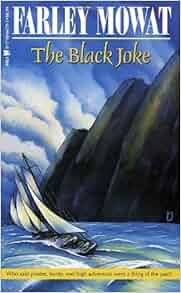 Title: The Black Joke


 Loyalty to one’s boat almost as to a living thing is the driving force of the novel – the Black Joke might as well be the Black Stallion for the Spence’s determination to be reunited with it – but loyalty between people is also emphasised. Communities are very tight-knit and old friends do not forget one another.
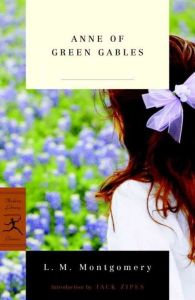 Title: Anne of Green Gables (Anne Novels #1)


 The Western Corner of the Castle