Fantasy: Time Cat

Apologies for formatting errors that I can’t seem to fix in this post.

Lloyd Alexander’s first novel for children is a tour guide of slightly cat-centric history and a promise of things to come. This bibliography is going to be fun.

See the source imageTitle: Time Cat
Author: Lloyd Alexander (1924-2007)
Original Publication Date: 1963
Edition: Puffin Books (1996), 206 pages
Genre: Fantasy. Historical Fiction.
Ages: 7-10
First Line: Gareth was a black cat with orange eyes.

A somewhat immature boy named Jason is sulking in his room after a bad day when his cat Gareth decides to speak to him. Jason (whose last name is never given, but I expect it’s probably Little) accepts this easily enough – Jason had always been sure he could if he wanted to and it’s left at that. However, he is surprised when Gareth shares a feline secret with him: cats don’t have nine lives, but they can visit nine lives, and Gareth has only been waiting for an “important reason” to do so. Jason gets to come along on a trip from Ancient Egypt to the American Revolution, learning about cats, people and life along the way.

Time Cat is a fairly perfect independent read for kids who are ready to tackle books without any illustrations. It’s a good standalone tale with adventure, humour and a cool premise: when cats disappear from a room they have actually gone time traveling. Short segments sustain the action, an occasional slimy villain pops up to threaten Jason and the situations he lands in are different enough from one to the next that any child should be fully entertained. Incidentally being introduced to the writing of Lloyd Alexander is just a bonus for down the road. Of course, Time Cat‘s very excellence for young kids dooms it to a fairly short shelf life, as it is so broadly sketched as to be soon outgrown in favor of deeper fantasy and historical narratives. That’s as it should be and it is certainly worth all 100+ Magic Treehouse books, and will do far more good for a child’s vocabulary, imagination and shelf space. To give an example: in Italy, 1468, Jason meets a boy called Leonardo (hint, hint) who shows him his room – the sort most scientifically-minded boys have probably wanted at one time or another.

Inside, Jason looked with amazement–tables crowded with piles of paper; collections of butterflies, rocks, pressed flowers. A squirrel raced back and forth in a small cage. In another cage, a sleepy green snake lay coiled. Great bottles and jars held clumps of moss and long-tailed, speckled lizards. From another bottle, a few fish stared at the inquisitive Gareth.
On a table, Leonardo had set a water bottle over a candle flame. “Did you ever notice how the bubbles come up?” Leonardo asked. “I’ve been watching them. There must be something inside, something invisible–I don’t know what it is. Perhaps the philosophers in Florence know and some day I’ll ask them. First, I want to try to find out for myself.”

https://www.johnnytimes.com/wp-content/uploads/2016/08/a-cat-by-leonardo-da-vinci.jpg
Detail from Cats in Motion, 1513-16 pen-and-ink by Italian artist Leonardo Da Vinci.

A quick rundown of places visited: The obvious cliche and weakest segment in ancient Egypt where cats are worshipped as gods; time spent tramping with the Roman legionaries before getting captured by some agreeable Britons; meeting a medieval Irish princess (with red-gold hair and a penchant for chatter, by the way) and a dignified slave by name of Sucat; teaching Japanese boy-Emperor Ichigo to stand up to his Regent, Uncle Fujiwara; meeting young Leonardo Da Vinci in Italy as he tries to convince his father that he’s an artist, not a notary; hanging out in post-Pizarro Peru; greeting the original Manx cat as she washes ashore on the Isle of Man; trying to avoid a nasty death in witch-burning Germany; and finally taking the rural tour of America in 1775.

https://upload.wikimedia.org/wikipedia/commons/7/7d/Manx_by_Gambier_Bolton.JPG
A historical photo of a Manx cat by photographer Gambier Bolton.

Almost every segment is two chapters long and everywhere they go Gareth imparts some fortune cookie wisdom like “even a kitten knows if you wait long enough someone’s bound to open the door.” Jason isn’t very proactive on their journey – whatever age he is, it’s apparently too young for active military service. Instead, he observes people and learns about life from them, to return home a steadier and wiser boy. Fantasy novels have a natural aspect of initiation and this one is no different, as Gareth points out at the end that he took Jason with to help him grow. There’s even a (very mild) sacrifice come journey’s end before Jason returns home in a cross between the movie version of The Wizard of Oz and Where the Wild Things Are.


Time Cat was Lloyd Alexander’s first novel for children after a string of flops, including a translation of Sartre’s La Nausée, which got roasted (along with Nausea itself) by Vladimir Nabokov. The moral: aim high and at least the giants themselves shall smite you. Alexander finally changed gears as he neared forty, and later described writing Time Cat as “the most creative and liberating experience of my life.” There’s a real joy that comes through the book, as it’s so clear that Alexander was simply enjoying the freedom of his new path in life. He loved cats, so they feature prominently. His villains are an entertaining series of oily and absurd caricatures, with the German witch-judge a standout:


The eldest judge, a bony, black-robed man with a lantern jaw and eyes as sharp as thorns, shuffled through some parchment sheets on the table. “We have studied your cases thoroughly,” he began, licking his lips, as if tasting every word.
“You’ve had no time to study anything,” shouted the miller.
The judge paid no attention. His little eyes turned sharper than ever as he read from his parchments.
“The accused witch, Johannes the miller: guilty.”
“The accused witch, Ursulina: guilty.”
“The accused witch, Master Speckfresser: guilty.”
“One demon disguised as a boy disguised as a demon: guilty.”
“One demon disguised as a cat: guilty.”
The judge set down his papers. “You will be burned at the stake in the morning. Believe me,” he added with a smile, “this is all for your own good.”

https://thewesterncornerofthecastle.home.blog/wp-content/uploads/2019/07/dda3e-lloyd2balexander.jpg
Lloyd Alexander.

Alexander’s writing is comfortable and witty, although it’s not quite polished enough to qualify as a great read-aloud on this early outing. He tosses around historic images like favorite toys, expecting kids to grasp the concept of centurions and Imperial Obeisance through context, rather than interrupting the plot to explain different factoids. Because of this it’s very light on educational material compared with more modern historical fiction for the same age group, and it has recently received some pointless criticism for cultural stereotyping. Honestly though, it’s for eight year olds. Try capturing a child’s imagination by explaining how the Incas were “exactly like you and me,” and see how much they remember about the subject in a month. We always begin with the broadest stereotypes, gaining detail and nuance as we grow up – so the Incas are memorable because they have llamas, while the Egyptians worship cats and ancient Britons wave spears around. Such details are memorable and interesting to a young child, and then swiftly outgrown as their reading naturally progresses.

Time Cat is simply a delightful experience at the right age. I read it avidly at around nine or so, and then within a couple of years I had moved on to Alexander’s far more mysterious Rope Trick. It’s easy to recommend and, while I don’t know exactly how consistent a writer Lloyd Alexander was over his long career, I’m looking forward to finding out.


https://i0.wp.com/img2.wikia.nocookie.net/__cb20110830042922/lloydalexander/images/3/3e/Time-Cat.jpg
My original copy of the book.

The Parental Guide up next, with some spoilers as always.

Violence: Death hangs over Jason’s head multiple times, including three threats of getting burned alive, but he never sustains any injury and after the danger is brought up it’s always swiftly negated. There are no other casualties until the final segment, when the likable Professor Parker is hit by British fire, though it’s never clear if he dies, since this is all we get: He smiled and tried to pull a shilling out of Jason’s ear, but his hand went slack and the coin dropped to the earth.

It is mentioned that cats are regularly killed in 1600 Germany, but none of the animal characters in the book suffer any harm. If you’re wondering, the “sacrifice” I mentioned Jason makes upon returning home is that Gareth will no longer be able to speak to him, but they will still understand one another without words.

Values: Sucat in the Ireland segment has a secular role, but it is revealed in a rather solemn moment at the end that Jason has actually just met Saint Patrick.

Cats are life’s great treasure, and this is not the last time Alexander would write a supremely cat-centric fantasy. In fact, it ends up such a trademark of his that I’m fairly surprised he kicked off his Prydain Chronicles with the hunt for an oracular animal of the porcine persuasion.

Monarchy is a fairly suspect arrangement in Time Cat, with rulers in general portrayed as ridiculously isolated from their subjects.

During the quiet story on the Isle of Man, Gareth states that everyone is pretty if they have pride in themselves, demonstrated by Dulcinea the Manx cat who doesn’t envy Gareth his tail. He also states the theme of Alexander’s career heretofore: “Trying to make someone do what they aren’t really good at is foolish.”

The most eye-rolling bit is easily when Sayri Tupac the Great Inca lets Jason and Gareth (being held for ransom) go because Don Diego the Spaniard gives a mushy speech about peace and understanding between cultures. “Understanding is better than gold,” says Sayri Tupac. Well, it was the sixties…

Role Models: Jason is a completely bland character; while he improves on his journey, it’s mostly by observing other, more interesting people. Gareth is a better creation, wise and unflappable, and when it’s time to save the princess, it’s Gareth who battles and slays the threatening serpent.

Educational Properties: The historical sketches are very light on detail, so even though you could tie the characters of Ichigo and Uncle Fujiwara to their real counterparts, it really belongs in the entertainment and fluency pile.

End of Guide.

Alexander’s books appear with some frequency at my local used bookstore, and I will be acquiring them whenever I can. As always, I invite those who’ve read more of his work than I have to share their opinions.

Up Next: Going for a classic western, and an example of what young adults were probably reading in the 1940s.

Anthropomorphic Fantasy: Stuart Little

This classic holds the dubious distinction of being the first book I ever read that left me feeling cheated of a justly-deserved ending, and I suspect this milestone applies to a lot of other children as well. Yet in hindsight this might even be the thing I appreciate most about the book…

book stuart little coverTitle: Stuart Little
Author: E.B. White (1899-1985)
Illustrator: Garth Williams (1912-1996)
Original Publication Date: 1945
Edition: Scholastic Inc. (1987), 131 pages
Genre: Anthropomorphic fantasy.
Ages: 5-8
First Sentence: When Mrs. Frederick C. Little’s second son arrived, everybody noticed that he was not much bigger than a mouse.

Stuart Little is a mouse born into a human family, an unexpected event that the Littles (and the world) accept with enviable equanimity. Small as he is, any number of misadventures can befall Stuart around the house, but he, his parents and older brother George muddle through, until the arrival of the bird Margalo – a sweet-tempered creature that Stuart quickly falls for. Snowbell, the family cat, is not so pleased, and puts out a hit on the bird, courtesy of a femme fatale feline known only as the Angora (if you haven’t read this book, please be aware I am dramatizing a little here). Margalo gets wind of the plot and flees without saying goodbye to the Littles. Stuart, distraught, decides to head out after her.

book stuart faucet garth williams
Illustration by Garth Williams.

Stuart Little is like two books in one. The first half, consisting of Stuart’s home life, is as perfect a children’s tale as you’re likely to find, effortlessly appealing to the imaginations of those still young enough to be preoccupied with truly important matters – such as what it would be like to be about two inches tall and have to make your way across the house. The second half contains almost nothing which would appeal to the same child at the same age. Instead, Stuart leaves home without a goodbye, takes a job pontificating to a bunch of schoolchildren, gets a date with a human girl who’s just his size, makes a complete mess out of it and gets back on the road, still looking for his bird and without the slightest proof that he’ll ever find her. I find that the only way this complete collapse of momentum and humour makes any sense (and I have no proof of this theory) is if E.B. White took a break and, when he came back, decided to send-up The Great American Novel that a hundred Thomas Wolfe wannabes were busy flooding the market with. This is the only way that Stuart Little’s prosey travelogue of impractical politics and girl troubles can be explained to my satisfaction, anyway. Let me know your theory.

This might be a fatal flaw in a lesser novel, rendering it nothing but a historical curio, but Stuart Little has so much to offer in the first half that it remains a children’s classic to this day. What sets it apart from other mouse tales is White’s wonderful style, which is balanced perfectly between the simplicity that would allow a child to handle it on his own and a verve that makes it a comfortable read-aloud for a parent. White’s manner is warm, wry and elegant, even when the hero is in imminent danger of an undignified death:

One day when he was seven years old, Stuart was in the kitchen watching his mother make tapioca pudding. He was feeling hungry, and when Mrs. Little opened the door of the electric refrigerator to get something, Stuart slipped inside to see if he could find a piece of cheese. He supposed, of course, his mother had seen him, and when the door swung shut and he realized he was locked in, it surprised him greatly.
“Help!” he called. “It’s dark in here! It’s cold in this refrigerator. Help! Let me out! I’m getting colder by the minute.”
But his voice was not strong enough to penetrate the thick wall. In the darkness he stumbled and fell into a saucer of prunes. The juice was cold. Stuart shivered, and his teeth chattered together. It wasn’t until half an hour later that Mrs. Little again opened the door and found him standing on a butter plate, beating his arms together to try to keep warm, and blowing on his hands, and hopping up and down.

book stuart in fridge garth williams
Waiting for rescue.

Stuart is a dapper mouse, with a complete dignity of dress and manner that allows him to feel bigger than his ridiculous circumstances. His request for a “nip of brandy” at the close of the fridge episode cements him as yet another adult protagonist in a story for children. However, I do wonder if the weakness of the second half might not be due to an absence of the other Littles, a flustered chorus to his misadventures and a loving family – even if they never do have the sense to board up the mousehole in the pantry. An example of their interplay from when they mistakenly believe Stuart has gone down it:

George was in favor of ripping up the pantry floor. He ran and got his hammer, his screw driver, and an ice pick.
“I’ll have this old floor up in double-quick time,” he said, inserting his screw driver under the edge of the first board and giving a good vigorous pry.
“We will not rip up this floor till we have had a good search,” announced Mr. Little. “That’s final, George! You can put that hammer away where you got it.”
“Oh, all right,” said George. “I see that nobody in this house cares anything about Stuart but me.”
Mrs. Little began to cry. “My poor dear little son!” she said. “I know he’ll get wedged somewhere.”
“Just because you can’t travel comfortably in a mousehole doesn’t mean that it isn’t a perfectly suitable place for Stuart,” said Mr. Little. “Just don’t get yourself all worked up.”

book stuart little margalo garth williams
A pretty little bird.

All together, including Snowbell, the Littles are a treat. It’s a perfect tale – a little strange, but humanoid mice are a strange concept when you think of it – until Margalo arrives and Stuart falls in love with a bird. Maybe this entire plot is purely to facilitate a pun – a “bird” is a girl, therefore a girl is a bird. However, it starts to feel more and more made up as it goes along. Stuart is too small to carry actual coin, so how does he pay for gasoline? Why does he have to chop down a dandelion for greens, yet is able to travel around with a mouse-sized tin of ham? Also, even as a child, it made no sense that Stuart, going on foot, would be able to find Margalo. Supposing she comes back while he’s out looking for her? I figured the likeliest way they’d meet again is if Margalo heard he was missing, and went looking for him.

The whole second half has a melancholy air. Stuart wrecks his new toy automobile in a sad and improbable bit of slapstick. He’s the world’s most boring substitute teacher, talking about being “Chairman of the World,” claiming that “rats are underprivileged,” and coming up with impracticable laws against being mean (this is the longest chapter in the whole book and has no pertinence on anything else). Meanwhile, the sudden appearance of Thumbelina Miss Ames is just bizarre, and Stuart behaves terribly the whole time he’s with her. Stuart, if you’re lonely for companionship, maybe try locating New York’s mouse population, who probably left you as a changeling in a human hospital to start with (this was always my theory anyway).

https://media1.britannica.com/eb-media/58/99358-004-8DF1F962.jpg
Elwyn Brooks White in the office.

This isn’t to say that the second half of Stuart Little has nothing to offer. White’s writing is consistent, there’s a wealth of local colour regarding 1940s New York, Garth Williams was already a quintessential children’s book illustrator on his very first try, and the non-ending is strangely inspired – especially since E.B. White is a rare example of a children’s author who did not weaken and knock out an inferior sequel when strapped for cash. It just ends. It is a messy novel meant for an age group that collects “practice” books which emphasize rigorous, multi-volume predictability, a la The Boxcar Children series. It is highly recommendable and artistically excellent, even if it does have the inescapable sense of a failed experiment. Just make sure your son or daughter gets Charlotte’s Web first, because Stuart Little is not necessarily the best introduction to E.B. White. Indeed, despite revisiting this (okay, the first half) often enough while growing up, I never trusted White enough to read a second one.

Parental Guide. Stuart’s letter to Miss Ames raised my eyebrows as I read it for this project. Quite frankly, he’s every parents’ nightmare: …my purpose in writing this brief note is to suggest that we meet. I realize that your parents may object to the suddenness and directness of my proposal, as well as to my somewhat mouselike appearance, so I think probably it might be a good idea if you just didn’t mention the matter to them. What they don’t won’t hurt them. He does promise to leave this matter to her own good judgement, and I suppose looked at from the Ames’ point of view the whole “afternoon on the river” sequence is a G rated cautionary tale about going on blind dates with hirsute strangers from out-of-town but it still feels tremendously out of place. Of course, Thumbelina herself was also courted by several wildly inappropriate suitors before finding her fairy prince, so maybe that’s what White was actually referring to here.

book stuart and miss ames garth williams
Stuart and Miss Harriet Ames.

Violence: Stuart gets into several close shaves, among them getting swept into a garbage truck and nearly drowned in the ocean. Snowbell and the Angora both threaten to eat Margalo, and Stuart defends her with a bow and arrow one night in a very Arthurian way. He destroys his toy car, though it’s fixed up again good as new.

Values: Chief among the values displayed here is actually stoicism. When Stuart boasts or brags he gets into trouble, first with the windowshade and then Miss Ames. When he does something truly noble, such as winning the boat race or saving Margalo, he is far too modest to tell anyone and the feat passes by unsung.

The Littles invent all manner of aids to help Stuart get about and enjoy life, while the dentist tinkers with model boats and cars. Stuart enjoys being useful to others and always has proper attire for every possible occasion. E.B. White also briefly morphs into his Elements of Style self, and has Stuart-as-teacher say “a misspelled word is an abomination in the sight of everyone. I consider it a very fine thing to spell words correctly and I strongly urge every one of you to buy a Webster’s Collegiate Dictionary and consult it whenever you are in the slightest doubt.”

You could try to read Stuart Little as a metaphor for a handicapped or adopted child, but I would advise against this search for deeper meaning, as Stuart never really fits in, although his parents love him very much. Indeed, life with the Littles is portrayed as far more of a struggle than his subsequent independent voyage, of which he is a fairly successful navigator. He also leaves home without a word – so as far as families in classic children’s books go, this one is more on the dysfunctional side.

Role Models: Stuart actually regresses over the course of his story, from a gallant young mouse to a petulant one. I think White intended the Miss Ames date to demonstrate the problem of letting a perfect day dream interfere with having an imperfectly good day, but it’s the penultimate chapter and leaves Stuart on a very downcast and immature note.

https://www.nccil.org/img/assets/img/portraits/2323/Garth-Williams-Portrait_e0fc7258c45b5e0ad8ee7dfed878bd55.jpg
Garth Williams.

Everyone, even the devious cats, are fully likable characters and most of them strive to be helpful at some point or other.

Educational Properties: Plenty of thought exercises and physics lessons. Random questions like “why doesn’t the story end? What do you think happened next? If a toy car is driving, is it still a mile?” spring to mind.

End of Guide.

Expect my review of Charlotte’s Web in August and The Trumpet of the Swan in September. E.B. White is going to be the first author on the Western Corner of the Castle whose bibliography I will be completing and I have absolutely no idea what to expect after this one. What are your thoughts on Stuart Little?

Up Next: One of the 1945 Newbery Honor books, so we’re almost staying in the year.

Adventure Novels: The Adventures of Tom Sawyer

An unassailable classic for boys, splendidly written and full of incident. Truly better than I had dared hoped it would be (hey, the only other Twain novel I’ve ever read was Pudd’nhead Wilson).

book tom sawyerTitle: The Adventures of Tom Sawyer
Author: Mark Twain (1835-1910)
Original Publication Date: 1876
Edition: The Complete Adventures of Tom Sawyer, Borders Classics (2006), 190 of 337 pages
Genre: Adventure. Humour. Historical Fiction.
Ages: 11-14
First Sentence: “Tom!”

In the opening chapter of this classic of children’s literature you will find this sampler of outdated items and high-octane spelling bee words: spectacles, stove-lids, resurrected, “jimpson,” roundabout (article of clothing), ruination, kindlings, guile, revealments, diplomacy, transparent, forestalled, vexed, enterprises, diligence, unalloyed, pantaloons, ambuscade, adamantine. As awesome as this is to behold, it is a language for those generations of children who had very few books written solely for them, and who therefore learned to read by constant exposure to the King James Bible and memorization of such poets as Lord Byron and Longfellow. I suspect that my recommended age group skews higher than the historical average but this is by no means a novel to spring on a child without a firm foundation in the English language that Mark Twain wields with such expertise. I read a children’s adaptation when I was probably eight but it didn’t stick with me and I would recommend against such things – in general, because it’s ridiculous to read a simplified version of a story when simply waiting a year or two will make the original available, and more specifically, because the success of The Adventures of Tom Sawyer owes everything to Twain’s grandiloquent language: There comes a time in every rightly constructed boy’s life when he has a raging desire to go somewhere and dig for hidden treasure. This desire suddenly came upon Tom one day. He sallied out to find Joe Harper, but failed of success. Next he sought Ben Rogers; he had gone fishing. Presently he stumbled upon Huck Finn the Red-Handed. Huck would answer. Tom took him to a private place and opened the matter to him confidentially. Huck was willing. Huck was always willing to take a hand in any enterprise that offered entertainment and required no capital, for he had a troublesome superabundance of that sort of time which is not money. The descriptions are so wildly inflated as to bring a smile to the face. Take that language away and both comedy and drama suffer while the honestly ramshackle plot stands alone.

https://www.bing.com/th?id=OIP.iL4p20dAaSEu-1j6DpkJrwHaHt&pid=Api&rs=1&p=0
Mark Twain’s house in Hannibal.

Tom Sawyer is a young rascal growing up in St. Petersburg, Missouri (based on Mark Twain’s boyhood town of Hannibal) in the care of his long-suffering Aunt Polly. He spends most of his time in the pursuit of fun, whether that be choreographing Robin Hood scenes in the woods, stealing from the jam jar or skipping school. When he and Huckleberry Finn sneak off to the graveyard at midnight, hoping to see some devils or witchcraft, they instead witness an all-too-human murder, which is promptly pinned on the wrong man. Too scared to testify and with the real murderer on the loose, the boys bury their nagging consciences in elaborate games of make-believe. However, run-ins with the terrifying Injun Joe punctuate their summer fun until Tom, and later Huck, finally have the courage to come forward in time to save the innocent – and maybe find some hidden treasure in the process.

What I most enjoyed regarding The Adventures of Tom Sawyer was not Tom himself, but actually the wealth of historical detail provided, putting modern readers infinitely closer to the realities of growing up in that time than anything modern, however well researched, could accomplish. Shoeless in summer, the kids are off by themselves for most of the day, with their own parallel society. Tom and his friends swear oaths, court girls, hold trials (even if just a juvenile court that was trying a cat for murder, in the presence of her victim, a bird) and have a strict code of honour that is not imposed by adults; instead it is all based on superstitions, folk customs, Christian commandments and the romantic literature available at the time, all filtered through the powerful imaginations of children.

https://stephenbasdeodotorg.files.wordpress.com/2016/05/egan-robin-hood.jpg?w=809
‘Robin Hood and Little John’ by Pierce Egan the Younger was published in 1840 and was one of the earliest versions of Robin Hood for a strictly juvenile audience.

For fun Tom and his friends will dig for buried treasure or trade bits of eye catching rubbish back and forth. There is also a gradual crescendo to these games, as they grow in ambition, impact and dramatic peril – from running away to play pirates (and crashing their subsequent funeral) to searching haunted houses (and discovering the whereabouts of Injun Joe) to getting lost in a cave system (a truly impressive sequence in which Tom and his sweetheart Becky have to choose between staying near a water source or trying random passages while their candles burn down). As trifling as the plot may be at times, the cavalcade of mishaps, hijinks and peril keep things moving along while waiting for the next appearance of Injun Joe.

Mark Twain handles his villain perfectly, avoiding the pitfall of creating a bumbling idiot outsmarted by a couple of kids by the simple means of never having Injun Joe interact with the boys at all. Tom believes that Joe has it in for him, but Twain never confirms or denies this, and since Tom always hides when he catches sight of Joe, the sense of a truly menacing villain is maintained. Seen and heard only in glimpses, Injun Joe is a very convincing psychopath, not a cartoon bad guy.

The writing is very cinematic as well, so provided that you could handle the dialect this would indeed make a superb read-aloud: It was a graveyard of the old-fashioned Western kind. It was on a hill, about a mile and a half from the village. It had a crazy board fence around it, which leaned inward in places, and outward the rest of the time, but stood upright nowhere. Grass and weeds grew rank over the whole cemetary. All the old graves were sunken in, there was not a tombstone on the place; round-topped, worm-eaten boards staggered over the graves, leaning for support and finding none. “Sacred to the memory of” So-and-So had been painted on them once, but it could no longer have been read, on the most of them, now, even if there had been light.

https://thewesterncornerofthecastle.home.blog/wp-content/uploads/2019/06/854ee-adventuresoftomsawyer_003.jpg
Raymond Sheppard illustration of the famous murder in the graveyard.

The dialogue is the most challenging part of Tom Sawyer, and Twain has gotten into endless trouble for making it too realistic. His contemporaries found it coarse and more recent audiences find it offensive; neither group seems to appreciate how in keeping it is with Twain’s focus on the concrete details of a childhood in the 1840s. The dialogue often slows the pace, with full pages of back-and-forth before the point of a conversation can even be arrived at, or the full transcript of every word and sound a boy pretending to be a steamboat under full crew would make. It’s a verbal verisimilitude that I sometimes found tedious but it is integral to Twain’s artistic vision.

If it is your goal to raise a generation which can read and engage with the western canon, The Adventures of Tom Sawyer is an excellent bridge in that process. The writing is high caliber, Tom is a memorable and endearing protagonist (especially for boys), and there is an abundance of humour and tension in his story. I’ve said little about Huckleberry Finn in this review, because he’s often in the background of Tom’s escapades and, while he does have his chance to engage in heroics, he is less than pleased to share in Tom’s happy ending – perhaps setting the stage for a sequel…

Onwards to the thorny tangle that is a Parental Guide for Mark Twain.

Violence: Corporal punishment is routine at home and school, dead animals are used as toys and Tom thrashes other boys with some regularity. The murder involves a trio of grave robbers and, with the head of the operation being a doctor, body snatching is rather strongly implied. Injun Joe threatens the doctor, gets punched in the face, Joe’s partner Muff Potter steps into the fray and Joe stands back awaiting an opening. It is related, like all incidents herein, with a certain dramatic flair: Injun Joe sprang to his feet, his eyes flaming with passion, snatched up Potter’s knife, and went creeping, catlike and stooping, round and round about the combatants, seeking an opportunity. All at once the doctor flung himself free, seized the heavy head-board of Williams’ grave and felled Potter to the earth with it–and in the same instant the half-breed saw his chance and drove the knife to the hilt in the young man’s breast. He reeled and fell partly upon Potter, flooding him with his blood, and in the same moment the clouds blotted out the dreadful spectacle and the frightened boys went speeding away in the dark.

After framing Potter (implied to be a close friend), Joe spends the rest of the novel skulking around before spouting off a remarkably gruesome bit of dialogue as he plots revenge on the widow of a man who once had him horsewhipped – supposedly merely for vagrancy, but I find myself skeptical of Joe’s story. Can’t imagine why. “Kill? Who said anything about killing? I would kill him if he was here; but not her. When you want to get revenge on a woman you don’t kill her–bosh! you go for her looks. You slit her nostrils–you notch her ears like a sow! … I’ll tie her to the bed. If she bleeds to death, is that my fault?” Injun Joe meets his end by getting trapped in a cave and starving before anyone realizes where he was, giving an abounding sense of relief and security to Tom and undoubtedly to legions of children reading and listening down through the decades.

https://i0.wp.com/cdn.history.com/sites/2/2015/05/list-8-things-mark-twain-1870-3353702.jpg
Mark Twain.

Values: Hard to tell, given Twain’s satirical voice. Superstitions don’t work, sermons are boring, medicines are always snake oil, detectives don’t solve crimes and so on. However, Tom is contrasted with other characters, notably his cousin Sid, a relentlessly well-behaved sneak, who avoids getting in trouble but equally avoids doing anything truly exceptional or brave. Tom and Huck only have their opportunities for heroics because they’re out in the night, being the inadvertent neighbourhood watch. Also, one of Tom’s unshakeable rules of the game – whether playing at pirates or robbers – is no harming women, putting him squarely at odds with the actual robber Injun Joe.

There’s also this bit, after Injun Joe is finally buried and Mr. Twain gets noticeably bored of writing for a child audience: This funeral stopped the further growth of one thing–the petition to the governor for Injun Joe’s pardon. The petition had been largely signed; many tearful and eloquent meetings had been held, and a committee of sappy women been appointed to go in deep mourning and wail around the Governor, and implore him to be a merciful ass and trample his duty under foot. Injun Joe was believed to have killed five citizens of the village, but what of that? If he had been Satan himself there would have been plenty of weaklings ready to scribble their name to a pardon-petition, and drip a tear on it from their permanently impaired and leaky waterworks.

Role Models: There’s no denying that Tom has admirable traits – he’s capable of great cleverness, generosity and even nobility – but he is by no means a paragon (I also don’t think it’s necessary for absolutely every book in a child’s library to model good behaviour). In some ways, Tom Sawyer’s independence and self-reliance, even when not terribly constructive, are his finest and most appealing traits. However, while I doubt most kids would notice, I certainly found Aunt Polly quite ill-used and I believe she’s absolutely right when she tells her nephew “Tom, you’ll look back, some day, when it’s too late, and wish you’d cared a little more for me when it would have cost you so little.”

Educational Properties: There’s a wealth of info on life in 19th Century America to be gleaned from Tom Sawyer, everything from temperance movements to body snatching, from river transportation to the operation of a small town. The memorable cave sequence would offer a natural opportunity for a geology lesson (or in certain parts of the world, a field trip). Since the novel is based on Twain’s boyhood, it could also open up Mark Twain’s life and place in American literature to some exploration.

I expect a fairly lively discussion of ethics could also result from a shared read of the book, given the wide variety of bad, questionable and criminal behaviour on display, as well as Tom’s earnest fear of divine reprisal for his sins and Injun Joe’s attempts to justify his own crimes under the guise of “revenge.”

On the subject of 1840s education, Tom and his peers perform recitations at school, from Patrick Henry to Byron’s ‘Destruction of Sennacherib’ to ‘Casabianca,’ while the littlest children stick to nursery rhymes. For Sunday school, memorizing Bible verses is rewarded (with a Bible) and in the woods the boys fall to a more willing reinactment of Robin Hood, though again with memorization of lines a key component.

End of Guide.

I enjoyed The Adventures of Tom Sawyer much more than I expected to at the start, and I suspect that it will prove a blueprint for many of the children’s books to come on this blog. I have copies of all three sequels, but I’m going to pace myself before I launch into them. What did you think of Tom Sawyer at whatever age you read it?

Up Next: One of the three slim novels penned by E.B. White.

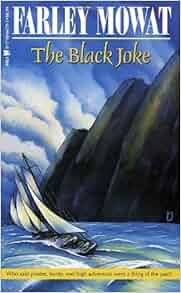
Adventure Novels: The Black Joke

When your tagline reads ” Who said pirates, booty, and high adventure were a thing of the past?” and the reader flips the book over and reads “The time: the 1930s” – you did, pal. This has been an episode of How to Lose Your Argument. I suspect this will not be the last time I take issue with the cover copy on these things.

https://images-na.ssl-images-amazon.com/images/I/510BNIo188L._SY291_BO1,204,203,200_QL40_.jpgTitle: The Black Joke
Author: Farley Mowat (1921-2014)
Illustrator: Victor Mays (1927-)
Original Publication Date: 1962
Edition: McClelland & Stewart Ltd. (2004), 218 pages
Genre: Adventure. Historical.
Ages: 9-12
First Sentence: One wind-whipped summer day in the year 1735, a black-hulled ship came storming in from seaward toward the mountain walls which guard the southern coast of Newfoundland.

The Black Joke has a slightly perplexing title until you realise it’s the name of a ship, a ship which stood out from her sisters as a ballerina would stand out in a crowd of folk dancers. Her slim, black-painted hull had a grace and delicacy which was unique amongst the rough-built, hard-working fishing ships. The Black Joke is owned by Jonathan Spence, a Newfoundland fisherman with a scrupulous work ethic, independent streak and strong will to avoid debt. His adversary, local merchant Simon Barnes, resents Spence and fears he’ll set a precedent for the local community. Unluckily for Spence, it’s the early 1930s and American Prohibition has created a thriving business for east coast rum-runners, all of whom are looking for fast yet innocuous vessels to smuggle liquor into the United States and in them Simon Barnes sees a way to turn a profit and rid himself of Spence. Framed and separated from his ship, Spence devises a plan to get her back but an accident intervenes and it falls to his young son Peter and his nephew Kye to rescue Black Joke before she sails for America.

Farley Mowat, Victor Mays - boat
An example of the illustrations by Victor Mays.

Most reviews of this little book make it sound like a fairly standard boys’ adventure novel, but I want to emphasize that for over half the duration, Jonathan Spence is the de facto protagonist, with Farley Mowat’s omniscient third person narrator hopping between ancillaries as needed. Children’s books with adults as main characters are pretty much a thing of the past but used to be quite common and The Black Joke is generally a serious story of a man falsely accused and the friends who come to his aid; Peter and Kye don’t get the chance to go rogue until the final quarter. While it is definitely an adventure tale, it’s not quite The Hardy Boys. Everything is kept very real, very plausible.

Take note that this is indeed a boating book. If Jack London’s Cruise of the Dazzler was essentially a human interest story that happened to go to sea, The Black Joke is all about the ship and the setting, with little leftover for the humans involved. I’m lucky to have a nautically knowledgeable friend and a few sea stories behind me but if you present this book to an unversed kid who has no one to discuss it with, he may not make it to the exciting parts, as the first chapters do have a strongly documentary feel.

As an American child, I had little exposure to any books set in Newfoundland. The only one I ever came across was Star in the Storm by Joan Hiatt Harlow, so I was especially interested in The Black Joke‘s setting and Mowat did not disappoint:

 By this time it was full daylight, with the sun just showing to the east. The cliffs no longer looked quite so formidable and, seen from the bottom, they were not absolutely sheer. The many ledges were thick-covered with deep moss which was riddled by the burrows of rats and puffins.
 Having started the two boys up the cliff, Jonathan remained behind to scuff a small avalanche of moss down over the dory, effectively concealing it from any but the closest inspection. Then he too shouldered a pack and began climbing upward.
 Peter led the way, scrambling from ledge to ledge, pausing now and again to search for the best route, but gradually gaining height. A hundred feet up he found a narrow ravine that slanted sideways up the cliff, so that the going became easier. All the same, it took half an hour of hard climbing before the three of them were at the top.

farley mowat, victor mays - boys
On top of Colombier.

The Black Joke leaves Newfoundland and the Spence’s are forced to island-hop from St. Pierre to Colombier to Miquelon and each location is distinctive. Mowat does equally well with weather patterns, which can be as big of an obstacle as the human villains, and also accents. Not only do his characters’ accents vary by ethnicity (Irish, French, Basque) and location (Newfoundland, New Jersey), he even modulates between generations. Pierre the Basque fisherman has a French accent you could cut with a knife but he married a Newfoundlander and their son Jacques speaks English in a stiff and formal, learned-lesson way. Meanwhile, when Pierre is talking to another Basque in private his accent vanishes, our clue that the two are conversing in French. I thought it worked quite well.

The story is very entertaining and the pace picks up as soon as they approach St. Pierre. Mowat strings out the plot, packing a lot of incident into a short space – smuggling and stowaways, fire and a sea battle and even a chapter spent marooned. He also ensures that something goes badly wrong at the last possible moment of every plan the heroes concoct, until finally something actually goes so wrong it goes right. Good stuff.

One thing Mowat does not do so well is character. Throughout the book, Peter and Kye are almost interchangeable. Peter is more emotional and risk-taking, while Kye is the voice of caution but it never feels like more than an outline. When Jacques joins the group he’s pretty much the same. The boys have different levels of knowledge and gumption but when push comes to shove and work needs doing they’re all three good sports and courageous lads. The one character who did stand out amongst the noble Spences and their friends was Smith, the Yankee rum-runner. A villain with significant personal flaws, he also has some genuinely admirable traits that come to the forefront in the eleventh hour.

https://travelcravingsdotcom1.files.wordpress.com/2014/10/1024px-miquelon_shore.jpg
The coast of Miquelon.

I ran some of the boating information here past my nautical friend and he found it all legit – even the actions taken during the sea battle were plausible and smart. I found the story engaging and the setting and cultural assemblage utterly refreshing. The writing has that straightforward masculine quality that I associate with the American midcentury and writers such as Jack Schaefer, Jim Kjelgaard and Jean Craighead George, where feelings take a backseat to rugged endeavour and sweeping natural beauty. It is exactly the kind of low-profile gem I was hoping to uncover for this project.

Parental Guide up next. Some spoilers, as always.

Violence: Nobody dies. Jonathan is taken out of the picture by tipping over and hitting his head, leaving him in the hospital with a severe concussion until the action is over. There’s gunfire that doesn’t hit anyone and a fire that leaves brave Smith choking, hair singed and with hands that bore a ghastly resemblance to two freshly boiled lobsters.

Language use actually surprised me. Mowat sticks to standard Yosemite Sam usage, with “the blazes you will!” and so on, until Smith loses his temper and we get him yelling “you name of a New Jersey name!” and various uses of “blank.” I was so puzzled I had to re-read the passage to understand that this was being substituted for actual cursing. It knocked me completely out of the story; I’d say Yosemite Sam works a lot better.

Values: Men’s work is strongly emphasised throughout and the simple hardness of a fishing life is shown as routine. The boys are enlisted in a world of working that is not 9 to 5 but literally dawn to dusk, until the task is completed. This demand is an important source of fulfillment for them. Kye and Peter caught each other’s glances. Neither would have admitted it, but they were as pleased as only two boys can be who have been told they can do a man’s job and do it well.

Farley Mowat, Victory Mays - shipLoyalty to one’s boat almost as to a living thing is the driving force of the novel – the Black Joke might as well be the Black Stallion for the Spence’s determination to be reunited with it – but loyalty between people is also emphasised. Communities are very tight-knit and old friends do not forget one another.

No value judgement is made on the rum-runners. To the poor coastal towns, smuggling is just another job opportunity and the rum-runners get off scot-free. French authorities don’t come off too well and the true villain is the merchant Simon Barnes, who uses debt as a tool to control and profit from his neighbours. What happens to him is left completely up in the air.

Fishing and hunting are a standard pastime and this Mowat does put a value judgement on: “It is not good to kill more than one needs,” says Jacques.

Role Models: Aside from an impish prank or two, the boys have no real flaws, which is probably why I find them a bit dull. When they lose adult leadership they are forced to improvise and carry on without aid or orders, showing great fortitude and also making things a lot worse before they get better.

When Jonathan is framed he chooses to turn fugitive rather than stand his ground, disregarding the good advice he had given the boys earlier: “When ye’re in the right of a thing, hang on. Don’t change yer mind. There’ll be many a time some feller what’s bigger’n you, or maybe richer, or maybe just louder in the mouth’ll try and shove you off your course. Don’t take no heed.”

Educational Properties: An interesting look at Prohibition from the outside and it could be a nice supplement to learning about the North Atlantic settlers. The setting is very strong and those who love the north countries will probably want to learn more about the dynamic landscape of Newfoundland.

https://images.thestar.com/content/dam/thestar/photos/2014/05/07/in_pictures_canadian_author_farley_mowat/undated.jpg.size-custom-crop.1086x0.jpg
Farley Mowat.

End of Guide.

Farley Mowat only wrote a few books for young readers, all of which I will be on the lookout for. Now that I’ve read both him and Montgomery, I am very curious about Canadian children’s books. What are some other authors I shouldn’t miss?

Up Next: I haven’t done an animal story yet, so up next is a girl and her horse, courtesy of C.W. Anderson and the 1950s.

Adventure Novels: The Cruise of the Dazzler

Word of Warning: I own two Jack London omnibuses and both contained a magazine version of The Cruise of the Dazzler which had been significantly abridged. Both volumes also failed to make note of the abridgement, and it wasn’t until I had read it, taken notes and started researching that I realized my mistake. I found the full text on Project Gutenberg, which isn’t a very fun way to experience an old book, but it let me save my review, and I admire their site tremendously. So here is Jack London’s forgotten boy’s adventure story!

Cruise of the DazzlerTitle: The Cruise of the Dazzler
Author: Jack London (1876-1916)
Original Publication Date: 1902
Edition: Project Gutenberg EBook HTML, unknown page count
Genre: Adventure.
Ages: 10-12
First Sentence: They ran across the shining sand, the Pacific thundering its long surge at their backs, and when they gained the roadway leaped upon bicycles and dived at faster pace into the green avenues of the park.

When reading old books I often will stumble upon oddly resonant, even poignant, passages, that seem to illuminate some tremendously modern concern that we often believe was not an issue in the old days. In the very first chapter of The Cruise of the Dazzler I came upon one of these passages, as protagonist Joe Bronson lashes out at his sister in frustration. “Oh, you can’t understand!” he burst out. “You can’t understand. You’re a girl. You like to be prim and neat, and to be good in deportment and ahead in your studies. You don’t care for danger and adventure and such things, and you don’t care for boys who are rough, and have life and go in them, and all that. You like good little boys in white collars, with clothes always clean and hair always combed, who like to stay in at recess and be petted by the teacher and told how they’re always up in their studies; nice little boys who never get into scrapes—who are too busy walking around and picking flowers and eating lunches with girls, to get into scrapes. Oh, I know the kind—afraid of their own shadows, and no more spunk in them than in so many sheep. That ‘s what they are—sheep. Well, I ‘m not a sheep, and there ‘s no more to be said.” This was in 1902 and Jack London could already see where this was going.

Fed up with the controlled environment of his parents’ guidance, bored with schoolwork, young Joe Bronson gets into fights and flunks all his tests before shipping off with the first crew that will have him, on board the Dazzler, only to discover too late that his new companions are San Francisco Bay pirates. At first he wishes only to escape or alert the authorities somehow but as he bonds with a fellow crewmate known as the ‘Frisco Kid he feels a reformer’s urge to save said Kid from jail, complicating his escape.

I’ve got to mention the fact that this book would make a splendid read-aloud. London provides a slightly wry narration that really brings out the humour of Joe’s predicament: But suddenly a man sprang out of the gloom, flashing a dark lantern full upon him. Blinded by the light, he staggered back. Then a revolver in the man’s hand went off like the roar of a cannon. All Joe realized was that he was being shot at, while his legs manifested an overwhelming desire to get away. Even if he had so wished, he could not very well have stayed to explain to the excited man with the smoking revolver. So he took to his heels for the beach, colliding with another man with a dark lantern who came running around the end of one of the piles of iron. This second man quickly regained his feet, and peppered away at Joe as he flew down the bank.

While the sea story doesn’t begin until the second half of the novel, there’s a fair amount of action throughout, as Joe ends up in the ‘Frisco slums brawling with Irish kids and running from the cops before the main plot even gets going. The violence is treated in a very sportsmanlike fashion, with both sides knowing the rules. Upon calling his captain French Pete a liar, for example: Joe had not been a boy among boys for nothing. He knew the penalty which attached itself to the words he had just spoken, and he expected to receive it. So he was not overmuch surprised when he picked himself up from the floor of the cockpit an instant later, his head still ringing from a stiff blow between the eyes. It’s very different from the brutal scenes in his famous dog books, which were not intended for young readers in the first place, and so could make for a much gentler introduction to Jack London.

Jack London - cruise of the dazzler
From the illustrations in the St. Nicholas magazine abridgement.

As far as subtext goes, there is little to speak of here. Morals are found embedded within the narrative which are then recapitulated in a “job well done” finish. In this day and age it all seems very quaint – charming if you miss those days, somewhat hokey otherwise. Responsibilities were showering upon him thick and fast. But a few days back he had had but himself to consider; then, in some subtle way, he had felt a certain accountability for ‘Frisco Kid’s future welfare; and after that, and still more subtly, he had become aware of duties which he owed to his position, to his sister, to his chums and friends; and now, by a most unexpected chain of circumstances, came the pressing need of service for his father’s sake. It was a call upon his deepest strength, and he responded bravely. While the future might be doubtful, he had no doubt of himself; and this very state of mind, this self-confidence, by a generous alchemy, gave him added resolution. Nor did he fail to be vaguely aware of it, and to grasp dimly at the truth that confidence breeds confidence—strength, strength.

This passage is key to the entire tale. Strength is repeated three times and Joe’s epiphany was meant to serve as an example to boys as he learns responsibility and self-reliance. As a matter of fact, Project Gutenberg reveals that The Cruise of the Dazzler was selected as part of a series called Every Boy’s Library, put out by the Boy Scouts of America with this Jack London - stormspecific ideal in mind: We know so well, are reminded so often of the worth of the good book and great, that too often we fail to observe or understand the influence for good of a boy’s recreational reading. Such books may influence him for good or ill as profoundly as his play activities, of which they are a vital part. The needful thing is to find stories in which the heroes have the characteristics boys so much admire—unquenchable courage, immense resourcefulness, absolute fidelity, conspicuous greatness. I would love to find a list of the other books that made the cut.

Joe is a likable protagonist and his struggle with schoolwork is very realistic. He can’t see how it could impact his life, he can’t concentrate on it and even when he wants to study he associates it with shame and gives up quickly, angry at his own failure. His final epiphany only occurs at sight of fellow pirate Nelson (a deliberate choice of name on London’s part, I suspect, as every schoolboy would have known about Trafalgar): Beside him, his injured arm in a sling, was Red Nelson, his sou’wester gone and his fair hair plastered in wet, wind-blown ringlets about his face. His whole attitude breathed indomitability, courage, strength. It seemed almost as though the divine were blazing forth from him. Joe looked upon him in sudden awe, and, realizing the enormous possibilities of the man, felt sorrow for the way in which they had been wasted. A thief and a robber! In that flashing moment Joe caught a glimpse of human truth, grasped at the mystery of success and failure. Life threw back its curtains that he might read it and understand. Of such stuff as Red Nelson were heroes made; but they possessed wherein he lacked—the power of choice, the careful poise of mind, the sober control of soul.

It’s an important passage and a beautiful one. I enjoy Jack London’s writing a great deal and this book does not disappoint. There are some passages that bog down in the world of sailing terminology, with reefing down of jib and mainsail and all that but this price asserts itself in all of the great boating books to come, from The Riddle of the Sands to Moby-Dick, so you might as well start adjusting early.

Aside from Joe, characterization isn’t terribly strong but the major cast are all believable human beings and have moments of deeper feeling to round them out a bit. I have no idea why this book isn’t in print. It seems there is very little space for masculine, nature-oriented adventures on a modern child’s bookshelf but you would think Jack London would still rate an exception.

Jack London
Jack London being authorial.

Got the Parental Guide up next, with spoilers and everything.

Violence: Yes, there’s gunfire, injury, fistfights, death at sea and criminal activity. A dearth of swearing though. “You rat!”

Values: Joe ships off to taste independence and discovers instead that he is responsible to his family no matter where he goes. In ‘Frisco Kid’s loneliness and wish for a sister – the Dazzler’s sole streak of Victorian sentiment – Joe realises that not all children have the support of good families and learns not to take his for granted. Other morals include knowing one’s limitations, protecting the family property, staying honest among thieves and never backing down from a bully. There’s some fairy tale philanthropy offered to ‘Frisco Kid, but Mr. Bronson is cautious of the outcome: “if he comes through his period of probation with flying colors, I’ll give him the same opportunities for an education that you possess. It all depends on himself.”

London’s worldview of solitary excellence is invoked, as Joe Bronson is not able to summon the proper authorities and has to deal with things on his own. London softens it up for his youthful audience though, because ‘Frisco Kid always has Joe’s back and the sea takes care of the wicked without Joe having to navigate any treacherous moral quandaries about life, death, freedom and imprisonment. It all wraps up tidily with lessons learned, patrician forgiveness and the first step to manhood attained.

Role Models: Joe is front and center here as a proper example to good Boy Scouts everywhere. Mr. Bronson is a strong father figure. Joe’s mother and sister Bessie are referred to in sympathetic tones throughout; Bessie is shown as studious and sensitive.

Educational Properties: You could probably use this to introduce the idea that there were pirates of the non-Caribbean in the world, or to accompany a social history of old San Francisco as it takes in rich and poor, schooling, philanthropy and the criminal classes. It also deals in part with the oyster pirates, a unique phenomenon and a cool topic from history.

Joe Bronson’s school test shows what was expected of students before the era of multiple choice tests. Nothing besides the question itself would be there to jog the student’s memory and each child would be expected to know the answer and be able to write it down cogently. The questions on the history test center on the laws of Draco and the reforms of Solon, which were things young teens were expected to know all about.

End of Guide.

I have read both The Call of the Wild and White Fang before, but I don’t trust my omnibuses to contain the official book texts, so I’ll wait on revisiting them. I’m unaware of any other London stories suitable to a young audience, so my biggest question this time is – what are some other good boating adventures I should be on the lookout for? If I read enough of them, maybe the sailing descriptions will actually start making sense. That would be a plus.

Up Next: A perfect June read by L.M. Montgomery.

Historical Fiction: The Scarlet Pimpernel

A Hungarian Baroness writes a love letter to all things British starring a French heroine and incidentally creates one of the greatest swashbucklers of all time all without recourse to a single swordfight. This is why we read classics.

Scarlet Pimpernel
My scanner isn’t working today, so I had to take a picture of my edition.

Title: The Scarlet Pimpernel (The Scarlet Pimpernel #1)
Author: Baroness Emmuska Orczy (1865-1947)
Original Publication Date: 1905
Edition: Puffin Classics (1997), 323 pages.
Genre: Historical. Romance. Swashbuckler.
Ages: 12-14
First Sentence: A surging, seething, murmuring crowd of beings that are human only in name, for to the eye and ear they seem naught but savage creatures, animated by vile passions and by the lust of vengeance and of hate.

One has to admire the effort taken by a publisher like Puffin. Their line of classics, complete and unabridged, gives a gentle yet firm admonishment to today’s parents: children, when competently taught and engaged, are highly capable readers and, once given a foundational vocabulary and cultural knowledge, many of the classics would appeal to them just as they did to previous generations. Teens looking for unsightly horror once sought out Frankenstein or The Phantom of the Opera while romantics read Jane Eyre. It is worth remembering that adventure and romance narratives WERE the young adult literature of past decades, among them the Baroness Orczy’s tale of love, espionage and a mysterious hero rescuing aristocrats from the bloody French Revolution…The Scarlet Pimpernel.

 Half-empty glasses littered the table, unfolded napkins lay about, the chairs–turned towards one another in groups, of twos and threes–seemed like the seats of ghosts, in close conversation with one another. There were sets of two chairs–very close to one another–in the far corners of the room, which spoke of recent whispered flirtations, over cold game-pie and champagne; there were sets of three and four chairs, that recalled pleasant, animated discussions over the latest scandal; there were chairs straight in a row that still looked starchy, critical, acid, like antiquated dowagers; there were a few isolated, single chairs, close to the table, that spoke of gourmands intent on the most recherche dishes, and others overturned on the floor, that spoke volumes on the subject of my Lord Grenville’s cellars.
 It was a ghostlike replica, in fact, of that fashionable gathering upstairs; a ghost that haunts every house where balls and good suppers are given; a picture drawn with white chalk on grey cardboard, dull and colourless, now that the bright silk dresses and gorgeously embroidered coats were no longer there to fill it in the foreground, and now that the candles flickered sleepily in their sockets.

 It all looked so peaceful, so luxurious, and so still, that the keenest observer–a veritable prophet–could never have guessed that, at this present moment, that deserted supper-room was nothing but a trap laid for the capture of the most cunning and audacious plotter those stirring times had ever seen.

Just this one passage is proof enough that the Baroness, a native Hungarian who chose to write in English and spent the majority of her life in England, adored the English language. She was also a creative force in her time, penning her historical romance when “modernity” was the fashion and publishers scorned the result. Rather than giving up on her mysterious hero, the Baroness adapted her work into a play, adopting the “if you can’t go through, go around” idea. The play was such a success on stage that it proved there was a demand for old-fashioned heroism and the novel The Scarlet Pimpernel was published in 1905 and affectionately dedicated to the lead actors of the play. Johnston McCulley’s first Zorro story, The Curse of Capistrano, did not appear until capistrano1919, leaving Baroness Orczy the clear originator of the “masked avenger” so widespread in 20th Century entertainment. Given how prevalent the trope has become, I have to wonder if anyone could possibly be surprised by the identity of the Scarlet Pimpernel anymore. Given how few characters are in the book, I also wonder when her original audience was expected to have it sussed out.

The Scarlet Pimpernel is told mostly from the perspective of Marguerite Blakeney, a Frenchwoman married to the wealthy English fop Sir Percy. The couple is not a happy one since the day of their marriage and now they avoid one another in private and wound each other in public. Marguerite’s only happiness is an occasional visit from her brother Armand. Approached by the French agent Chauvelin with evidence incriminating Armand as a traitor to the Revolution, Marguerite is blackmailed. To save her brother she must discover the location of the brave and cunning Scarlet Pimpernel and hand him over to Chauvelin. Marguerite must summon all her resourcefulness to save the hero all of England admires from her own betrayal.

This is fairly gripping stuff despite having very few action scenes. Baroness Orczy focuses on Marguerite’s internal struggle in the high stakes choice she must make: to save her brother she must send a noble man to the guillotine. Her emotions are believable and her motives sympathetic while the choices she must make are so dire that they keep the pages turning as she devises a spying method, tries to avoid getting caught, wonders whether to engage her husband on the matter and finally struggles to locate the Pimpernel before Chauvelin and his men – one woman alone in France. It’s very well done and livened up by Chauvelin’s always appearing at the worst possible moments and by occasional bouts of delightful realism little seen in books of this type. After all, when an epic chase is underway and the Channel must be crossed before it’s too late one hardly expects the mission to be called off on account of weather, yet heroes and villains alike are forced to wait out a sudden storm in a quiet seaside town. A sure drowning is of no use to the cause, yet so many adventure tales would prefer a dramatic battle with the elements where the practical Baroness chose to delay, thus exacerbating Marguerite’s fears and putting her in a spirit of desperation as things build to a finish.

The Scarlet Pimpernel is not without its flaws, however. Baroness Orczy falls prey to some repetitive language, more noticeable in some chapters than others. I lost track of how many times she referred to Percy’s inane laugh. In spite of the brilliantly ghoulish opening scene, she seems averse to violence and this lack of traditional derring-do, while not impairing the story as a whole, does leave the grand finale feeling somewhat deflated. The cinematic adaptations I have watched have each changed the ending to have greater suspense, and they also inject more scenes from the rescue missions performed by the League of the Scarlet Pimpernel, crafting a more conventional swashbuckler around the Baroness’ framework.

Though the ending disappointed me, there is plenty of satisfaction to be had in getting there and I was surprised by how reminiscent the set-up was to the young adult books I read as a teen. A nominally clever heroine interacting with two moody guys who are not all they might seem on the surface. It’s a common enough recipe and Chauvelin, whose impeccable manners never conflict with his gleeful villainy, is a splendid antagonist. Cosmetically, this whole plot could probably be instantly recycled with the addition of fangs or feminism, and the result would probably look a lot like the miniseries from 1999, which traded in guile for violence, gave Marguerite a more active role in events, equipped Chauvelin with a multilayered personality and hinted at some past attraction between the two. Baroness Orczy on the other hand maintains a strict demarcation between the just and the unjust in her story and I’m not holding my breath for a more accurate adaptation in the future.

Richard E. Grant 1999
It did have its good points.

I enjoyed this novel a great deal and would highly recommend it for literary, conservative and homeschooling families. Perhaps best suited for those 12 to 14 year olds who are old enough to be interested in romance plotlines but who are not ready to try and field the more explicit material to be found in modern young adult. While there are something like a dozen sequels, none of them are held in the same regard. All are available on Project Gutenberg but I don’t have any plan to pursue them. The original has a fond place on my shelves and that will do for me.

Here follows the spoiler-packed Parental Guide:

Violence: For a novel of the French Revolution this is fairly genteel stuff, owing to the majority of the novel taking place in England and on a lonely stretch of French coast. Chapter One, told from the combined viewpoint of the salivating mobs of Paris, is a much different kettle of fish, full of ghoulish rejoicing and vivid little details, with the tricotteuses especially memorable: knitting and gossipping…whilst head after head fell beneath the knife, and they themselves got quite bespattered with the blood of those cursed aristos. Orczy paints a grim picture of the mob rule she had so feared from her youth and it colours the whole book the appropriate scarlet. Elsewhere there’s not much to speak of – a scuffle where two of the League are captured (later released anticlimactically offscreen) and a severe flogging toward the very end of the book, all described in mild language. Speaking of language, this book is replete with wonderfully quaint expressions of vexation: La! Lud! Zooks! Zounds! Demmed! Jackanapes! Odd’s life! One usage of “damn” late in the book is therefore a little surprising.

Values: The Scarlet Pimpernel takes a staunchly conservative view on the French Revolution with hints of disapproval at the Revolution’s atheism and full sympathy for the aristocrats. All things English are revered.

This being a romance, a great deal of attention is paid to the Blakeney’s strained marriage. They only have one big scene together, a fairly electric conversation as they hesitate – cautious, proud, suspicious and yet hurt by the distance between them as the omniscient narration shows their frustrated love and inability to voice it. It’s truly a marvel that so much can be achieved within one dialogue while the grievances and poor decisions made by Marguerite and Percy are a rich example of the immature ideals of “romance” that plague relationships. After Marguerite finally confesses the full history of her time as a Revolutionary this stinging dialogue follows:

Percy: “…at the time of the Marquis’ death, I entreated you for an explanation… I fancy that you refused me all explanation then, and demanded of my love a humiliating allegiance it was not prepared to give.”
 “I wished to test your love for me, and it did not bear the test. You used to tell me that you drew the very breath of life but for me, and for love of me.”
 “And to prove that love, you demanded that I should forfeit mine honour,” he said, whilst gradually his impassiveness seemed to leave him, his rigidity to relax; “that I should accept without murmur or question, as a dumb and submissive slave, every action of my mistress.”

If they’d just talked it out from the first instead of arranging tests of character and dishing out the silent treatment… However, heroism wins the day and brings about reconciliation and reaffirmed devotion between these two. The language is a treat, by the way. “Forfeit mine honour” is the sort of phrase I love but will probably never have opportunity to use.

Bravery is valued but the Baroness yet more highly prized cleverness, for the Scarlet Pimpernel never once confronts his enemies but instead uses disguise and subterfuge. The finale has him disguised as a Jew, relying on French anti-semitism to see him escape unnoticed. This doesn’t really work as a plot point since it shares identical tactics and motivation with the role of the pestilential old woman he played in the first scene, and it ends up feeling both drab and parodic – perhaps it had some comedic visual element that worked in theaters of the time, but subsequent filmmakers always change the ending to something more workable.

Role Models: The Scarlet Pimpernel achieves his ends without the use of violence, preferring trickery. His valor and daring are unmatched in the text and the men who follow him are loyal unto death, yet Baroness Orczy contrasts them starkly with Chauvelin’s men, who follow the boss’s directives with unbending zeal and what proves a disastrous lack of imagination. The League of the Pimpernel have that spark of independent thought which allows Sir Andrew Ffoulkes to accompany Marguerite on her mission to France without any input from his leader.

As for Marguerite, while she does make a fairly believable (if somewhat abrupt) transformation from a distant and disdainful wife to loving and self-sacrificing, several GoodReads reviewers took issue with her being described as the cleverest woman in Europe when she is so often slow on the uptake. However, I do believe this reference is made to social wit and repartee rather than intelligence as we would think of it today. From being surprised that accusing an aristocrat of treason would get him executed to completely missing all clues to her husband’s hidden depths, Marguerite is sadly just not that bright.

Educational Properties: This is one of the big reasons I recommend this book to homeschoolers. This would make a great kickstart to a unit on the French Revolution, perhaps compared and contrasted with the American Revolution or even (since so much of the book is about Britain) a nice civics lesson on the differences between the neighboring monarchies and the attendant results. This book would also make a good springboard to classic Hollywood filmmaking through the 1934 film, starring Leslie Howard, Merle Oberon and Raymond Massey. The film still holds up very well today and could itself make a good compare and contrast with The Mark of Zorro, as the two masked avengers share many qualities. Superheroes would also apply if your child likes them.

Creative exercises might include something like a map charting escape routes from Paris or some kind of Diary of an Aristo. The storm system halting all action could tie-in to the science of storms and famous shipwrecks in history. And if your child really enjoys the novel, A Tale of Two Cities could be a good future read.

End of Guide.

Overall this is an enjoyable yarn that’s held up well through the years. Let me know your thoughts on The Scarlet Pimpernel. Also, if you’ve read any of the sequels, am I wrong to dismiss them?

baroness orczy
The Baroness.

Up Next: We jump ahead to the 1980s and a historical novel by Ann Rinaldi.

‘To Repel Boarders’ and Why I Love Vintage Children’s Books

Welcome to The Western Corner of the Castle! For this inaugural post I thought I’d start with a short story that sums up many of the qualities I find appealing in older children’s books: ‘To Repel Boarders’ by Jack London, written for St. Nicholas magazine in June 1902. You can read it online here. It’s a simple boys’ boating adventure, starting with two lads, Bob (the narrator) and his “chum” Paul, onboard a boat and deep in a surprisingly relevant conversation for modern malcontents:

“No, honest, now, Bob, I’m sure I was born too late. The twentieth century’s no place for me. If I’d had my way–“
“You’d have been born in the sixteenth,” I broke in, laughing, “with Drake and Hawkins and Raleigh and the rest of the sea-kings.”
“You’re right!” Paul affirmed

The boys bemoan the times they live in – too soft, too “civilized” – and Bob makes casual reference to historical figures who are unlikely to be referenced by modern boys. Drake, Hawkins and Raleigh were Elizabethan privateers. Hawkins revamped the British navy (directly contributing to the defeat of the Spanish Armada), lobbied for and won a pay increase for sailors and, together with Drake, founded both a charity and a hospital for sick and aging mariners. These men sailed the globe as empire-builders and Drake became the first Englishman to circumnavigate the globe. They had skill and daring, were hated by the Spanish, loved by the British and did exactly the sort of bad things that are part of the privateer job description – they beat down the Irish and traded slaves and killed people. I doubt a modern author would choose these names for a boy to speak of admiringly, or indeed at all.

Sir Walter Raleigh also knew how to dress.

Continuing on, it is revealed that the boys, whose ages are unspecified, are out at midnight on their very own boat; a truly dazzling amount of freedom from a modern perspective. The boys have earned this privilege through the ability to delay and forego gratification. By saving money, by earning more, and by each of us foregoing a bicycle on his birthday, we had collected the purchase-price of the ‘Mist,’ a beamy twenty-eight footer, sloop-rigged, with baby topsail and centerboard. No idea what that last part means, but good for them. The boys learned boating from Paul’s father, a yachtsman who inspected the Mist for them, and now that the Mist was ours, we were hard at work adding to our knowledge. So they’re our for a week’s excursion and Paul’s complaining about how dull his middle-class life is. “And today we go from school to high school, and from high school to college, and then we go into the office or become doctors and things, and the only adventures we know about are the ones we read in books.”

As Paul persists in his lachrymose train of thought, however, we get at the heart of what he’s trying to say. When he talks of adventure he’s not using the phrase in its common manner. He’s not talking about a jolly lark and home by supper, he’s questioning his mettle. Since brave men as well as cowards can have moments of panic and since their lives are so sheltered and they only go amongst civilized men, it looks likely to Paul that he will never know what he would do faced with an emergency and he thirsts for that self-knowledge. It’s a sensation I suspect is very common to boys, which is why they are on average much higher risk-takers than girls, and Jack London clearly understood that impulse and did not condescend to the young audience he wrote for here.

The boys’ hypothetical adventure arrives when they accidentally run into what they assume must be mud-flats and discover too late that the Mist is caught on a fishing-net. The boys are chilled by the approach of a boat containing two foreign-looking fellows with sun-bronzed faces… For all the world they were like pirates stepped out of the pages of romance. And, to make the picture complete, their faces were distorted with anger, and each flourished a long knife. This exciting turn of the plot is soon revealed to be, not pirates per say, but instead a pair of volatile Italian fishermen attempting to board their vessel. Paul and Bob try to hold them off with the oars while explaining that they will pay for the damages, but the men are bigger and stronger. With the peace attempt failing, the boys have to use quick thinking, teamwork and a little sailor’s luck to repel the boarders and escape. Paul later admits to Bob how scared he was during the incident and the story ends.

Jack London on a boat.

This isn’t the greatest story in the world but as I read it I realized it really encapsulates a lot of the virtues you will find in vintage children’s literature in a few short pages:

The boys have been raised to a high standard of both independence and personal responsibility, with parents who are neither hovering nor neglectful and who are themselves portrayed as neither a hindrance nor as the enemy.

There are no female characters because the story does not require any.

The contemporary notion of what “traditional masculinity” used to mean is shown as the false parody it really is, because here is Jack London, the ultimate in masculinity, a real man’s man of a writer, spinning a tale where Paul freely admits to his best friend how shaken and scared he feels. Well, knock me over with a feather.

The Italian fishermen can be the villains of the piece without worry that some kid will take them as a representation of all Italians everywhere and base all future life decisions on the idea.

The child characters reference historical figures most modern people don’t have a clue about.

The scenario is unusual and escapist yet perfectly plausible – a backyard adventure of sorts, not speculative fiction (and don’t get me wrong; I like the speculative genres, but they have rather over-saturated the market).

The language is descriptive and nicely fashioned, and a parent could read it out loud without stumbling over fragmented sentences or anything that feels like practice prose.

I couldn’t find an image for the June issue, but I did find this picture of the July issue, containing The Cruise of the Dazzler, his full-length novel on the subjects of boating and boys.

My affection for these old books is the chief inspiration for this blog and I hope like-minded people, parents or otherwise, will find The Western Corner of the Castle helpful and informative as I delve into the many decades of children’s literature, with new book reviews every Saturday.