The Prince and the Pauper – Mark Twain

It derailed the Great American Novel and it was totally worth it.

https://postercrazed.com/wp-content/uploads/2017/05/The-Prince-and-the-Pauper-by-Mark-Twain-Art-Print.jpg
Not my edition, but importing photos has gotten rather difficult lately…

Title: The Prince and the Pauper
Author: Mark Twain (1835-1910)
Illustrator: Uncredited
Original Publication Date: 1881
Edition: Harper and Brothers Publishers (1909), 281 pages
Genre: Historical fiction. Adventure.
Ages: 10-14
First Sentence: In the ancient city of London on a certain autumn day in the second quarter of the sixteenth century, a boy was born to a poor family of the name of Canty, who did not want him.

As King Henry VIII’s health fails, a fateful meeting takes place between his son and heir, Edward VII, and a pauper named Tom Canty. The boys switch costume, marveling at their strangely identical appearance, but before they can change back, they are mistaken one for the other and Prince Edward is thrown from the palace on his ear while Tom is installed in his place. Edward must now venture through the underbelly of Tudor society, seeking someone to believe his claims, while Tom futilely insists that he is not the true heir to a court that can only maintain that the prince has gone mad. When King Henry dies, preparations for the coronation begin, but how will the prince ever regain his rightful place?

Mark Twain revolutionized American literature with Adventures of Huckleberry Finn and its groundbreaking use of wholly accurate and authentic vernacular. His characters spoke in slightly different dialects depending on their location, class and race. He took far greater pains with the writing than he did with the plot, and it shows in his lazy sequels, where the accent work turns plain and inconsistent. However, in every one of those books he had an advantage: he was an American who’d grown up and spent years traveling and working in the south. While he visited England, it was clearly not long enough to learn anything about the overwhelming variety of accents to be found there. Everyone in The Prince and the Pauper speaks an identical version of ye olde English. Here’s the prince begging the pauper’s villainous father to believe that he is not Tom Canty:

“Oh, art his father, truly? Sweet heaven grant it be so–then wilt thou fetch him away and restore me!”
“His father? I know not what thou mean’st; I but know I am thy father, as thou shalt soon have cause to–“
“Oh, jest not, palter not, delay not!–I am worn, I am wounded, I can bear no more. Take me to the king my father, and he will make thee rich beyond thy wildest dreams. Believe me, man, believe me!–I speak no lie, but only the truth!–put forth thy hand and save me! I am indeed the Prince of Wales!”
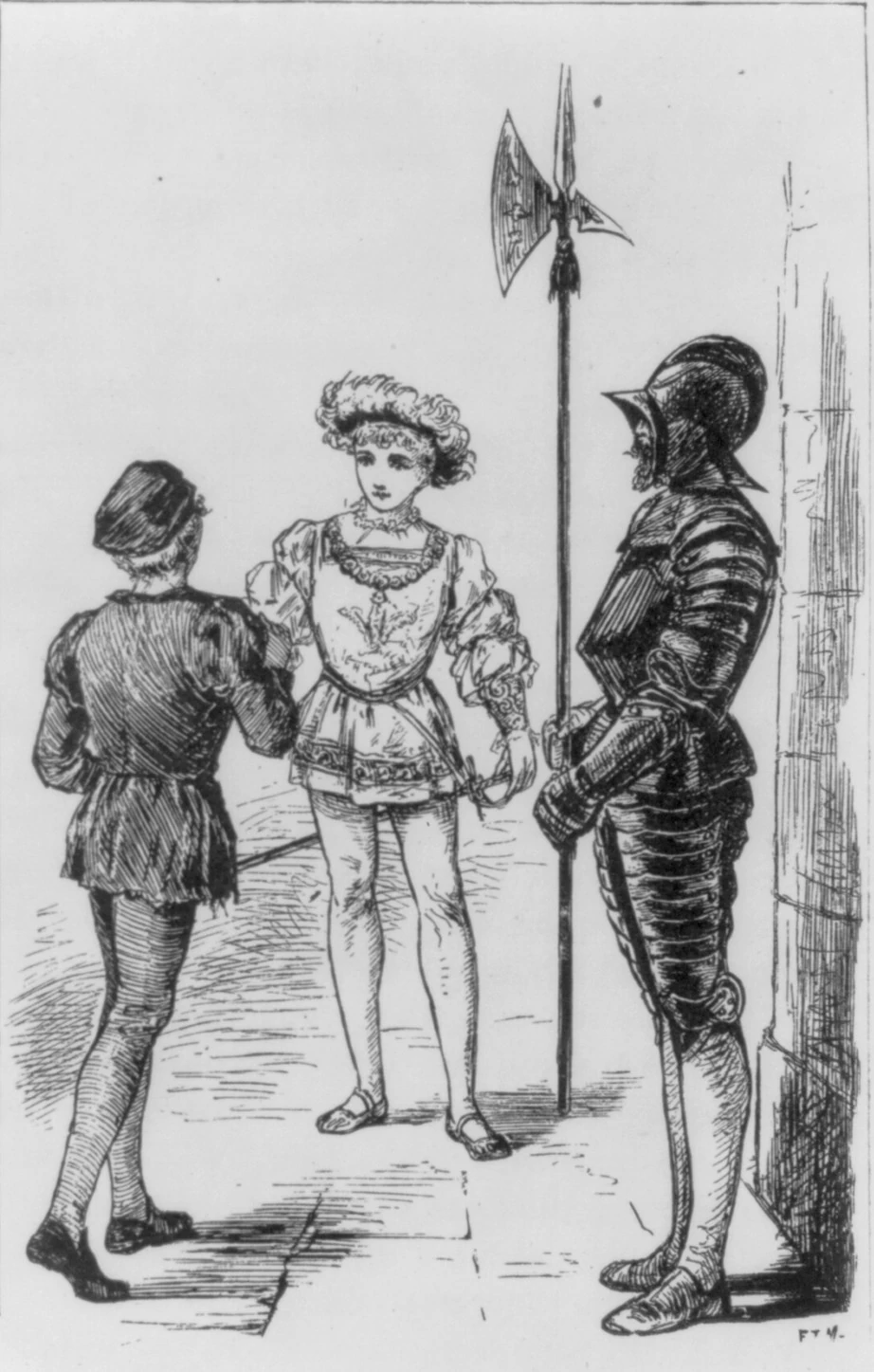
https://vignette.wikia.nocookie.net/onceuponatime8042/images/e/e0/InfoboxPrincePauper.jpg/revision/latest?cb=20130414052811
The illustrations from my edition, shamefully uncredited.

Neither of the titular characters indulge in a second’s worth of masquerade. They both stand by their true identities, and yet the boy from Offal Court with only his feet for transport and the sequestered son of the King of England apparently speak as identically as they look. No Englishman would have written this plot (or if he did, he would choose an “exotic” locale like Ruritania to set it in). Twain grounds his flight of fancy amidst real historical events, but I don’t even want to criticize him for this. The Tom Sawyer books were not exactly bastions of realism either, and The Prince and the Pauper departs altogether into the realms of the fairy tale – a style which Twain does a great job with.

As a fairy tale, it’s properly dark, suited for those children who’ve grown up with Grimm, Andersen and other storytellers of good cruelly set upon before it can triumph. Twain’s inspiration seems to have stemmed in part from a desire to draw attention to the excessive punishments of the Tudor era, and as such his prince finds himself lost amid beggars, thieves and vagrants. What’s odd is that, unlike in the Tom Sawyer series, Twain wears his heart on his sleeve here, appearing in genuine earnest upon his subject. He offers few bon mots, but some of his loveliest writing, as when the prince (now king) finds shelter in a barn and friendship with a calf.

The king was not only delighted to find that the creature was only a calf, but delighted to have the calf’s company; for he had been feeling so lonesome and friendless that the company and comradeship of even this humble animal was welcome. And he had been so buffeted, so rudely entreated by his own kind, that it was a real comfort to him to feel that he was at last in the soiciety of a fellow-creature that had at least a soft heart and a gentle spirit, whatever loftier attributes might be lacking. So he resolved to waive rank and make friends with the calf.

Pleasant thoughts came at once; life took on a cheerfuler seeming. He was free of the bonds of servitude and crime, free of the companionship of base and brutal outlaws; he was warm, he was sheltered; in a word, he was happy. The night wind was rising; it swept by in fitful gusts that made the old barn quake and rattle, then its forces died down at intervals, and went moaning and wailing around corners and projections–but it was all music to the king, now that he was snug and comfortable; let it blow and rage, let it batter and bang, let it moan and wail, he minded it not, he only enjoyed it. He merely snuggled the closer to his friend, in a luxury of warm contentment, and drifted blissfully out of consciousness into a deep and dreamless sleep that was full of serenity and peace. The distant dogs howled, the melancholy kine complained, and the winds went on raging, whilst furious sheets of rain drove along the roof; but the majesty of England slept on undisturbed, and the calf did the same, it being a simply creature and not easily troubled by storms or embarrassed by sleeping with a king
.

Twain uses an interesting tactic for the historical aspects included – where his interest in description flags, he simply excerpts from other chroniclers such as Leigh Hunt; educating his public while saving time. I guess that never caught on. It does disrupt the story a little bit, but it adds plenty of detail, especially of the resplendent pickle Tom Canty’s in.

Tom’s plotline is given less space, which is fitting since it’s considerably less dramatic. Unlike the Tom Sawyer books, whose plotting range from ramshackle to insane, The Prince and the Pauper is tightly woven. Tom Canty remains stationary, and the looming false coronation provides a natural venue for the finale, devoid of excessive coincidence.

https://christinawehner.files.wordpress.com/2015/09/527px-the_prince_and_the_pauper_12-134.jpg

Most of the secondary characters are only there to help or hinder the two boys, with the exception of Miles Hendon, a brave musketeer-styled nobleman who was wrongfully dispossessed and seeks restoration. Miles sees the good qualities in what he takes for a delusional beggar-boy, and so offers his protection. Although unconvinced by Edward’s assertions, Miles plays along, hoping to cure the boy of his madness and make him his ward. To this end, Miles becomes “a knight of the Kingdom of Dreams and Shadows” as the unlikely pair brave the mean streets of Tudor England together, and when separated, always find each other again.

The young prince does turn out to be every bit the equal of Miles for bravery. I had assumed going in that Edward would be the lesser of the two boys, stuck-up and ready for humbling, but he is so wholly principled and virtuous that Twain accidentally makes a case for monarchy through his example. Obviously, the plot couldn’t begin without the pair being rather dimwitted, but once the prince is cast into the streets things really get into gear. As Tom Canty’s abusive father and grandmother drag the prince “home” for a beating, the boy’s mother attempts to intervene and the prince’s mettle is revealed for the first time:

A sounding blow upon the prince’s shoulder from Canty’s broad palm sent him staggering into goodwife Canty’s arms, who clasped him to her breast, and sheltered him from a pelting rain of cuffs and slaps by interposing her own person.
The prince sprung away from Mrs. Canty, exclaiming:
“Thou shalt not suffer for me, madam. Let these swine do their will upon me alone.”
This speech infuriated the swine to such a degree that they set about their work without waste of time.

From this time forward, the prince shows loyalty to those as give him aid, compassion for the unjustly punished, contempt for the base and crooked, and obstinence in the face of disbelief. Trained in the art of the sword, he makes short work of boy thieves, and when captured by a gang of hoodlums, he refuses to improve his position by assisting in their plots to beg and steal.

Tom Canty is less sure of his moral compass. With less to lose, he finds himself going along with the masquerade he’s been forced into. He doesn’t like it but he adapts. Even here, the theme of justice asserts itself when Tom presides over a passing sheriff’s prisoners, bringing them into the palace to decide their fates. This culminates in some of the only comedic material in what is, for Twain, a thoroughly dramatic tale. Tom hears the accusation of witchcraft and storm-summoning levied against a mother and daughter:

“How wrought they, to bring the storm?”
“By pulling off their stockings, sire.”
This astonished Tom, and also fired his curiosity to fever heat. He said, eagerly:
“It is wonderful! Hath it always this dread effect?”
“Always, my liege–at least if the woman desire it, and utter the needful words, either in her mind or with her tongue.”
Tom turned to the woman, and said with impetuous zeal:
“Exert thy power–I would see a storm!”
There was a sudden paling of cheeks in the superstitious assemblage, and a general, though unexpressed, desire to get out of the place–all of which was lost upon Tom, who was dead to everything but the proposed cataclysm.

https://tobagostars.files.wordpress.com/2012/01/mark-twain.jpg

I could continue pulling quotes from this book all day, and I can well understand why Twain found this story more compelling than Huckleberry Finn. Throughout The Prince and the Pauper it seems as if he actually likes his characters – which I’m not sure can be said about any of his sequels to Tom Sawyer. Because it’s still written by Twain, there are occasional moments where his snideness gets the better of him, as when, after describing the engineering marvel of London Bridge and its remarkably self-sufficient community, he caps off with this statement: It was just the sort of population to be narrow and ignorant and self-conceited. However, that aspect of his writing is kept on a short leash here and not allowed to sprawl in every direction. The writing is wonderful, the plot is entertaining and though parts of it are very intense, that is compensated by the ever-present ideal of goodness. It is an undoubted children’s classic.

See Also: The Adventures of Tom Sawyer.

Parental Guide.

Violence: Beatings were a part and parcel of the era, and the prince sustains a few. Several of the vagabonds he falls in with have missing ears and there are descriptions of other medieval punishments, from whipping to getting boiled alive. However, these are mostly second-hand accounts. There are only two sequences which directly affect the prince, and both have a similar intensity to the famous murder in Tom Sawyer. One occurs when two women are burned at the stake, with their relatives forcibly restrained from throwing themselves on the pyre, and the prince looking away in horror. Twain focuses only on the reaction of the onlookers, not on what’s happening to the condemned women, but it’s still extremely dark.
The other notable sequence is an abrupt shift into full-fledged horror tropes, when the prince seeks shelter with a hermit. The hermit turns out to be a thoroughly deranged Catholic, who, upon discovering that he has King Henry’s son in his power, decides to truss him up while he sleeps. His methodical arrangements (and Twain’s choice language) make the whole scene that much more creepy.
The old man glided away, stooping, stealthily, catlike, and brought the low bench. He seated himself upon it, half his body in the dim and flickering light, and the other half in shadow; and so, with his craving eyes bent upon the slumbering boy, he kept his patient vigil there, heedless of the drift of time, and softly whetted his knife, and mumbled and chuckled; and in aspect and attitude he resembled nothing so much as a grizzly, monstrous spider, gloating over some hapless insect that lay bound and helpless in his web.

Values: Packed full, unusually for Twain. There’s a great deal of focus on noble characteristics, the quality of mercy and the value of education. This is also a precursor to A Connecticut Yankee in King Arthur’s Court, engaged at least in part around the cruel and unusual punishments of Tudor England, though here lacking the American alternative.

Role Models: Between Edward, Tom and Miles, practically every masculine virtue is exemplified, among them honor, honesty, strength, fidelity, principal, integrity, compassion, sacrifice and protectiveness. Twain dedicated the book to his own daughters, and it’s rather sweet to see this less jaundiced side of the man.

Educational Properties: This book furnishes a very detailed view of Tudor England and with so much focus on criminal law, social stratification, royal customs and historic London, it’s a great boon to homeschoolers, not even taking into account its highly advanced diction.

End of Guide.

And with this I have completed Mark Twain’s juvenile bibliography, ending on a high note indeed.

Hans Brinker, or The Silver Skates – Mary Mapes Dodge

A history of Holland, a tour guide of the same and a novel all rolled into one. It has its flaws, but perhaps they reflect more poorly on we the modern audience than on the book itself.

https://images-na.ssl-images-amazon.com/images/I/51ozLydwHrL._SX317_BO1,204,203,200_.jpgTitle: Hans Brinker, or The Silver Skates
Author: Mary Mapes Dodge (1831-1905)
Original Publication Date: 1865
Edition: Dover Publications, Inc (2003), 276 pages
Genre: Sentimental fiction.
Ages: 11-14
First Line: On a bright December morning long ago, two thinly clad children were kneeling upon the bank of a frozen canal in Holland.

The Brinkers are the poorest family in their Dutch village, ever since the terrible day when father Raff Brinker fell from a dike, struck his head and was brought home a lunatic – an event which coincided with the arrival of a mysterious watch and the disappearance of the family’s life savings, rendering the Brinkers destitute. It’s been ten years but young Hans Brinker is determined to earn money and hire the finest doctor in Holland to attempt a cure. All the other boys and girls in the village are more excited about an upcoming race whose prize is a pair of silver skates, but Hans and his sister Gretel possess only wooden skates and could never hope to compete. A group of local boys are about to set off on a skating tour of Holland and Hans sees them off with a message to the doctor to please hurry, for his father has taken a turn for the worse…

Hans Brinker is a Victorian novel, perhaps even quintessential of all those tropes and styles now associated with that age. You’ll find the worthy poor, prolonged suffering rewarded by a sentimental conclusion, the long arm of coincidence, high culture and lengthy digressions. This is a challenging book to read, and impossible for a child to enjoy unless they have been raised on the more accessible 19th Century classics. There are ample rewards to be had, especially for homeschooling families, but fair warning must be given.

https://upload.wikimedia.org/wikipedia/commons/4/40/Portrait_of_Mary_Mapes_Dodge.jpg
Mary Mapes Dodge.

Mary Mapes Dodge had never been to the Netherlands when she wrote Hans Brinker, but she knew many Dutch immigrants to America and did scrupulous research on Dutch landscape, culture and history, crafting a novel so accurate that it actually became a rare American novel of the time period to become popular overseas, while at home it outsold all but Charles Dickens himself. Hans Brinker became an undisputed children’s classic, and Dodge contributed to children’s literature in another way by becoming the editor of St. Nicholas magazine. She took this job very seriously and attracted great writers to the magazine, serializing Burnett’s Little Lord Fauntleroy, Alcott’s Eight Cousins, Kipling’s Jungle Book and Twain’s Tom Sawyer Abroad.

Dodge’s importance to the field should not be overlooked; however, her one great novel was an odd mix of genres. The dramatic tale of the Brinker family had to share time with the sights and sounds of Holland, and since Hans and his family were far too poor to be traveling anywhere, Dodge had to devise a way to get the story out of the small town of Broek and into the great cities of Amsterdam and Haarlem. Her solution was to cut the story of Hans in half and give the middle portion of the book over to a skating tour, even adding the English boy Benjamin Dobbs to ensure that customs and monuments would receive naturalistic explanations within the text.

The skating portion is somewhat hard going for the modern reader, but the book-ending plot is designed to captivate the audience and still succeeds. The Brinkers live in dire poverty and although they are symbols of the virtuous poor, Dodge is willing to dive surprisingly deep into their inner lives. They feel real and developed, down to the smallest details like the slight religious schism between Dame Brinker and her very Protestant children, who are shocked when she considers praying to Saint Nicholas. The Dutch are not demonstrative in their affections, and thus the difference between “thee” and “thine” is of great importance to them. His mother had said “thee” to him, and that was quite enough to make even a dark day sunny. Gretel is burdened by tremendous guilt because she was only an infant when her father went crazy; having never known the real man, she is incapable of loving him the way her mother and Hans do. Even Dame Brinker is depicted as a real woman who had a life before her children were born, rather than a static mother figure. She remembers her lost husband with fondness but has carried a heavy burden which Hans is only just old enough to help with:

“When you and Gretel had the fever last winter, and our bread was nearly gone, and I could earn nothing, for fear you would die while my face was turned, oh! I tried then! I smoothed [Raff’s] hair and whispered to him soft as a kitten, about the money–where is was, who had it? Alack! He would pick at my sleeve and whisper gibberish till my blood ran cold. At last, while Gretel lay whiter than snow and you were raving on the bed, I screamed to him–it seemed as if he must hear me–‘Raff, where is our money? Do you know aught of the money, Raff? The money in the pouch and the stocking, in the big chest?’ But I might as well have talked to a stone. I might as–“
The mother’s voice sounded so strange, and her eye was so bright, that Hans, with a new anxiety, laid his hand upon her shoulder.
“Come, Mother,” he said, “let us try to forget this money. I am big and strong. Gretel, too, is very quick and willing. Soon all will be prosperous with us again.”

https://i.pinimg.com/originals/10/a4/23/10a4230fb00a1d96b1af6439e8dd5a22.jpg
From the picture book adaptation by Bruce Coville, illustrated by Laurel Long.

The family is very genuine, and this creates immediate interest in their plight. Dodge also weaves together several compelling questions around them. Will they find the money – and where on earth was it? Can Raff Brinker by cured? What’s up with the pocket watch? Who will win the race for the skates? With these looming mysteries waiting in the wings, Dodge goes in for a cliffhanger: It was a scream–a very faint scream! She then drops the plot entirely for 30 pages, at which point the Brinkers are revisited just long enough to resolve the scream incident and then are abandoned for a further 90 pages while Dodge shifts her focus to happy children on holiday.

The biggest problem with the resultant skating tour is that it is comprised of boys who are almost entirely removed from the main plot – only the leader, Peter van Holp, has any meaningful interaction with Hans, and that only happens after the party sets out. The tour also suffers from having one too many boys in tow, leaving me even at the end struggling to differentiate between Lambert and Ludwig. However, these problems being set aside, there’s actually a lot to enjoy about this portion of the novel, especially if you’re a history buff.

The 120 pages of the tour are a schoolbook tucked inside a novel. As such, it’s perfect for homeschoolers, or for anyone who wants to study Dutch history in a broader European context. Hans Brinker is a very cultured book, packed with references to explore. Dodge expects young readers to know who Handel was and to care about his visit to Haarlem, while her reference to Charles the First anticipates that children will either know or seek out further info on their own, as it brings up more questions than answers: A fresco features a number of family portraits, among them a group of royal children who in time were orphaned by a certain ax, which figures very frequently in European history. These children were painted many times by the Dutch artist Van Dyck, who was court painter to their father, Charles the First, of England. Beautiful children they were. What a deal of trouble the English nation would have been spared had they been as perfect in heart and soul as they were in form!

https://www.rct.uk/sites/default/files/styles/rctr-scale-1300-500/public/collection-online/5/0/245397-1537434105.jpg?itok=hByWl2Gp
The Five Children of Charles I, 1637 painting by Anthony van Dyck.

I read Hans Brinker as a kid, and since I never bothered to look up context for the books I read, I found it incredibly tedious. One must be willing to engage with the text or it turns into so much white noise, while the frustrated reader waits for something to happen. There are some scattered dramatic incidents along the tour, including an attempted robbery, and a surprising amount of humour (I was astonished to find a precursor to Monty Python’s Cheese Shop Sketch, in which Peter orders various foodstuffs at an inn only to be continuously told they’ve run out), but the pace is leisurely. The main purpose of this book is to transmit culture, and so it is atmospheric, descriptive and dense with Dutch inventors, physicians, painters and war heroes. It’s worth noting that English Ben squabbles with his Dutch cousin over which of their homelands is superior, yet their shared patriotism actually seems to knit them closer together rather than drive them apart.

Lambert: “I saw much to admire in England, and I hope I shall be sent back with you to study at Oxford, but take everything together, I like Holland best.”
“Of course you do,” said Ben in a tone of hearty approval. ” You wouldn’t be a good Hollander if you didn’t. Nothing like loving one’s country.”

https://regenerationandrepentance.files.wordpress.com/2014/07/dike.jpg
Engraving of Dutch boy, sadly couldn’t find artist credit.

The most famous part of Hans Brinker is actually far removed from both the A and B plots (or even the C plot surrounding the race). It is the famous story of the Dutch boy who stuck his finger in the hole in the dike and saved his town. This incident is a folktale facsimile which is apparently based on nothing, but Dodge makes it feel so credible that she convinced whole generations this was an old story – despite appearing in the text only as an English school lesson. It took on a life of its own, and Dutch Genealogy did an interesting article on the topic.

Of course, it’s just one more in a sea of digressions in this sprawling, thoughtful novel. Hans Brinker became an American children’s classic well before Tom Sawyer had appeared and a year before Little Women was published in book form, yet it has lost out to them both and is today rather difficult to recommend. The lack of streamlining which adds to the charming content of the book is now seen as a hindrance. While some aspects of the writing have dated very badly (most notably the climactic race sequence, which reads like closed-captioning in places) even at its best Hans Brinker feels like a novel whose time has passed. It makes me sad, but I’m not the one to judge, given that everything which Hans Brinker offers of interest, pathos and entertainment completely passed me by as a child. May other families have more luck.

See Also: The Adventures of Tom Sawyer, which also contains challenging prose but is far more modern in its commitment to entertainment rather than education.

Around the World in Eighty Days, another Victorian tour guide with endless asides, yet  its digressions actually propel the ridiculous plot along rather than hinder it.

Parental Guide

Violence: The most memorable portion of the story concerns the lunatic father and the family’s wretched state of poverty, including an incident in which Raff seizes his wife and holds her so near the fire her dress begins to burn, laughing all the while.

Another incident occurs on the skating trip, wherein the boys count their money in an inn’s sitting room only to have one of the other patrons sneak into their room by night, armed with a knife. The boys overpower him and the episode is played as a schoolboy adventure.

Values: The book is laced with them, from family loyalty to noble suffering – for the Brinkers, begging is never an option. Education, care of the poor, Christian piety, humility and hard work all get their due.

This bit sums up much of the era’s outlook on what a boy should be, when Peter’s group realise they’ve lost their money purse and have to return home without food. A surly boy, Carl, says “Well, I see no better way than to go back hungry.”
“I see a better plan than that,” said the Captain.
“What is it?” cried all the boys.
“Why, to make the best of a bad business and go back pleasantly and like men,” said Peter, looking so gallant and handsome as he turned his frank face and clear blue eyes upon them that they caught his spirit.

Role Models: Hans, Gretel and a variety of other children are all virtuous, with character flaws given only to Carl and a couple of girls too proud to play with Gretel – all of whom are hinted to have a harder time in adulthood because of their lack of noble principles.

Educational Properties: Fairly well demonstrated already. Besides cultural and military history, there’s also plenty of descriptions of the region’s landscape and how human engineering and endeavor wrested the land away from the sea. Of course, all of its potential is useless if it fails to engage a modern audience, so make sure its a good fit for your family.

End of Guide.

Mary Mapes Dodge has a very short bibliography, of which only this novel is remembered. Her life’s work was St. Nicholas magazine, and between that and Hans Brinker, or The Silver Skates she did a great deal to improve what was still a very new market. My work here is done and I’m glad I took the time to revisit this.

Up Next: A lengthy and regrettable hiatus for personal reasons.

Misty of Chincoteague – Marguerite Henry

Remember when you could buy a pony for 100 dollars? Me neither.

Related imageTitle: Misty of Chincoteague (Misty #1)
Author: Marguerite Henry (1902-1997)
Illustrator: Wesley Dennis (1903-1966)
Original Publication Date: 1947
Edition: Aladdin Paperbacks (1991), 174 pages
Genre: Animal Stories. Adventure.
Ages: 5-11
First Line: A wild, ringing neigh shrilled up from the hold of the Spanish galleon.

Paul and Maureen Beebe are growing up on their grandparent’s horse farm in the isolated commuity of Chincoteague Island. Tired of bonding with colts that always get sold, the siblings set out to earn 100 dollars to spend at the annual Pony Penning Day, when the wild herds on Assateague Island are rounded up and the colts auctioned. Paul and Maureen have their hearts set on an elusive mare called the Phantom, who has avoided capture two years in a row. Faced with the challenges of earning enough money, capturing and gentling her, an added complication is thrown into the mix when Pony Penning Day arrives and reveals that this year the Phantom has a colt of her own…

The Newbery list is certainly hit-and-miss but (with a few notable exceptions like The Phantom Tollbooth and Little House on the Prairie) they have historically been quite good at recognising children’s classics when they appear on the American stage and that’s exactly what the 1948 Honor Book Misty of Chincoteague is. A horse story that can appeal to a broad age range, full of action and purpose as the protagonists dedicate themselves to a series of goals, yet devoid of the emotional punches that are found in other famous horse books like Black Beauty. The ending is memorable and wistful, but without tragedy, and the story as a whole is sunny, lacking any villains beyond circumstances that must be overcome. With Paul and Maureen sharing viewpoints, it even has equal appeal to boys as well as girls, something that has become unusual in the genre.

Wesley Dennis
Paul heading off to work.

Marguerite Henry instills her book with a strong sense of place right from the start, not only with the wild herds on Assateague but also the fishing community of Chincoteague, whose independence forms a parallel to the ponies, for these men and women are also making do with less, cut off from the larger nation yet thriving. There’s a real American ethos within the book and it captures a place in time with its own culture and cuisine (there’s a small pile of food descriptions with oysters, cornbread, clam fritters, dumplings and wild blackberry jam). Henry spent a great deal of time on Chincoteague, and even though she changed the larger “true story” drastically, I have no reason to distrust her eye for detail, which even renders the old-timers’ accent through Grandpa and Grandma Beebe:

Maureen: “…if you came here to Pony Ranch to buy a colt, would you choose one that was gentled or would you choose a wild one?”
Grandpa chuckled. “Can’t you jes’ see yer Grandma crow-hoppin’ along on a wild colt!”
“Thar’s yer answer,” laughed Grandma, as she cut golden squares of cornbread. “I’d take the mannerly colt.”

The real draw are the horses, of course, and Henry supplies two perfect equine characters in the Phantom and Misty. The Phantom has a map of the United States on her withers – a clear cut case of symbolism in a patriotic novel. “Lad,” [Grandpa] said, “the Phantom don’t wear that white map on her withers for nothing. It stands for Liberty, and ain’t no human being going to take her liberty away from her. … The Phantom ain’t a hoss. She ain’t even a lady. She’s just a piece of wind and sky.”

https://78.media.tumblr.com/a995b367ed67762425a704e360e5c91e/tumblr_oigdbozsVX1tedwcmo7_500.jpg
Paul’s first glimpse of the Phantom and Misty.

The only thing that really tames the Phantom is her “colt” (islanders in this book refer to every young horse as a colt, which I thought only referred to males), whom Paul names Misty. Misty drives none of the plot – she is the counterweight to the Phantom’s wildness, playful and domestic by nature, belonging to Chincoteague from the moment her hooves land on the shore. Slowly and dejectedly the wild ponies paraded through the main streets of Chincoteague. Only the Phantom’s colt seemed happy with her lot.

I would be remiss not to single out Wesley Dennis as a large part of Misty of Chncoteague‘s charm, as he always supplies the perfect image for every scene. The personalities of every character, horse and human, shine through and equal the best of Garth Williams’ work. Dennis draws comic characters without caricaturing and his equines emote without crossing the line and losing their realism. His dramatic talents also enhance the impact of what is a fairly short and low-stakes adventure tale, making the risks feel bigger and the triumphs sweeter. Nicely done.

https://thehaynesblog.files.wordpress.com/2015/08/il_fullxfull-291177439.jpg
Maureen surrounded by wild ponies – a brief line of text given epic treatment.

I have no complaints to make. Misty of Chincoteague was quite nearly as enjoyable today as it was when I was a child. It makes a lovely addition to the family bookshelf and would make a good read-aloud for high summer, maybe even for 4th of July week given how civic minded the story is. For more on the 1940s value system this is steeped in, check out the Parental Guide below.

Violence: The book opens with a Spanish shipwreck in which the original Assateague ponies, destined for the mines of Peru, successfully swim to shore. All hands perish in the storm, with Henry softening that blow by depicting the Captain as gold-hungry and indifferent to the ponies’ welfare. In the present day, there’s a high ratio of distressed ponies, due to their captivity on Pony Penning Day and the auction. None are injured or die.

Values: Hard work and responsibility as Paul and Maureen seize any type of summer employment they can find to earn money for the Phantom – and then do it all over again to pay for Misty. They have a whole series of chores round the Ranch and almost every time the grandparents are depicted they are in the middle of work, whether that be feeding chickens, preparing food, maintaining the horses or doing laundry.

Misty is very patriotic in tone – Pony Penning revenue goes toward maintaining the island’s fire department, school is “what me and Grandma pays taxes for,” every roundup man is well-known by his day job and the island is a well oiled machine with every man, woman and child doing their part to keep it running. The kids have a great deal of independence and are allowed their own goals and their own time to tell about them, but once Paul is picked for the roundup crew he is expected to obey his leader’s orders (and is promptly rewarded when following instructions leads him to the Phantom). There’s even material about fair play, as Paul and Maureen pull a wishbone to decide who gets to race the Phantom, and liberty, when Paul makes a hard decision about the Phantom’s future.

Role Models: Paul has a keen head for business but also a romantic streak, and he’s the one most attuned to the Phantom. Maureen is given less to do, which disappointed me growing up, and a friend of mine found several disparaging remarks (such as “Quit acting like a girl, Maureen!”) concerning as a parent. As such, I paid close attention to the topic and found the only source of the quotes to be Paul, which could easily be attributed to big brother posturing. Such occasional put-downs never stop him from treating her as an equal partner in their plan to buy and gentle the Phantom and the actual text never devalues Maureen’s (or Grandma Beebe’s) contributions. It’s certainly true that she doesn’t get any action scenes, but it’s also true that not everything has to be about girls. There are thousands of horse and pony books catering to the pre-teen girl demographic, books which I devoured indiscriminately and which rarely ever give equal time or weight to male characters – such that when I first read Misty I assumed that Maureen should naturally have a greater bond with the Phantom just because she was a girl. No one ever labels that a cause for concern, so a mix of recent and vintage horse books would balance out nicely.

https://upload.wikimedia.org/wikipedia/en/thumb/c/cf/Marguerite_Henry.jpg/220px-Marguerite_Henry.jpg
Marguerite Henry was owner of the real Misty.

Aside from that, not a lot to say. Every character is trustworthy and fair and probably most kids would wish they had grandparents like the Beebes. Oddly, Paul and Maureen’s parents are absent due to being in China (I guess Henry thought orphaning them would be too predictable).

Educational Properties: I would normally advise researching the true story behind the fiction, but in this case there is no historical sweep that would prove schoolworthy and Misty is meant for such young readers that there’s no point digging for disillusion here.

On the other hand, the wild ponies have been observed for decades, which offers quite a lot of information and data for a bit of natural science. Theories on how the ponies arrived on Assateague are also well worth researching. Those in nearby states might want to take a trip to the islands as well.

End of Guide.

I have copies of all three sequels to Misty, which I will be posting in the next few months. I can then embark on her larger bibliography, which consists mostly of other horse stories (one of which won the Newbery Medal), many of which were also illustrated by Wesley Dennis.

Up Next: A springtime poetry collection by Cicely Mary Barker.

Anthropomorphic Fantasy: Charlotte’s Web

I never read Charlotte’s Web growing up and have vague memories of disliking the animated movie, but having read it at last I must conclude that it is in fact worthy of all the praise it has received.

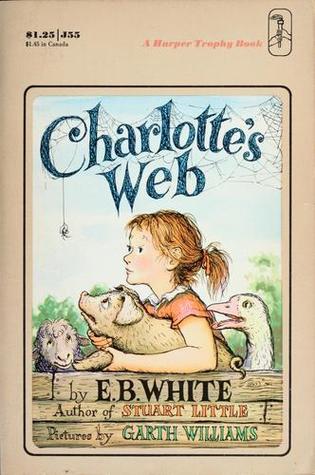
https://i.gr-assets.com/images/S/compressed.photo.goodreads.com/books/1506253069l/11124601._SY475_.jpgTitle: Charlotte’s Web
Author: E.B. White (1899-1985)
Illustrator: Garth Williams (1912-1996)
Original Publication Date: 1952
Edition: Harper Trophy (1973), 184 pages
Genre: Anthropomorphic fantasy.
Ages: 5-8
First Sentence: “Where’s Papa going with that ax?” said Fern to her mother as they were setting the table for breakfast.

Wilbur the pig is born a runt, saved from an untimely death by the intervention of eight-year-old Fern Arable, who raises him on a bottle until he’s big enough to sell. He’s bought by her uncle Mr. Zuckerman, which is awfully nice at first since Fern visits him almost every day, but it soon turns out Mr. Zuckerman intends Wilbur for future dinners. Only the clever spider Charlotte can save Wilbur from his fate.

Charlotte’s Web won a 1953 Newbery Honor; it’s often considered the most grievous oversight of the Newbery committee that it lost to Secret of the Andes. Based purely on the writing I have to suspect that it should have carried the Newbery Medal that year, but I withhold further judgement until I actually read Secret of the Andes. E.B. White here far outstrips what he was doing in Stuart Little, with distinct voices for every animal on the farm, from pig to spider to rat to geese. He achieves a truly perfect level of repetition, enough to feel sonorous without impeding the actual flow of the story. The structure is episodic enough for good bedtime material but the actual plot is very tight, with natural rises and falls in the drama, and a final bittersweet triumph. It introduces children to the nature of death but also to rebirth and the regenerative cycle of seasons and progeny. It is, in short, a perfect read-aloud. You could adapt whole chapters into picture books and almost every line would be capable of sustaining a new image. From Chapter IV, Loneliness:

The next day was rainy and dark. Rain fell on the roof of the barn and dripped steadily from the eaves. Rain fell in the barnyard and ran in crooked courses down into the lane where thistles and pigweed grew. Rain spattered against Mrs. Zuckerman’s kitchen windows and came gushing out of the downspouts. Rain fell on the backs of the sheep as they grazed in the meadow. When the sheep tired of standing in the rain, they walked slowly up the lane and into the fold.

https://i.pinimg.com/236x/80/05/58/80055881f97eb2c6875f8c7fce73a4c8--garth-williams-charlottes-web.jpg
A haughty lamb refuses to talk to Wilbur, from Garth Williams’ illustrations.

The novel is gorgeously agrarian in focus without being sentimental. White understood farming and, aside from a strange bias against lambs in this book, is more than willing to address mother nature fairly. Charlotte may be the sweetest spider in all of literature, but she’s a bloodsucking predator and that’s not glossed over. While no direct parallel is ever made between her nature and that of humans, it’s definitely something I picked up on. Charlotte anaesthetizes her victims so they don’t feel pain; farm animals (until the advent of factory farming) would generally lead very comfortable lives and then be quickly killed. Charlotte’s nature brings death to other beings, but she has the gifts of intellect, artistry and compassion, and chooses to exercise them, saying “perhaps I was trying to lift up my life a trifle.”

Charlotte also becomes a mother figure for Wilbur, protecting and comforting him while also instilling some education on subjects big and small. She has a lovely vocabulary and is often explaining words to Wilbur; unlike Lemony Snicket, this never comes across as patronizing on the part of the author.

Wilbur walked into his yard just at that moment.
“What are you thinking about, Charlotte?” he asked.
“I was just thinking,” said the spider, “that people are very gullible.”
“What does ‘gullible’ mean?”
“Easy to fool,” said Charlotte.
“That’s a mercy,” replied Wilbur, and he lay down in the shade of his fence and went fast asleep.

https://www.thefamouspeople.com/profiles/images/e-b-white-4.jpg
E.B. White.

White takes every opportunity that he can to layer language and give his young audience as much raw material as he can without interrupting his story. He morphs into a thesaurus: The rat had no morals, no conscience, no scruples, no consideration, no decency, no milk of rodent kindness, no compunctions, no higher feeling, no friendliness, no anything. He adds a touch of math: Mr. Arable gave Fern two quarters and two dimes. He gave Avery five dimes and four nickels. Yes, they did name their son Avery Arable. He even introduces a little Latin to the small fry, as Charlotte says: “It is my egg sac, my magnum opus.” And in what I thought was the funniest part of the whole book, White transforms a verbal tic (his geese repeat words when they talk) into a spelling joke, with a bonus obscure medical condition of history thrown in:

Charlotte: “Does anybody here know how to spell ‘terrific’?”
“I think,” said the gander, “it’s tee double ee double rr double rr double eye double ff double eye double see see see see see.”
“What kind of an acrobat do you think I am?” said Charlotte in disgust. “I would have to have St. Vitus’s Dance to weave a word like that into my web.”

The language jokes work much better than the occasional slapstick sequence, but then I’m not a fan of slapstick. Aside from this minor flaw, Charlotte’s Web is quite perfect, in both writing and story. After my recent revisit with Stuart Little, I am pleased to find this book such a rich, well-rounded experience that fixes every problem that first novel contained. The characters are more memorable, the world-building is comparatively sane and White really threads the needle with his brand new addition of an actual ending: Wilbur and Charlotte earn thematically rich conclusions to their tale, but the final message of Stuart Little – that life is not tidy – is revisited rather than directly contradicted. For all Templeton’s importance to the rescue of Wilbur, White is scrupulously honest with his small readers about the nature of some people in the world and the rat never repents or has any change of heart, remaining exactly what he was introduced as – a bastion of greed, malice and self-interest – to the end.

https://spaceintext.files.wordpress.com/2010/12/templetons-egg-charlottes-web-page-46-illustration-1952-gm-williams.jpg
Templeton under the disapproving eyes of the local animals and Fern.

It should be obvious that this gets a very high recommendation from me and I’m very happy to see that this is one vintage children’s book that remains on everyone’s radar, secure from either focused attack or general amnesia at present.

Parental Guide. Spoilers ahoy for anyone who doesn’t know the ending.

Violence: Charlotte dies in the end, and it’s plainly telegraphed for several chapters beforehand. Kids who haven’t had any prior exposure to the subject of death in fiction might be as shocked as Wilbur is, but I think most could figure out what’s inevitable. It is still very moving at any age though. No one was with her when she died.

On a more cheerful note, I was impressed with the subtle comeuppance for Templeton’s selfishness. He refuses to help save Charlotte’s children until Wilbur bribes him with the promise of first go at the pig trough… forever. Wilbur keeps his promise and we last see Templeton eating his way to an early grave. Forever won’t be lasting too long in this case and Sun Tzu would be proud of this pig.

Values: Charlotte saves Wilbur through cleverness, the power of words – and knowing who to bribe to get things done around the farm.

https://i0.wp.com/api.ning.com/files/kV4MbYiv7oSxHFJWLwFCPCf6i9ZYGHMph46ms1kDgjKFn-an-4w%2AkvBeJWpLJY-Gpnz%2At2SgWFfx1sbjkUcp1VLT%2A-mX81Hx/1082054003.jpeg
Wilbur at the fair, humble to the last.

White chooses to focus on the unsung animals of the farmyard – pigs, spiders and rats – while the cute and cuddly lambs are proud and ill-mannered. Humans are by and large gullible and capricious. Fern saves Wilbur yet loses interest in him by the end of the book while her brother Avery, indifferent to animal welfare theretofore, takes over her vacated role during Wilbur’s hour of triumph at the fair.

Role Models: Readers tend to focus on Charlotte, and I’ve already covered her finer attributes. I would like to focus on Wilbur here. He’s a passive figure for much of the novel, friendly and happy to be directed by other characters. He remains humble despite being a figure of great interest but he’s easy to overlook and seemingly incapable of ever repaying Charlotte for saving his life – until the end, where he does actually save her, by saving her egg sac. They’re leaving the fair and the grounds will be deserted through the winter, making it crucial for Wilbur to think on his feet, and he does find a way to return her children to the farm. Once spring arrives, most of the baby spiders depart but three remain and carry on Charlotte’s lineage, and the generations continue to live comfortably in Zuckerman’s barn, hearing stories of their great ancestress – all owing to the humble pig Wilbur.

Educational Properties: Aside from the lingual elements, this category is not really applicable or necessary. Read it aloud and talk it over. Save the homework for other books.

End of Guide.

One more of E.B. White’s books to go, due in September and earnestly anticipated.

Up Next: Back to Tom Sawyer’s world with Huckleberry Finn and my first impressions of this towering giant of American literature are going to be a whole lot less favorable. Stay tuned.

Coming-of-Age Stories: Anne of Avonlea

A lovely follow-up to a great classic that stays true to the characters and doesn’t manufacture drama to keep their lives interesting – preferring to develop new characters for that purpose. Don’t miss it.

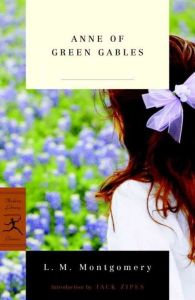
https://thewesterncornerofthecastle.home.blog/wp-content/uploads/2019/07/db407-anneofavonlea.jpgTitle: Anne of Avonlea (Anne Novels #2)
Author: L.M. Montgomery (1874-1942)
Original Publication Date: 1909
Edition: Bantam Books (1998), 276 pages
Genre: Coming-of-Age.
Ages: 10-16
First Line: A tall, slim girl, “half-past sixteen,” with serious gray eyes and hair which her friends called auburn, had sat down on the broad red sandstone doorstep of a Prince Edward Island farmhouse one ripe afternoon in August, firmly resolved to construe so many lines of Virgil.

The immediate success of Anne of Green Gables inspired L.M. Montgomery to the swift production of a sequel, published the following year, and taking up almost immediately where the previous installment ended. Anne Shirley, having given up on college to help Marilla, finds joy and purpose in her newly public role in Avonlea, both as the new schoolteacher and as head of the Avonlea Village Improvement Society. Two new orphans are brought to Green Gables, she befriends Avonlea’s most reclusive spinster and, still being Anne, gets into a new series of absurd predicaments as she matures and finds that her path not taken may yet meet up on the road ahead. Yet again, the pacing is episodic and I must warn you that readers holding out for the famed Anne/Gilbert romance will find L.M. Montgomery cruelly indifferent to their wishes, for that major subplot from volume one is almost wholly absent here.

Anne of Avonlea is a slow, comfortable book. Odd as it is to associate Anne of Green Gables with drama and uncertainty, in hindsight this was certainly the case. Anne as a newcomer was never wholly secure and questions, such as whether Marilla would let her stay or whether the Barrys would allow her and Diana to remain friends, gave the novel some stake. In the sequel Anne knows her place and has a teenager’s insufferable certainty of right and wrong. She takes up teaching with ease and she sails into whatever task is at hand full of fresh theories and ideals. This self-confidence becomes something of a plot point in itself, for in the first hundred pages Anne almost loses herself in her new calling as Avonlea’s saintly beautician.

https://i0.wp.com/digital.library.upenn.edu/women/garvin/poets/montgomery.gif
Lucy Maud Montgomery.

Luckily, Montgomery was not blind to her heroine’s foibles and set her a losing battle with human nature in her efforts to win over sullen student Anthony Pye with a simpering “kill him with kindness” approach. The resolution to their battle of wills could not be rendered today with our changed views on corporal punishment but the messy human dynamic is inspired, as Anne betrays her ideals in a fit of pique while the boy responds respectfully to a display of power – because that is what he understands and respects, not an artificial kindness. The next morning finds Anne heartily ashamed of herself, when she runs into Anthony, who to her bewilderment tips his hat and carries her books to school. Anthony walked on in silence to the school, but when Anne took her books she smiled down at him … not the stereotyped “kind” smile she had so persistently assumed for his benefit but a sudden outflashing of good comradeship. Anthony smiled … no, if the truth must be told, Anthony grinned back. A grin is not generally supposed to be a respectful thing; yet Anne suddenly felt that if she had not yet won Anthony’s liking, she had, somehow or other, won his respect.

Elsewhere, Marilla’s decision to adopt a local pair orphan leads to the saga of Davy and Dora, six year old twins who luckily don’t upstage Marilla – she is given plenty of opportunities to be her wonderfully pessimistic self, perhaps even more so than in the first volume owing to Anne having rendered her virtually shock-proof. With Anne despondent after a hoped-for guest fails to appear, Marilla’s response is perfectly in keeping: “You’ll probably have a good many more and worse disappointments than that before you get through life,” said Marilla, who honestly thought she was making a comforting speech. The twins provide fresh havoc for Green Gables as Marilla quickly discovers that a six year old boy is a wholly different creature from an eleven year old girl – Dora, a prim, quiet child, ends up being little heeded while Davy monopolizes the attention of the women, and they play favorites to an extent that actually made me feel bad for Dora.

“Marilla, it may be a dreadful thing to say, but honestly, I like Davy better than Dora, for all she’s so good.”
“I don’t know but that I do, myself,” confessed Marilla, “and it isn’t fair, for Dora isn’t a bit of trouble. There couldn’t be a better child and you’d hardly know she was in the house.”
“Dora is too good,” said Anne. “She’d behave just as well if there wasn’t a soul to tell her what to do. She was born already brought up, so she doesn’t need us; and I think,” concluded Anne, hitting on a very vital truth, “that we always love best the people who need us. Davy needs us badly.”

https://i0.wp.com/great-authors.albertarose.org/mark_twain/novels/the_adventures_of_tom_sawyer/images/01-019.jpg
Tom Sawyer stealing, could not discover the illustrator.

Later on, Davy does improve, though he always reads like a cross between Tom Sawyer and that blonde boy from The Family Circus. First he steals from the jam jar and then, after learning it’s wrong to steal jam, he claims that there will at least be plenty of jam in heaven by quoting the catechism. “Why should we love God? It says, ‘Because he makes preserves and redeems us.’ You either find him adorably funny or you don’t. I vacillated on the question of Davy but I have to admit his request for a bedtime story made me laugh:

“I don’t want a fairy story. They’re all right for girls, I s’pose, but I want something exciting … lots of killing and shooting in it, and a house on fire, and in’trusting things like that.
Fortunately for Anne, Marilla called out at this moment from her room.

https://i0.wp.com/www.victorianweb.org/art/illustration/brock/2.jpg
Miss Havisham and Estella, pen and ink illustration by H.M. Brock.

Otherwise, there are comedic interludes every bit as good as those found in the first volume, with the saga of Mr. Harrison’s cow particularly funny – and of course, no matter what calamities befall her, Anne always makes friends and mends fences. Even Avonlea’s answer to Miss Havisham, complete with a strange little girl always in tow, turns out to be sweet Miss Lavendar, an eccentric old dear who prefers to playact the life that passed her by than to groom little Charlotta the Fourth to avenge herself upon the male sex. After an episodic structure, Miss Lavendar’s story takes up much of the final third, and Montgomery delivers a much purer happy ending than she did in the previous volume.

There is an infectious warmth to her writing that is transmitted, however briefly, to the modern reader and renders the world brighter and more poetic for a time. Seen through Anne’s eyes, the mundane becomes wondrous. I remember the balm that Elizabeth Goudge brought me as a troubled 17 year old and the same traits are found in Montgomery’s world. Avonlea is too good to be true but it is a sustaining myth for the world that we have to live in, right at the age when children are beginning to realize what hardship that world entails. Anne has an instinctive sense for what is noble and good, even in the midst of the most frivolous debate:

“I think her parents gave her the only right and fitting name that could possibly be given her,” said Anne. “If they had been so blind as to name her Elizabeth or Nellie or Muriel she must have been called Lavendar just the same, I think. It’s so suggestive of sweetness and old-fashioned graces and ‘silk attire.’ Now, my name just smacks of bread and butter, patchwork and chores.”
“Oh, I don’t think so,” said Diana. “Anne seems to me real stately and like a queen. But I’d like Kerrenhappuch if it happened to be your name. I think people make their names nice or ugly just by what they are themselves. I can’t bear Josie or Gertie for names now but before I knew the Pye girls I thought them real pretty.”
“That’s a lovely idea, Diana,” said Anne enthusiastically. “Living so that you beautify your name, even if it wasn’t beautiful to begin with … making it stand in people’s thoughts for something so lovely and pleasant that they never think of it by itself. Thank you, Diana.”

See the source image
Job and his Daughters, 1825 engraving by English artist William Blake. The daughters are Jemima, Keziah and Kerrenhappuch.

Anne of Avonlea is a sweet and worthy sequel, growing its heroine and the landscape of Avonlea. It is lighter and more leisurely, yet the charms of the original remain and if you and your children loved Anne of Green Gables you needn’t fear disappointment here. Some children’s classics are followed by deeply inferior products but for her first sequel L.M. Montgomery had no need to manufacture scenarios, as Anne grows into her adopted community and approaches the bend in the road that will take her from girl to young woman with customary optimism. We can only follow after in similar spirit to volume three.

Parental Guide.

Violence: Anne whips and wins her most rebellious student. There’s a violent hailstorm with stones, the smallest of which was as big as a hen’s egg. A neighbour’s parrot dies during the storm and there’s a short scene of the man sitting sorrowfully by his lost companion.

Davy locks Dora in a neighbour’s tool shed for hours to give the women a scare and receives a pitifully slight punishment in response. Anne is actually far more upset that Davy lied about not knowing his sister’s whereabouts than she is that he locked her up to torment them all in the first place.

Values: Contentedness. None of that ‘Road Not Taken’ torment for Anne Shirley. She finds meaning in her relationships and her humble role as village schoolmistress, rather than constantly fretting over what could have been.

Anne and her friends fight staunchly to keep their town lovely, and while some efforts backfire, they do encourage a general move toward landscaping and keep the dread pharmaceutical advertisements off of their roads.

Disapproval is registered toward girls too obsessed with beaus – Anne and Diana fall out with a friend over her immodest and gloating behaviour. Anne, who is completely oblivious to love, is allowed to remain so, and people actually take care not to push the subject – even though most of Avonlea expects her to marry Gilbert Blythe when she does wise up. Mrs. Allan the minister’s wife stops short when about to prod Anne on the topic of Gilbert. In the delicate, whitebrowed face beside her, with its candid eyes and mobile features, there was still far more of the child than of the woman. Anne’s heart so far harbored only dreams of friendship and ambition, and Mrs. Allan did not wish to brush the bloom from her sweet unconsciousness. So she left her sentence for the future years to finish. Innocence respected, not trampled on from every angle.

Role Models: Anne remains a lovely example, of course, and as a completed young person there is less emphasis on her learning from others than before. Gilbert meanwhile decides to become a doctor: “The folks who lived before me have done so much for me that I want to show my gratitude by doing something for the folks who will live after me. It seems to me that is the only way a fellow can get square with his obligations to the race.”

Diana is a loyal friend. Anne is a red-hot Conservative, out of loyalty to Matthew’s memory and Diana’s father was a Liberal, for which reason she and Anne never discussed politics. In fact, all their differences in outlook and imagination do nothing to impede their loyalty to one another.

Educational Properties: Because Anne of Avonlea is a somewhat more prosaic work than the first, it would feels less like a killjoy for a parent to make use of it in exploring early 20th Century Canadian society of the science of storm systems. However, it still makes the most sense as sheer entertainment.

End of Guide.

I’ll be moving on to volume three, where Anne moves away to attend college, in a month or so. In the meantime…

Up Next: Getting started on the enormous bibliography of Lloyd Alexander with an early standalone novel.

Anthropomorphic Fantasy: Stuart Little

This classic holds the dubious distinction of being the first book I ever read that left me feeling cheated of a justly-deserved ending, and I suspect this milestone applies to a lot of other children as well. Yet in hindsight this might even be the thing I appreciate most about the book…

book stuart little coverTitle: Stuart Little
Author: E.B. White (1899-1985)
Illustrator: Garth Williams (1912-1996)
Original Publication Date: 1945
Edition: Scholastic Inc. (1987), 131 pages
Genre: Anthropomorphic fantasy.
Ages: 5-8
First Sentence: When Mrs. Frederick C. Little’s second son arrived, everybody noticed that he was not much bigger than a mouse.

Stuart Little is a mouse born into a human family, an unexpected event that the Littles (and the world) accept with enviable equanimity. Small as he is, any number of misadventures can befall Stuart around the house, but he, his parents and older brother George muddle through, until the arrival of the bird Margalo – a sweet-tempered creature that Stuart quickly falls for. Snowbell, the family cat, is not so pleased, and puts out a hit on the bird, courtesy of a femme fatale feline known only as the Angora (if you haven’t read this book, please be aware I am dramatizing a little here). Margalo gets wind of the plot and flees without saying goodbye to the Littles. Stuart, distraught, decides to head out after her.

book stuart faucet garth williams
Illustration by Garth Williams.

Stuart Little is like two books in one. The first half, consisting of Stuart’s home life, is as perfect a children’s tale as you’re likely to find, effortlessly appealing to the imaginations of those still young enough to be preoccupied with truly important matters – such as what it would be like to be about two inches tall and have to make your way across the house. The second half contains almost nothing which would appeal to the same child at the same age. Instead, Stuart leaves home without a goodbye, takes a job pontificating to a bunch of schoolchildren, gets a date with a human girl who’s just his size, makes a complete mess out of it and gets back on the road, still looking for his bird and without the slightest proof that he’ll ever find her. I find that the only way this complete collapse of momentum and humour makes any sense (and I have no proof of this theory) is if E.B. White took a break and, when he came back, decided to send-up The Great American Novel that a hundred Thomas Wolfe wannabes were busy flooding the market with. This is the only way that Stuart Little’s prosey travelogue of impractical politics and girl troubles can be explained to my satisfaction, anyway. Let me know your theory.

This might be a fatal flaw in a lesser novel, rendering it nothing but a historical curio, but Stuart Little has so much to offer in the first half that it remains a children’s classic to this day. What sets it apart from other mouse tales is White’s wonderful style, which is balanced perfectly between the simplicity that would allow a child to handle it on his own and a verve that makes it a comfortable read-aloud for a parent. White’s manner is warm, wry and elegant, even when the hero is in imminent danger of an undignified death:

One day when he was seven years old, Stuart was in the kitchen watching his mother make tapioca pudding. He was feeling hungry, and when Mrs. Little opened the door of the electric refrigerator to get something, Stuart slipped inside to see if he could find a piece of cheese. He supposed, of course, his mother had seen him, and when the door swung shut and he realized he was locked in, it surprised him greatly.
“Help!” he called. “It’s dark in here! It’s cold in this refrigerator. Help! Let me out! I’m getting colder by the minute.”
But his voice was not strong enough to penetrate the thick wall. In the darkness he stumbled and fell into a saucer of prunes. The juice was cold. Stuart shivered, and his teeth chattered together. It wasn’t until half an hour later that Mrs. Little again opened the door and found him standing on a butter plate, beating his arms together to try to keep warm, and blowing on his hands, and hopping up and down.

book stuart in fridge garth williams
Waiting for rescue.

Stuart is a dapper mouse, with a complete dignity of dress and manner that allows him to feel bigger than his ridiculous circumstances. His request for a “nip of brandy” at the close of the fridge episode cements him as yet another adult protagonist in a story for children. However, I do wonder if the weakness of the second half might not be due to an absence of the other Littles, a flustered chorus to his misadventures and a loving family – even if they never do have the sense to board up the mousehole in the pantry. An example of their interplay from when they mistakenly believe Stuart has gone down it:

George was in favor of ripping up the pantry floor. He ran and got his hammer, his screw driver, and an ice pick.
“I’ll have this old floor up in double-quick time,” he said, inserting his screw driver under the edge of the first board and giving a good vigorous pry.
“We will not rip up this floor till we have had a good search,” announced Mr. Little. “That’s final, George! You can put that hammer away where you got it.”
“Oh, all right,” said George. “I see that nobody in this house cares anything about Stuart but me.”
Mrs. Little began to cry. “My poor dear little son!” she said. “I know he’ll get wedged somewhere.”
“Just because you can’t travel comfortably in a mousehole doesn’t mean that it isn’t a perfectly suitable place for Stuart,” said Mr. Little. “Just don’t get yourself all worked up.”

book stuart little margalo garth williams
A pretty little bird.

All together, including Snowbell, the Littles are a treat. It’s a perfect tale – a little strange, but humanoid mice are a strange concept when you think of it – until Margalo arrives and Stuart falls in love with a bird. Maybe this entire plot is purely to facilitate a pun – a “bird” is a girl, therefore a girl is a bird. However, it starts to feel more and more made up as it goes along. Stuart is too small to carry actual coin, so how does he pay for gasoline? Why does he have to chop down a dandelion for greens, yet is able to travel around with a mouse-sized tin of ham? Also, even as a child, it made no sense that Stuart, going on foot, would be able to find Margalo. Supposing she comes back while he’s out looking for her? I figured the likeliest way they’d meet again is if Margalo heard he was missing, and went looking for him.

The whole second half has a melancholy air. Stuart wrecks his new toy automobile in a sad and improbable bit of slapstick. He’s the world’s most boring substitute teacher, talking about being “Chairman of the World,” claiming that “rats are underprivileged,” and coming up with impracticable laws against being mean (this is the longest chapter in the whole book and has no pertinence on anything else). Meanwhile, the sudden appearance of Thumbelina Miss Ames is just bizarre, and Stuart behaves terribly the whole time he’s with her. Stuart, if you’re lonely for companionship, maybe try locating New York’s mouse population, who probably left you as a changeling in a human hospital to start with (this was always my theory anyway).

https://media1.britannica.com/eb-media/58/99358-004-8DF1F962.jpg
Elwyn Brooks White in the office.

This isn’t to say that the second half of Stuart Little has nothing to offer. White’s writing is consistent, there’s a wealth of local colour regarding 1940s New York, Garth Williams was already a quintessential children’s book illustrator on his very first try, and the non-ending is strangely inspired – especially since E.B. White is a rare example of a children’s author who did not weaken and knock out an inferior sequel when strapped for cash. It just ends. It is a messy novel meant for an age group that collects “practice” books which emphasize rigorous, multi-volume predictability, a la The Boxcar Children series. It is highly recommendable and artistically excellent, even if it does have the inescapable sense of a failed experiment. Just make sure your son or daughter gets Charlotte’s Web first, because Stuart Little is not necessarily the best introduction to E.B. White. Indeed, despite revisiting this (okay, the first half) often enough while growing up, I never trusted White enough to read a second one.

Parental Guide. Stuart’s letter to Miss Ames raised my eyebrows as I read it for this project. Quite frankly, he’s every parents’ nightmare: …my purpose in writing this brief note is to suggest that we meet. I realize that your parents may object to the suddenness and directness of my proposal, as well as to my somewhat mouselike appearance, so I think probably it might be a good idea if you just didn’t mention the matter to them. What they don’t won’t hurt them. He does promise to leave this matter to her own good judgement, and I suppose looked at from the Ames’ point of view the whole “afternoon on the river” sequence is a G rated cautionary tale about going on blind dates with hirsute strangers from out-of-town but it still feels tremendously out of place. Of course, Thumbelina herself was also courted by several wildly inappropriate suitors before finding her fairy prince, so maybe that’s what White was actually referring to here.

book stuart and miss ames garth williams
Stuart and Miss Harriet Ames.

Violence: Stuart gets into several close shaves, among them getting swept into a garbage truck and nearly drowned in the ocean. Snowbell and the Angora both threaten to eat Margalo, and Stuart defends her with a bow and arrow one night in a very Arthurian way. He destroys his toy car, though it’s fixed up again good as new.

Values: Chief among the values displayed here is actually stoicism. When Stuart boasts or brags he gets into trouble, first with the windowshade and then Miss Ames. When he does something truly noble, such as winning the boat race or saving Margalo, he is far too modest to tell anyone and the feat passes by unsung.

The Littles invent all manner of aids to help Stuart get about and enjoy life, while the dentist tinkers with model boats and cars. Stuart enjoys being useful to others and always has proper attire for every possible occasion. E.B. White also briefly morphs into his Elements of Style self, and has Stuart-as-teacher say “a misspelled word is an abomination in the sight of everyone. I consider it a very fine thing to spell words correctly and I strongly urge every one of you to buy a Webster’s Collegiate Dictionary and consult it whenever you are in the slightest doubt.”

You could try to read Stuart Little as a metaphor for a handicapped or adopted child, but I would advise against this search for deeper meaning, as Stuart never really fits in, although his parents love him very much. Indeed, life with the Littles is portrayed as far more of a struggle than his subsequent independent voyage, of which he is a fairly successful navigator. He also leaves home without a word – so as far as families in classic children’s books go, this one is more on the dysfunctional side.

Role Models: Stuart actually regresses over the course of his story, from a gallant young mouse to a petulant one. I think White intended the Miss Ames date to demonstrate the problem of letting a perfect day dream interfere with having an imperfectly good day, but it’s the penultimate chapter and leaves Stuart on a very downcast and immature note.

https://www.nccil.org/img/assets/img/portraits/2323/Garth-Williams-Portrait_e0fc7258c45b5e0ad8ee7dfed878bd55.jpg
Garth Williams.

Everyone, even the devious cats, are fully likable characters and most of them strive to be helpful at some point or other.

Educational Properties: Plenty of thought exercises and physics lessons. Random questions like “why doesn’t the story end? What do you think happened next? If a toy car is driving, is it still a mile?” spring to mind.

End of Guide.

Expect my review of Charlotte’s Web in August and The Trumpet of the Swan in September. E.B. White is going to be the first author on the Western Corner of the Castle whose bibliography I will be completing and I have absolutely no idea what to expect after this one. What are your thoughts on Stuart Little?

Up Next: One of the 1945 Newbery Honor books, so we’re almost staying in the year.

Adventure Novels: The Adventures of Tom Sawyer

An unassailable classic for boys, splendidly written and full of incident. Truly better than I had dared hoped it would be (hey, the only other Twain novel I’ve ever read was Pudd’nhead Wilson).

book tom sawyerTitle: The Adventures of Tom Sawyer
Author: Mark Twain (1835-1910)
Original Publication Date: 1876
Edition: The Complete Adventures of Tom Sawyer, Borders Classics (2006), 190 of 337 pages
Genre: Adventure. Humour. Historical Fiction.
Ages: 11-14
First Sentence: “Tom!”

In the opening chapter of this classic of children’s literature you will find this sampler of outdated items and high-octane spelling bee words: spectacles, stove-lids, resurrected, “jimpson,” roundabout (article of clothing), ruination, kindlings, guile, revealments, diplomacy, transparent, forestalled, vexed, enterprises, diligence, unalloyed, pantaloons, ambuscade, adamantine. As awesome as this is to behold, it is a language for those generations of children who had very few books written solely for them, and who therefore learned to read by constant exposure to the King James Bible and memorization of such poets as Lord Byron and Longfellow. I suspect that my recommended age group skews higher than the historical average but this is by no means a novel to spring on a child without a firm foundation in the English language that Mark Twain wields with such expertise. I read a children’s adaptation when I was probably eight but it didn’t stick with me and I would recommend against such things – in general, because it’s ridiculous to read a simplified version of a story when simply waiting a year or two will make the original available, and more specifically, because the success of The Adventures of Tom Sawyer owes everything to Twain’s grandiloquent language: There comes a time in every rightly constructed boy’s life when he has a raging desire to go somewhere and dig for hidden treasure. This desire suddenly came upon Tom one day. He sallied out to find Joe Harper, but failed of success. Next he sought Ben Rogers; he had gone fishing. Presently he stumbled upon Huck Finn the Red-Handed. Huck would answer. Tom took him to a private place and opened the matter to him confidentially. Huck was willing. Huck was always willing to take a hand in any enterprise that offered entertainment and required no capital, for he had a troublesome superabundance of that sort of time which is not money. The descriptions are so wildly inflated as to bring a smile to the face. Take that language away and both comedy and drama suffer while the honestly ramshackle plot stands alone.

https://www.bing.com/th?id=OIP.iL4p20dAaSEu-1j6DpkJrwHaHt&pid=Api&rs=1&p=0
Mark Twain’s house in Hannibal.

Tom Sawyer is a young rascal growing up in St. Petersburg, Missouri (based on Mark Twain’s boyhood town of Hannibal) in the care of his long-suffering Aunt Polly. He spends most of his time in the pursuit of fun, whether that be choreographing Robin Hood scenes in the woods, stealing from the jam jar or skipping school. When he and Huckleberry Finn sneak off to the graveyard at midnight, hoping to see some devils or witchcraft, they instead witness an all-too-human murder, which is promptly pinned on the wrong man. Too scared to testify and with the real murderer on the loose, the boys bury their nagging consciences in elaborate games of make-believe. However, run-ins with the terrifying Injun Joe punctuate their summer fun until Tom, and later Huck, finally have the courage to come forward in time to save the innocent – and maybe find some hidden treasure in the process.

What I most enjoyed regarding The Adventures of Tom Sawyer was not Tom himself, but actually the wealth of historical detail provided, putting modern readers infinitely closer to the realities of growing up in that time than anything modern, however well researched, could accomplish. Shoeless in summer, the kids are off by themselves for most of the day, with their own parallel society. Tom and his friends swear oaths, court girls, hold trials (even if just a juvenile court that was trying a cat for murder, in the presence of her victim, a bird) and have a strict code of honour that is not imposed by adults; instead it is all based on superstitions, folk customs, Christian commandments and the romantic literature available at the time, all filtered through the powerful imaginations of children.

https://stephenbasdeodotorg.files.wordpress.com/2016/05/egan-robin-hood.jpg?w=809
‘Robin Hood and Little John’ by Pierce Egan the Younger was published in 1840 and was one of the earliest versions of Robin Hood for a strictly juvenile audience.

For fun Tom and his friends will dig for buried treasure or trade bits of eye catching rubbish back and forth. There is also a gradual crescendo to these games, as they grow in ambition, impact and dramatic peril – from running away to play pirates (and crashing their subsequent funeral) to searching haunted houses (and discovering the whereabouts of Injun Joe) to getting lost in a cave system (a truly impressive sequence in which Tom and his sweetheart Becky have to choose between staying near a water source or trying random passages while their candles burn down). As trifling as the plot may be at times, the cavalcade of mishaps, hijinks and peril keep things moving along while waiting for the next appearance of Injun Joe.

Mark Twain handles his villain perfectly, avoiding the pitfall of creating a bumbling idiot outsmarted by a couple of kids by the simple means of never having Injun Joe interact with the boys at all. Tom believes that Joe has it in for him, but Twain never confirms or denies this, and since Tom always hides when he catches sight of Joe, the sense of a truly menacing villain is maintained. Seen and heard only in glimpses, Injun Joe is a very convincing psychopath, not a cartoon bad guy.

The writing is very cinematic as well, so provided that you could handle the dialect this would indeed make a superb read-aloud: It was a graveyard of the old-fashioned Western kind. It was on a hill, about a mile and a half from the village. It had a crazy board fence around it, which leaned inward in places, and outward the rest of the time, but stood upright nowhere. Grass and weeds grew rank over the whole cemetary. All the old graves were sunken in, there was not a tombstone on the place; round-topped, worm-eaten boards staggered over the graves, leaning for support and finding none. “Sacred to the memory of” So-and-So had been painted on them once, but it could no longer have been read, on the most of them, now, even if there had been light.

https://thewesterncornerofthecastle.home.blog/wp-content/uploads/2019/06/854ee-adventuresoftomsawyer_003.jpg
Raymond Sheppard illustration of the famous murder in the graveyard.

The dialogue is the most challenging part of Tom Sawyer, and Twain has gotten into endless trouble for making it too realistic. His contemporaries found it coarse and more recent audiences find it offensive; neither group seems to appreciate how in keeping it is with Twain’s focus on the concrete details of a childhood in the 1840s. The dialogue often slows the pace, with full pages of back-and-forth before the point of a conversation can even be arrived at, or the full transcript of every word and sound a boy pretending to be a steamboat under full crew would make. It’s a verbal verisimilitude that I sometimes found tedious but it is integral to Twain’s artistic vision.

If it is your goal to raise a generation which can read and engage with the western canon, The Adventures of Tom Sawyer is an excellent bridge in that process. The writing is high caliber, Tom is a memorable and endearing protagonist (especially for boys), and there is an abundance of humour and tension in his story. I’ve said little about Huckleberry Finn in this review, because he’s often in the background of Tom’s escapades and, while he does have his chance to engage in heroics, he is less than pleased to share in Tom’s happy ending – perhaps setting the stage for a sequel…

Onwards to the thorny tangle that is a Parental Guide for Mark Twain.

Violence: Corporal punishment is routine at home and school, dead animals are used as toys and Tom thrashes other boys with some regularity. The murder involves a trio of grave robbers and, with the head of the operation being a doctor, body snatching is rather strongly implied. Injun Joe threatens the doctor, gets punched in the face, Joe’s partner Muff Potter steps into the fray and Joe stands back awaiting an opening. It is related, like all incidents herein, with a certain dramatic flair: Injun Joe sprang to his feet, his eyes flaming with passion, snatched up Potter’s knife, and went creeping, catlike and stooping, round and round about the combatants, seeking an opportunity. All at once the doctor flung himself free, seized the heavy head-board of Williams’ grave and felled Potter to the earth with it–and in the same instant the half-breed saw his chance and drove the knife to the hilt in the young man’s breast. He reeled and fell partly upon Potter, flooding him with his blood, and in the same moment the clouds blotted out the dreadful spectacle and the frightened boys went speeding away in the dark.

After framing Potter (implied to be a close friend), Joe spends the rest of the novel skulking around before spouting off a remarkably gruesome bit of dialogue as he plots revenge on the widow of a man who once had him horsewhipped – supposedly merely for vagrancy, but I find myself skeptical of Joe’s story. Can’t imagine why. “Kill? Who said anything about killing? I would kill him if he was here; but not her. When you want to get revenge on a woman you don’t kill her–bosh! you go for her looks. You slit her nostrils–you notch her ears like a sow! … I’ll tie her to the bed. If she bleeds to death, is that my fault?” Injun Joe meets his end by getting trapped in a cave and starving before anyone realizes where he was, giving an abounding sense of relief and security to Tom and undoubtedly to legions of children reading and listening down through the decades.

https://i0.wp.com/cdn.history.com/sites/2/2015/05/list-8-things-mark-twain-1870-3353702.jpg
Mark Twain.

Values: Hard to tell, given Twain’s satirical voice. Superstitions don’t work, sermons are boring, medicines are always snake oil, detectives don’t solve crimes and so on. However, Tom is contrasted with other characters, notably his cousin Sid, a relentlessly well-behaved sneak, who avoids getting in trouble but equally avoids doing anything truly exceptional or brave. Tom and Huck only have their opportunities for heroics because they’re out in the night, being the inadvertent neighbourhood watch. Also, one of Tom’s unshakeable rules of the game – whether playing at pirates or robbers – is no harming women, putting him squarely at odds with the actual robber Injun Joe.

There’s also this bit, after Injun Joe is finally buried and Mr. Twain gets noticeably bored of writing for a child audience: This funeral stopped the further growth of one thing–the petition to the governor for Injun Joe’s pardon. The petition had been largely signed; many tearful and eloquent meetings had been held, and a committee of sappy women been appointed to go in deep mourning and wail around the Governor, and implore him to be a merciful ass and trample his duty under foot. Injun Joe was believed to have killed five citizens of the village, but what of that? If he had been Satan himself there would have been plenty of weaklings ready to scribble their name to a pardon-petition, and drip a tear on it from their permanently impaired and leaky waterworks.

Role Models: There’s no denying that Tom has admirable traits – he’s capable of great cleverness, generosity and even nobility – but he is by no means a paragon (I also don’t think it’s necessary for absolutely every book in a child’s library to model good behaviour). In some ways, Tom Sawyer’s independence and self-reliance, even when not terribly constructive, are his finest and most appealing traits. However, while I doubt most kids would notice, I certainly found Aunt Polly quite ill-used and I believe she’s absolutely right when she tells her nephew “Tom, you’ll look back, some day, when it’s too late, and wish you’d cared a little more for me when it would have cost you so little.”

Educational Properties: There’s a wealth of info on life in 19th Century America to be gleaned from Tom Sawyer, everything from temperance movements to body snatching, from river transportation to the operation of a small town. The memorable cave sequence would offer a natural opportunity for a geology lesson (or in certain parts of the world, a field trip). Since the novel is based on Twain’s boyhood, it could also open up Mark Twain’s life and place in American literature to some exploration.

I expect a fairly lively discussion of ethics could also result from a shared read of the book, given the wide variety of bad, questionable and criminal behaviour on display, as well as Tom’s earnest fear of divine reprisal for his sins and Injun Joe’s attempts to justify his own crimes under the guise of “revenge.”

On the subject of 1840s education, Tom and his peers perform recitations at school, from Patrick Henry to Byron’s ‘Destruction of Sennacherib’ to ‘Casabianca,’ while the littlest children stick to nursery rhymes. For Sunday school, memorizing Bible verses is rewarded (with a Bible) and in the woods the boys fall to a more willing reinactment of Robin Hood, though again with memorization of lines a key component.

End of Guide.

I enjoyed The Adventures of Tom Sawyer much more than I expected to at the start, and I suspect that it will prove a blueprint for many of the children’s books to come on this blog. I have copies of all three sequels, but I’m going to pace myself before I launch into them. What did you think of Tom Sawyer at whatever age you read it?

Up Next: One of the three slim novels penned by E.B. White.

Coming-of-Age Stories: Anne of Green Gables

This is a retooled rendition of the review I originally wrote for my other book blog, Pseudo-Intellectual Reviews, which I have currently discontinued to focus on this more pleasant project. I purchased a complete set of the Anne books on Ebay and intend to work through them in a timely manner. Seven books in twelve months should be feasible. I’m looking forward to it.

Anne of Green GablesTitle: Anne of Green Gables (Anne Novels #1)
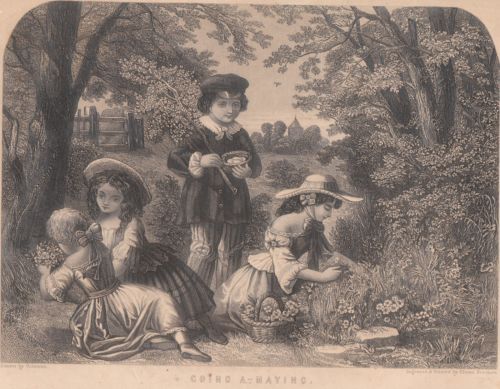
Author: L.M. Montgomery (1874-1942)
Original Publication Date: 1908
Edition: Modern Library Classics (2008), 287 pages
Genre: Coming-of-Age.
Ages: 9-16
First Sentence: Mrs. Rachel Lynde lived just where the Avonlea main road dipped down into a little hollow, fringed with alders and ladies’ eardrops and traversed by a brook that had its source away back in the woods of the old Cuthbert place; it was reputed to be an intricate, headlong brook in its earlier course through those woods, with dark secrets of pool and cascade; but by the time it reached Lynde’s Hollow it was a quiet, well-conducted little stream, for not even a brook could run past Mrs. Rachel Lynde’s door without due regard for decency and decorum; it probably was conscious that Mrs. Rachel was sitting at her window, keeping a sharp eye on everything that passed, from brooks and children up, and that if she noticed anything odd or out of place she would never rest until she had ferreted out the whys and wherefores thereof.

The Cuthberts of Green Gables, an unmarried brother and sister, send away for an orphan boy to help them on the farm and receive an eleven year old girl by mistake. Unable to bring themselves to send Anne Shirley back to the orphanage they set themselves the task of bringing her up properly. In return the lovable orphan warms their hearts and charms the whole town. However, the plot soon ceases and is replaced by life in all its vagaries as the chapters follow the incidents of Anne’s youth: from being afraid of a haunted wood to getting her best friend drunk (quite by accident) to discovering a passion for schooling and finally to death and grieving. And Anne grows up.

I never read Anne of Green Gables when I was little (my orphan of choice was Sara Crewe) but reading it as an adult its appeal is obvious. Imaginative children would find it easy to identify with Anne, as she has enough flaws to balance out as a relatable character: a girl whose imagination preserves her soul in dreadful circumstances and also gets her into ridiculous scrapes; who only gets out of said scrapes by her good character (apologising when she’s wrong and standing up for herself when maligned). She’s charming, funny, hard-working, honest and clever – a role model, in other words, but never a goody-two-shoes.

https://www.bing.com/th?id=OIP.bTGvpzcbEa0FPpGv586k7wHaFr&pid=Api&rs=1&p=0

She nearly drowns reinacting the Lady of Shalott, she appalls surrounding adults with her temper and she has a disastrous tendency to drift off at critical household moments leaving ruined dinners in her wake (oh, how ruefully I sympathized). Marilla waits patiently for each new disaster to unfold and after a while can even sense when Anne’s getting overdue for one. Anne is not an easy child to raise and that keeps the novel grounded.

A strong secondary appeal is L.M. Montgomery’s romantic depiction of Avonlea, a rural paradise in a corner of Prince Edward Island where everyone knows everybody else, the four seasons march in beautiful parade and the hard shells of the stuffiest individuals can be melted away by an open-hearted little girl. The novel is almost extravagantly European in its culture and it was an absolute dream for me to find the children of Avonlea welcoming spring by gathering mayflowers and singing as they march down the country lanes. Everyone is Christian (the arrival of a new minister is a great local event) and yet the children, especially Anne, have something pagan about their outdoor roving and wreathing:

 All the boys and some of the girls went to Mr. Bell’s spruce grove as usual, fully intending to stay only long enough to “pick a chew.” But spruce groves are seductive and yellow nuts of gum beguiling; they picked and loitered and strayed; and as usual the first thing that recalled them to a sense of the flight of time was Jimmy Glover shouting from the top of a patriarchal old spruce, “Master’s coming.”
 The girls, who were on the ground, started first and managed to reach the schoolhouse in time but without a second to spare. The boys, who had to wriggle hastily down from the trees, were later; and Anne, who had not been picking gum at all but was wandering happily in the far end of the grove, waist deep among the bracken, singing softly to herself, with a wreath of rice lilies on her hair as if she were some wild divinity of the shadowy places, was latest of all. Anne could run like a deer, however; run she did with the impish result that she overtook the boys at the door and was swept into the schoolhouse among them just as Mr. Phillips was in the act of hanging up his hat.


children maying

It is a beautifully written scene. The pastoral joys of Avonlea are pure and unspoiled but Montgomery tempers the considerable sweetness with strong doses of narrative sarcasm and realism – there are natural results to letting the children run wild, as they play ‘dare’ so vociferously that someone finally lands on a broken ankle (no surprise who). While the inevitability of death is depicted in the final chapters of the novel, most other misfortunes are comical or else relegated to Anne’s mostly unspoken past – this is above all a cheerful book, something which the current Anne with an E Netflix series has stridently corrected for. Early viewers were dismayed by the darkness of the end product but I don’t think the creators of the show had much choice – after all, a faithful adaptation would have meant an idyllic portrayal of a white Christian community being shown to kids, so a violent purge of the original content was really their only option.

Then there are the morals. Most of Anne’s choices and Marilla’s teachings are at odds with the advice given to droves of modern girls. Case in point: Anne’s own identity. Anne, like many girls her age, is terribly self-conscious. She hates her red hair and wishes she had raven tresses and a dramatic, elegant name like Cordelia to go along with them. However, Anne’s reinvention of herself is to learn to love being Anne of Green Gables, leaving Cordelia to the realm of make-believe. She does purchase hair dye from a passing peddler – hoping for black hair, it instead turns a hideous bronzy green that won’t wash out. Marilla has to hack it all off while chiding Anne over her vanity and the lesson is learned: “I never thought I was vain about my hair, of all things, but now I know I was, in spite of its being red, because it was so long and thick and curly.” Anne learns to appreciate her features in the future – it’s a genuinely good example of much-heralded “body positivity” for a culture that can now peddle its green hair dye openly.

Consider also the layers of meaning to Marilla and Matthew deciding to keep Anne. Anne does not ever attempt to be the farm boy they sent for and needed, because she isn’t a boy. Marilla doesn’t require any help around the house either, so the girl is given no outlet to “earn” her keep. On the other hand, the Cuthberts never officially adopt Anne – though they grow to love her, neither of them wants to become a parent at the outset. Marilla expects a certain standard of behaviour from Anne but that’s as far as her wants go. Anne is therefore established as superfluous to the Cuthbert’s well-ordered needs and yet they might be good for her and so she stays. They sacrifice for her sake.

And then comes the end of the novel. Spoilers ahead.

https://www.bing.com/th?id=OIP.yFnvaXSHVgA3J96XyM2kGwHaKT&pid=Api&rs=1&p=0Anne has won a coveted scholarship and is going away to college, “living the dream,” when Matthew tragically passes away. Marilla, whose eyesight is failing, cannot afford to maintain Green Gables and so Anne resolves to postpone higher education and become a local schoolteacher instead. “I’m just as ambitious as ever. Only, I’ve changed the object of my ambitions.” She chooses home and family over career, directly foreshadowing her future (depicted in the later sequels) as a married mother of six and dismaying some modern readers in the process. “Anne should never have grown up to become a conformist” says Jack Zipes in his introduction to the Modern Library edition, strongly implying she shouldn’t have grown up at all. What was she expected to do in this situation? Peck Marilla on the cheek as she dropped her off at a nursing home? “Bye, you’ll literally never see me again!” Would that have made her a greater heroine?

Zipes also quotes another children’s scholar, Perry Nodelman, who says that in the wholesome orphan stories of yore “childhood never really ends, the most childlike children never really grow up, and even terminally mature people can become childlike again. It is the secret desire of grownups to be children again that makes these novels so appealing to grown-ups, and it may be the secret desire of children to never grow up that makes these novels appealing to them.” That’s a lot of secret desires right there (are you sure you’re not projecting, Perry?). If children don’t want to grow up why do they consistently prefer their heroes to be older than themselves? You would think that there would be far more stories like Peter Pan if Nodelman’s theory was correct but in fact immortal children are vastly outnumbered by the other kind. And doesn’t becoming an orphan in fact destroy childhood in these stories, a la Sara Crewe in the attic or Harry Potter under the stairs? Why do the Pevensies get shut out of Narnia? Why does Travis shoot Old Yeller? For the same reason that Anne gives up her hard-won scholarship. Good children’s literature is about growing up, about surviving, because childhood is supposed to end. It has to. Anne of Green Gables is a particularly affectionate roadmap to that process, in all its sweetness and melancholy.

And so the Parental Guide.

https://upload.wikimedia.org/wikipedia/commons/thumb/0/00/Lucy_Maud_Montgomery.JPG/205px-Lucy_Maud_Montgomery.JPG
Lucy Maud Montgomery

Violence: Matthew dies of a heart attack at the close of the novel, and although it is lightly foreshadowed it may come as a bit of a shock considering how rosy the rest of the book is. Anne’s dismal past is handled very circumspectly and the dare game culminating in a broken ankle is as “violent” as the story gets.

Values: Aside from those I singled out earlier, Anne of Green Gables is a solidly Christian novel. Anne arrives at Green Gables and is first of all taught to pray and attend Sunday school. Marilla declares “she’s next door to a perfect heathen,” and that is a very good assessment. Although she is irreverent at times her questioning never leads her anywhere near atheism, and as she gains a sense of belonging in her community, she also sheds her early ignorance of Christianity, the symbol of her previous neglect. It’s very nicely done.

There’s a strong sense throughout the book of Canadian identity and local pride in Avonlea. Naturally there is no diversity to be seen in such a time and place (another thing Anne with an E has “fixed,” of course). Prince Edward Island is so thoroughly sequestered from the world that Marilla shudders even at the thought of acquiring a British orphan: “Give me a native born at least. There’ll be a risk, no matter who we get. But I’ll feel easier in my mind and sleep sounder at nights if we get a born Canadian.”

Role Models: Montgomery gives Anne a number of excellent role models as she matures, each with their own gifts. Marilla is my favorite, with her sense of justice and well-bestowed sarcasm. There is also the schoolteacher Miss Stacy, who holds nature studies and inspires her students. Meanwhile, Mrs. Allen the minister’s wife shows Anne that religion can be a “cheerful thing” and even Mrs. Lynde the town gossip has plentiful good advice and a kindly, if somewhat officious heart. Anne is, of course, a wonderful example for all the reasons earlier mentioned.

The men are somewhat more flawed characters. Matthew shuns difficult decision-making and has no financial acumen but he has a good heart and won’t back down from his principles. Many of the most heartwarming moments in the novel stem from his quiet understanding of Anne. Gilbert Blythe starts out as an obnoxious classmate but he grows up to be quite the gentleman and scholar, and is the soul of chivalry when Anne needs it most. I look forward to reading of their future interactions.

Educational Properties: In all honesty, I drew a complete blank on this one. It could expand everything from the child’s vocabulary and reading material to his or her soul but to me, Anne of Green Gables is really a perfect “delight read.” It’s a book to read aloud or independently and to savour. Obviously, there is a great deal of social and historical detail one could mine from this book (and it has been annotated before), but it almost seems contrary to the spirit of the work to make too much of it.

End of Parental Guide.

Anne of Green Gables would make a lovely read-aloud to share with your children. It’s sweet, funny, wise and beautifully written. I enjoyed it thoroughly and am very keen on the sequels, though also a little nervous. How do they hold up? Also, while I’m maxed out on L.M. Montgomery for the upcoming year, which of her non-Anne books should I keep an eye out for in future?

Up Next: A boy’s boating adventure from the 1960s, courtesy of another respected Canadian writer, Farley Mowat.

https://i0.wp.com/ecx.images-amazon.com/images/I/51OhjS4JpTL._SY282_BO1%2C204%2C203%2C200_.jpg
I have plenty of reading ahead of me…