One for Sorrow – Mary Downing Hahn

This book begins with a run-on sentence. Prepare yourself for a rant, because there will be no prisoners taken, nor will I be using any spoiler warnings in this review…

https://pdpabst.files.wordpress.com/2017/07/one-for-sorrow-book.jpgTitle: One for Sorrow: A Ghost Story
Author: Mary Downing Hahn (1937-)
Original Publication Date: 2017
Edition: Scholastic Inc. (2018), 293 pages
Genre: Horror. Fantasy. Historical fiction.
Ages: 10?
First Sentence: Although I didn’t realize it, my troubles began when we moved to Portman Street, and I became a student in the Pearce Academy for Girls, the finest school in the town of Mount Pleasant, according to father.

It’s 1918 and the Spanish Flu is making the rounds of America. Shy Annie Browne is new in school and on her first day is immediately “befriended” by Elsie Schneider, a lying, controlling, destructive little psycho whom all the other girls despise. Annie is prevented from making any other friends until Elsie is absent from school, at which point Annie is finally brought into the popular circle – and takes part in their ceaseless bullying of Elsie. There’s no doubt that Elsie brings it on herself, but she’s grossly outnumbered and Annie feels bad about her part in it (not that it stops her). Eventually, Elsie gets the flu and dies, only to return as an angry ghost with a particular grudge against Rosie, the leader of the clique, and guilt-stricken Annie.

Okay, so the writing in this book is absolutely horrible, beginning with the most brutally short paragraphs this side of a Guardian article. Sentences are clipped, descriptive prose is fleeting and the vocabulary is limited and therefore numbingly repetitive. Is this the style of today? If so, it’s been streamlined of everything that could possibly make reading a “chore.”

Just as I finished my oatmeal, Jane knocked on the door.
When I ran to meet her, she gave me a big hug. “Oh, I’m so glad you’re well enough to come back to school, Annie. I’ve missed you so much.”
“I’ve missed you, too.”

https://d.gr-assets.com/books/1348400532l/200891.jpg
I’m just going to recommend better books in these spaces today.

The prose is continually stuck at the level of early chapter books – and not even challenging ones at that. You’ll find more detailed verbiage in American Girl, Chet Gecko and Beverly Cleary stories for younger readers and that’s a death blow for this entire book. The concept – a ghost story kicked off by the Spanish Influenza at the end of the First World War – has so much potential, but it can’t be harnessed because the setting is never given any focus or weight. Hahn is a veteran writer; she’s been doing this since the 1980s and once won the Scott O’Dell award for historical fiction, but there’s no evidence here for why that would have ever been the case. Aside from the games girls played, the books they read and some basic info on wakes and horse-drawn hearses, there’s just nothing here. Maryland in 1918 is a vague backdrop for the ghostly plot, nothing more.

As far as the plot goes, Elsie’s ghost doesn’t appear until over 100 pages in – before that, One for Sorrow is a story about bullying, which means it should be character driven. It isn’t. Aside from Elsie and Rosie, almost none of the characters merit any physical description or personality. The clique of mean girls are only distinguishable by their degrees of guilt, with the “nice” ones (Annie and Jane) feeling more guilt and the “mean” ones (Eunice and Lucy) feeling less, with Rosie somewhere in the middle. Never mind that this sets up the phony idea that guilt is somehow a virtue; it can lead to virtue but just as easily to self-destruction. As such, none of these girls have any positive traits whatsoever. They are nasty, ill-mannered liars without a complete spine between them. Rosie comes up with a plan (inspired by the true story of Hahn’s mother) to get free sweets by going to wakes and pretending to know the dead people there. “We won’t be doing anything wrong,” Rosie said. “We’ll tell people how sorry we are, we’ll talk about how nice the dead person was, we’ll make the mourners feel better. That’s not taking advantage, that’s not lying.” And Annie more than once compares this horrid specimen to Anne Shirley, who never told a lie. But since most kids won’t (or can’t?) read Anne of Green Gables, I guess they’ll never know that.

As for Annie, she’s a complete drip with no spirit at all. One could be forgiven for assuming that she must improve at some point, being the protagonist and all, but you would be wrong. To the end she thinks (paraphrasing): “oh, why did I let Elsie make me do those terrible things?” She makes no effort to defeat Elsie’s ghost. She goes along with every stupid and cruel idea Rosie ever has, even one which nearly gets her killed, and then feels bad afterwards. She does not grow or alter through the book and never comes clean. When she stumbles upon a retired ghost hunter called Mrs. Jameson, it is by accident, and she simply follows all of Mrs. Jameson’s instructions thereafter with no agency of her own.

https://i0.wp.com/d.gr-assets.com/books/1293762966l/596878.jpg
The second book about Tiffany Aching. Excellent, complex and creepy.

So much for the characters. The plot begins with children being mean (usually by shoving and screaming insults at one another) and once Elsie’s ghost appears it’s just round two of the same spiel for more tedious pages of screaming and shoving. Ghost Elsie is exactly the same as living Elsie, only with more power. This should be unnerving but it isn’t. For instance, Elsie possesses Annie and makes her do terrible things, but Annie doesn’t black out (which would heighten the suspense by adding mystery) or have enough personality to make the behavioral change feel horrifying (a la Tiffany Aching in A Hat Full of Sky). The writing continues to be frenetic and flat, and Elsie explains from the start what she intends to do to Annie, so there’s no chance for the situation to ever feel dreadful or uncanny: Alone except for Elsie, I found myself removing the flu mask from my bookbag and tucking it into Rosie’s. I didn’t want to do it, but I couldn’t stop. It was as if I were outside my own body, watching myself.

One for Sorrow is a ghost story that has no sense of the unearthly and no allowance for anything bigger than the individual. A Scooby-Doo hoax would feel more authentic to this novel’s worldview because while this is set in 1918, all of the characters are from 2017.

https://images.gr-assets.com/books/1361116236l/500660.jpg
By These Ten Bones, featuring werewolves in medieval Scotland. Good and evil, religious belief, horror and the highlands. Worth checking out.

In 1918 a girl’s first thought about ghosts would involve the state of the soul, salvation and damnation. Annie would pray to God for aid and she would go to church – if for no other reason than the hope that Elsie couldn’t follow her there. But Annie doesn’t even think of any of those things, because Annie is from 2017. That’s why she mishears the phrase “at peace with the Lord” as “at the beach with the Lord” – because she’s never heard it before. She’s shocked at the notion of corporeal punishment because her parents and teachers also belong in 2017 (Miss Harrison, faced with a sea of screaming pupils disgracing her school’s orderly reputation, disciplines them by ending recess early). Muddying the waters are a couple of references to hell and the devil, which means Hahn wants us to think of these characters as Christian, even though they obviously aren’t.

So let’s try to assume that Annie and her entire social circle are the very height of the 1918 progressive movement. But just as there’s no spiritual element to her problem, there’s no historical one either – because guess what? Annie loves to read, so it really should occur to her that Elsie can’t be the world’s first ghost. It has to have happened before and there should be records, yet she does no research on spiritualists and ghost-hunters, and no one reading this book would gain from it any sense of the antiquity of hauntings. When Annie’s bad behavior gets out of hand, she’s sent to a convalescent home and it just so happens there’s a retired ghost-hunter on the premises. Mrs. Jameson drops hints that she’s an expert on the matter, but even at this stage there’s nothing bigger than the ghosts – in fact, Mrs. Jameson can’t “help” Elsie until she dies and becomes one herself. In other words, when Elsie causes Mrs. Jameson to fall and break a hip, it’s actually a good thing.

Lastly, although Elsie is clearly psychotic – revelling in every drop of pain she causes and before her death probably headed to a future abducting and murdering children – it turns out that she can only be defeated by empathy.
https://vignette3.wikia.nocookie.net/bartimaeus/images/1/1d/Trilogy.jpg/revision/latest/scale-to-width-down/200?cb=20140528201030
Annie is basically a villain protagonist, but if that’s what you’re looking for, this is still the gold standard.

It’s not even genuine empathy. You know, the sort that would make this story less about the ghost and more about the life lessons the heroine learns about caring for others and standing up to bullies and whatnot. That would be corny but fairly typical. Instead, Mrs. Jameson flat-out instructs Annie to lie: “Be kind to her, earn her trust.” Annie loathes Elsie but pretends otherwise – and it’s the right thing to do. Elsie kills Mrs. Jameson – and it’s the right thing to do. Early on in the book, Elsie screams at Annie: “I’d give anything to have a mother like yours. It’s not fair that you have so much and I have nothing!” Herein lies the key to her defeat. She’s just an underprivileged child who wants her mommy and the whole book was a 200 page temper tantrum (culminating in the murder of a little old lady). It turns out that sympathizing with the motives of evil is what defeats it.

To be extra clear, Elsie does not show any mercy at the end of this book. She becomes “reachable” because she turns maudlin and self-pitying for a couple of minutes. She is not redeemed, but she gets everything she wanted, including a free ticket to the afterlife to reunite with her dead mother. She’s like Hannah in Thirteen Reasons Why, only she’s a literal ghost instead of tapes. She dies and is avenged. All of the adults feel sorry for her, all of the girls who wouldn’t be her friends are haunted by their actions and she never has to repent or live with any of her own choices.

The point of the Castle Project has always been to read as widely as possible in the field of children’s literature. I cannot proclaim the superiority of vintage options if I don’t read the modern alternatives. Well, here you go. On technical merits, One for Sorrow is abysmal. It is relentlessly unpleasant, philosophically poisonous and the bigger picture behind this book implies that speculative fiction in particular is on a steep decline. If there’s nothing bigger than our finite experience, if good and evil are relative based on the individual and if our entire history means nothing, we will be seeing more and more fantasies robbed of power and built on sand.

There was only one thing I appreciated about One for Sorrow and that was Hahn’s inclusion of many book titles which girls of the time would have read. After a while I began keeping a list, hoping that Hahn was sending some kind of message to her readers (she was born in the 1930s, so she has to be aware of what’s happened):

L.M. Montgomery – Anne of Green Gables; Anne’s House of Dreams
Johann D. Wyss – The Swiss Family Robinson
Wilkie Collins – The Moonstone; The Woman in White
Charles Dickens – The Pickwick Papers
Ouida – A Dog of Flanders
Zane Grey – Riders of the Purple Sage
Louisa May Alcott – Little Women
Booth Tarkington – Penrod; Seventeen; The Magnificent Ambersons
Henry Wadsworth Longfellow – ‘The Wreck of the Hesperus’
Victor Appleton – Tom Swift
Sir Walter Scott
Edgar Allan Poe
Nathaniel Hawthorne

Feast your eyes and think of what they call progress.

https://i0.wp.com/photo.goodreads.com/books/1177273274l/690609.jpg
Bonus points for including a cryptid – because people of the time believed in them, even if Rinaldi doesn’t.

See Also: The Coffin Quilt by Ann Rinaldi. Set during the Hatfield-McCoy feud, this books contains plenty of southern gothic atmosphere, morbid and murderous occurrences, actual historical detail and period-accurate belief systems.

Parental Guide, just for fun.

Violence: You’ve got your dead people, your rotting ghost, and your screaming, shoving, fat-shaming and throwing things (these bullies don’t have very original material). Without atmosphere or subtlety, the disturbing horror content ranges from merely annoying to unpleasant. Spookiness can be fun. This was neither.

Values: Be nice! Lying makes people feel better, so it’s good! Empathize at all costs, even with psychos – because if you’re only nice enough, they’ll totally leave you alone!

There’s also a dropped plotline in which the girls hate Elsie for being German, which sets up a commentary on xenophobia that is never utilized because that’s not really why they hate her. It’s just an extra way to insult her.

Role Models: Everyone is horrible. Oh and Annie gets a concussion from sledding. Headfirst. At night. In a cemetery. Just thought I’d mention it.

Educational Properties: If you or yours have already suffered through it, by all means hold a discussion on morality and the Spanish flu to try and make it worth your time. Otherwise, no.

End of Guide.

Mary Downing Hahn has written many ghost stories, and I can easily believe the ones from the 80s were better just because the trends in children’s publishing were healthier at the time. Judging an author from a single book is never entirely fair, but I have to admit that I’m sorely tempted to do so in this case.

Up Next: The vintage equivalent. An obscure Canadian choice from 1968 featuring another angry ghost girl. Let’s see how it stacks up, just as a nice note to go out on.

A Stranger Came Ashore – Mollie Hunter

The cover makes this look fairly campy, but the actual story hearkens to North Sea folktales. Sign me up.

mollie hunter a stranger came ashoreTitle: A Stranger Came Ashore
Author: Mollie Hunter (1922-2012)
Original Publication Date: 1975
Edition: HarperTrophy (1995), 163 pages
Genre: Fantasy. Suspense.
Ages: 9-14
First Line: It was a while ago, in the days when they used to tell stories about creatures called the Selkie Folk.

It is a dark and stormy night on the Shetlands Islands when the Norwegian ship Bergen wrecks and a solitary man washes ashore in the isolated community of Black Ness. Calling himself Finn Learson, the good-looking young man secures shelter in the Henderson household, charming the family and their neighbours and quietly making himself indispensable while paying court to his hosts’ lovely daughter Elspeth. Only twelve year old Robbie Henderson finds it hard to trust the stranger. As omens appear in the funeral fire and Elspeth grows listless, Robbie begins to see something menacing behind Finn’s ready smile. Concerned for his sister, Robbie sets out to discover the truth about the stranger – and when he does, he will need to find help, or Elspeth will suffer a terrible fate…

https://thekelpiespearls.files.wordpress.com/2011/02/mollie_hunter2.jpg
Scottish author Maureen Mollie Hunter McIlwraith.

The first thing to understand about A Stranger Came Ashore is that it is deliberately written in the style of an oral folktale. Mollie Hunter was Scottish and she tried to recreate the feel of Shetland customs and concerns; as such, there is a distinct cadence to the writing, a pattern of speech rather than straight narrative. It makes the novel feel distinctly personal, as a tale told directly to you, yet it’s also distancing – this is a tale of a while ago and Hunter does not play up the drama. Even knowing what to expect, the effect is momentarily very strange and perhaps even a deal-breaker for those expecting the techniques of modern storytelling. However, once you grow accustomed to the style, it becomes both lilting and propulsive, such that I have more trouble deciding where to end my quotes than where to start.

So Robbie swithered and swayed in the opinion that was never asked, and meanwhile, Finn Learson was getting acquainted with all the rest of the people in Black Ness. Very easy he found this, too, for all that he was a man of few words, since there is nothing Shetlanders enjoy better than visiting back and forward in one another’s houses.
Sooner or later also, on such occasions, out will come the fiddle. All the young folk–and very often some of those that are not so young–will get up to have a dance; and the first evening that this was the way of things in the Hendersons’ house, Finn Learson showed the lightest, neatest foot in the whole company.
He was merry as a grig, too, clapping his hands in time to the fiddling, white teeth flashing all the time in a laugh, eyes glittering like two great dark fires in his handsome head. No amount of leaping and whirling seemed to tire him, either; and curiously looking on at this with Robbie and Janet, Old Da remarked,
“Well, there’s one stranger that knows how to make himself at home on the islands!”

Hunter laces this book with details of Shetland culture, including their holiday traditions, superstitions, social conventions, the tug of war between pagan and Christian customs, the threat of the press gang, and all the way down to floor plans and furniture: Old-fashioned beds for the islanders were made like a large box complete with a lid on top and a sliding door on one side. There were air-holes in the sliding doors, neatly pierced in the shapes of hearts and diamonds; the box beds themselves stood on legs that raised them above drafts… This gives A Stranger Came Ashore plenty of crossover appeal between kids who like the particular atmosphere of British fantasy and kids who enjoy historical fiction. In other words, I would have loved it growing up if I’d only known it existed.

https://i2.wp.com/dymusings.com/wp-content/uploads/2012/09/p1000277.jpg?resize=640%2C360
A Shetland box bed.

The fantasy elements of A Stranger came Ashore are built on ancient motifs. The Great Selkie is drawn ashore by the gold of a young girl’s hair – he has the power to charm the girl and her family, but is bound to speak only truth. This makes Finn Learson a trickster who nevertheless offers recompense to the families he hurts as he willingly takes on the work of the village, and further insists that the Hendersons accept an ancient gold coin, “for it may still cost you more than you think to have me here.” His sea-magic is powerful, but opposed by other elements and Robbie’s role in the story is to be the messenger and summon those other elements. It’s fairly mythic for such a quick read.

Unfortunately, Robbie does have a tendency to be outclassed and upstaged from his own story, as does Elspeth, the damsel in distress who never even realises she’s in danger. Finn Learson, with his charming facade and careful words, owns the book – at least until the final third when Yarl Corbie shows up.

Yarl is both the best and worst thing about A Stranger Came Ashore. He’s a bitter wizard who lost his love to the Great Selkie years ago, and now grinds along as the village schoolteacher, terrifying his pupils and inspiring wild rumours of ancient magic. It’s easy to understand why Robbie is so reluctant to approach such an intimidating and possibly crazy man – and this also forms a smart contrast with the smiling, seductive Finn, for Yarl Corbie acts like a villain but in truth plays the hero. From his first appearance this book is his:

https://th.bing.com/th/id/OIP.-UBQ0Oxy_L7qY1kr7NpO-wHaDF?pid=Api&rs=1
No idea why I thought of this guy…

To begin with, he had the nickname of Yarl Corbie, for that is the nickname the raven has in Shetland, and he looked like nothing so much as a huge raven.
His nose was big and beaky. His skin was swarthy. His eyes glittered in a sharp and knowing way. He was tall, but very thin and stooped, and he dressed always in black. Besides which, he always wore a tattered, black, schoolmaster’s gown that flapped from his shoulders like a raven’s wings. And like the raven, he was solitary in his habits.
There was yet another reason, however, for his nickname of Yarl Corbie. Long ago, it was said, in the days when this schoolmaster was still only an unchristened child, he had been fed on broth made from the bodies of two ravens. This, it was also said, had gifted him with all the powers of a wizard; and it was this, of course, which had given Robbie his idea.
Yet here was the snag of it all. Robbie was deadly afraid of Yarl Corbie; for Robbie, it has to be remembered, was twelve years old at that time, which was certainly not old enough for him to have lost his fear of wizards. It has to be remembered too, that Robbie was Shetland born and bred; which meant that deep, deep down in his blood and in his bones there lived the Shetlander’s ancient fear of the raven and its croaking cry of death.

The fact that this quote was pulled from page 98, over halfway into the novel, gives rise to the only significant problem I have with A Stranger Came Ashore. There is no earlier appearance by the schoolmaster, no brief cameo or reference to offer any hint that this man could hold a solution to Robbie’s problem. The lack of foreshadowing guarantees that his fortuitous knowledge of the Great Selkie feels like a deus ex machina rather than an organic part of the worldbuilding. He’s so cool that I didn’t really mind, but it’s a significant dramatic flaw that could have been cleared up with just one line, and I wish an editor had intervened on this point.

This is the only notable failing of the book and it’s not one likely to bother its intended young audience. Children who’ve enjoyed hearing folktales read to them will find here a longer fiction with the same feel, and Mollie Hunter’s style lends itself very well to reading aloud besides. There is menace and suspense, but it has none of the love for grotesquerie found in something like Coraline and is leisurely paced and intelligently written, like much of 70s middle grade. A fine addition to your family’s fantasy collection, especially if you prize a northern setting.

https://magdalenaperks.files.wordpress.com/2011/03/800px-crofthouse-shetland.jpg
Traditional homestead, looks like a postcard possibly.

See Also: Seven Tears Into the Sea for a defanged teen romance take on selkies. The Stones are Hatching for a nihilistic deconstruction of British folklore and boy heroes.

Parental Guide and spoilers for the ending.

Violence: Very mild. There are some eerie omens and a vision of Elspeth dressed for some deathly bridal. It is revealed that girls who go to the Great Selkie’s underwater palace eventually grow homesick and drown when they attempt to return to the land, which makes for some unsettling imagery.

One seaside brawl. Yarl Corbie has a knife he likes to wave around and he easily scares Robbie into keeping silent about his wizardry. In the end Yarl becomes a raven and blinds Finn in one eye, sending the Selkie back to the sea.

Values: Lots of Shetland folk traditions are included here, and given that it’s rather hard to find children’s books set on the Shetland Islands, that’s enough for a recommendation already. Although it’s not a retelling, it is a folktale by nature and so is pro family and tradition.

Role Models: Robbie is a good, imaginative boy but also timid and superstitious, and so the only way he can save his sister is to conquer his fears one by one – of the dark, the schoolmaster and the stranger. He rises to the challenge yet also feels compassion for his family’s defeated enemy at the last when he believes Yarl Corbie fully blinded the Great Selkie.

“But a selkie hunts with its eyes,” he exclaimed. “And so you might as well say you’ve doomed him to starve to death!”
“Would that be so bad?” Yarl Corbie asked.
“I don’t know,” Robbie admitted. “But it’s cruel, all the same.”
Yarl Corbie shrugged. “The thought does you credit, I suppose,” he said drily.

Educational Properties: It would springboard nicely into a research session on the Islands, whose history and culture is not well known, as well as selkie folklore.

End of Guide.

It will probably be a while before I come across any more of Hunter’s books – although a prolific writer, relatively few of hers have migrated to America and many appear out of print. However, she’s definitely on my list to watch out for.

The Magic Snow Bird and Other Stories – Enid Blyton

Charlotte Mason would have called this twaddle, and she’d have been right. However, twaddle is a necessary step on the road to literacy and Blyton’s contributions, seen in this sampling of her posthumous Popular Rewards short story anthologies, are so clean you can practically hear the squeak. These days, that’s refreshing.

https://www.enidblytonsociety.co.uk/author/covers/the-magic-snow-bird-award.jpgTitle: The Magic Snow Bird and Other Stories
Author: Enid Blyton (1897-1968)
Illustrator: Dorothy Hamilton (1906-)
Original Publication Date: 1989
Edition: Award Publications (1990), 192 pages
Genre: Short stories. Fantasy. Anthropomorphic fantasy. Realistic fiction.
Ages: 4-7
First Line: Once upon a time, Derry the dormouse hid a nice little store of cherry-stones in the hole of a hollow tree.

If you happened upon this particular volume out of a Blyton bibliography consisting of hundreds of books, you would find 19 stories inside of a durable hardback printed in the German Democratic Republic, with large type, plentiful illustrations and what appears to be surprisingly low-acid paper. The stories are taken in part from a 1951 collection with the same name while the rest possibly date from the same era. Of the stories, 13 are fantasy tales, 4 are realistic tales of little British children at play and 2 are anthropomorphic stories of field and farm animals. The shortest selections are 4 pages long, while the longest, ‘Bobbo’s Magic Stocking,’ runs to 50. There is a slight Christmas theme at work, in that the title story and ‘Bobbo’ both involve trips to the North Pole to visit Santa’s Workshop – however, the rest of the material lacks a proper winter theme and appears to be selected mostly for variety.

The book is trite, just as one would suspect given the cover art. The writing is simple and fond of exclamation points: How all the others laughed! Funny old Thomas–wouldn’t go out into the water with his brothers and sisters, but didn’t think twice about going up to his chin for his boat! The illustrations are not exactly subtle. The pixies sport names like Littlefeet and Scatterbrain. And yet, none of that matters because The Magic Snow Bird (and I suspect many other Blyton works) are absolutely perfect for early readers.

The stories each stand alone and are equipped with simple plots, light comedy and wholesome messages. Three basic topics are covered:

snow bird, blyton, hamilton
Snow bird and cargo.

1. Stories meant purely to delight. Fairy treats such as the titular snow bird, which takes two children to visit Santa, or a magic blackberry which grows into a whole pie. Others ignore magic and involve simple visits from wildlife, such as the story of a dormouse who decides to hibernate in a little girl’s dollhouse. These are all low-stakes adventures based on ideas that children would enjoy.

2. “Just so stories.” Blyton’s whimsical answers to questions like how holly got its spines and why the blackbird’s beak is yellow. “A pixie did it” appears to be a favorite answer.

3. Cautionary tales. Stories of foolish or naughty children learning the error of their ways, such as Bobbo, the greedy materialist who sneaks aboard the annual good children’s trip to the North Pole because elves don’t know how to do head counts. Blyton changes up the standard Santa mythology regarding such questions as how the reindeer fly:

Bobbo looked, and he saw a most enormous hill stretching up in front of the sleigh. It was very, very steep, but the reindeer leapt up it as easily as if it was level ground. The sleigh tilted backwards, and the children held on more tightly than ever. Up and up went the sleigh, right to the very, very top, and then, on the summit, drenched in moonlight, it stopped.
‘We’ve come to a little inn!’ cried one of the children, leaning out. ‘Oh, and here come six little gnomes, carrying something! What are they going to do?’
All the children leaned out to watch. They saw the gnomes come hurrying up, carrying pairs of lovely green wings. There were six pairs of these, and the gnomes knew just what to do with them.
Four of the gnomes went to the reindeer, and fastened a pair of wings on to their backs. The other two bent down by the sleigh, and the children saw that they had fastened two pairs of wings on to the sides of the sleigh as well!

cat, blyton, hamilton
Dormouse and interested neighbour.

For all that the writing is simplistic, I actually enjoyed Blyton’s imagery quite a bit. Her stories are of the halcyon 1950s and utterly reject anything approaching relevance even for the time period. Her children play hide and seek, sail toy boats and have dollhouses. Her families are automatically intact and her reference pool consists of pixies, brownies and gnomes alongside classic British plants like holly and primroses. It’s simple escapism, something for the child graduating from I Can Read books to chapter books, completely clean-cut and cuddly. I suspect Blyton was consistent in this regard – series like Malory Towers might be aimed at an older group of kids than these anthologies, but I highly doubt the content takes any darker shifts.

Now here’s where things get interesting, as librarians and educators have been waging a war against Enid Blyton for the past 50 years. It’s almost funny, given how innocuous a target she appears, and I suspect a large part of their continued bitterness against Blyton stems from the fact that she won. Her books are still massively popular, such that British publisher Hachette’s attempt to doctor the Famous Five books hurt sales so badly that they actually returned to their earlier edition in 2016. Educators and librarians fume but Blyton remains standing. Used bookstores in Britain feature whole shelves stuffed with her books (which I’ve seen firsthand) and there she stays, not on the strength of one canonized classic so much as her whole output.

Normally I would be inclined to sympathize with critics taking a stand against poor prose – however, these critics sit mute over much of the modern dross saturating the markets while insisting that bad old Blyton should be quashed. As such I suspect the “literary standards” argument was simply a handy cudgel in this instance, with the real objection being Blyton’s perpetual popularity. These heartlessly conservative and blindingly white books are still widely read today, while successive Carnegie winners and acclaimed intersectional efforts lapse into obscurity. The so-called experts have failed to turn public opinion against her for over 50 years. That’s gotta sting.

https://d.gr-assets.com/books/1320495328l/7095563.jpg
The bait-and-switch winner of 2010, perhaps?

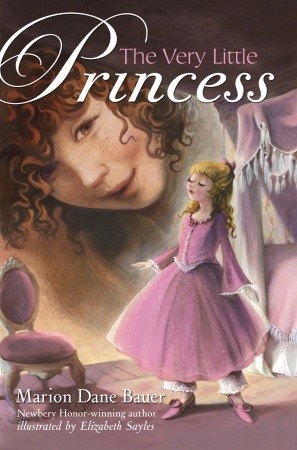
To best illustrate why I so warmly recommend Blyton, have a quick look at the GoodReads reviews for The Very Little Princess, a Stepping Stones chapter book by Newbery Honor author Marion Dane Bauer. With its quaint title, sweet pink cover and Blytonian premise of a doll coming to life, what could possibly go wrong? Surely any parent could gift this to their daughter in full confidence and leave it at that! Yet this book ends with its young heroine being abandoned by her bipolar mother at her grandmother’s house – a grandmother she’d never met before. The packaging thus appears deeply subversive – bypassing parents and cutting them out of the conversation they should be having (and deciding when to have) with their children about such topics. And it’s not the first, the worst or the last of this trend.

For a cautious parent, researching every book you pick up for your child is an overwhelming task, which leads us back to Blyton. With her, you’re off the hook. Children love her and parents can relax around her. Oh, the horror!

Check out the Parental Guide and see what I mean.

Violence: In one story, a duckling is angry at the mean ducks on the farm and so he goes to the farmer demanding that all the ducks be killed. Mr. Farmer laughs and tells him to come back in eight weeks, since he might change his mind by then – a bit of folktaleish cynicism on display here, though it’s obvious the farmer does not intend to follow through with the duckling’s idea. The duckling is ridiculed as a fool for wishing harm on his own while seeing himself as exempt.

No other stories go near the concept of death. There are some references to scary goblins, but they never actually appear.

Values: Blyton likes to tell her audience not to be idiots. Don’t be greedy. Don’t make assumptions. Don’t lose your temper. Don’t bite your nails. Don’t be like that duckling. Meanwhile, her good children are always helpful, generous and provide shelter for local wildlife.

Role Models: Naughty children learn the error of their ways. Good children visit Santa.

Educational Properties: A fine option for reading practice.

https://www.egmont.co.uk/wp-content/uploads/2018/08/enid-blyton.jpg
Enid Blyton and dog.

As I said, this book is being recommended on faith as a stand-in for much of Blyton’s work, as the odds of finding specific titles here in America seem small. She’s not great literature – and she doesn’t have to be. She gave children stories they loved.

Up Next: A wintry children’s classic and Dutch travelogue all rolled up in one for the Christmas season: Mary Mapes Dodge.

Flower Fairies of the Spring – Cicely Mary Barker

Given that the Flower Fairy books are A: standalone, B: poetry and C: have no plot between them, I will be reviewing this series in whatever order and at whatever speed I am able to acquire them. Nothing like a dream of spring in the depths of winter…

https://i.gr-assets.com/images/S/compressed.photo.goodreads.com/books/1309213072l/245680.jpgTitle: Flower Fairies of the Spring
Author: Cicely Mary Barker (1895-1973)
Illustrator: Cicely Mary Barker
Original Publication Date: 1923
Edition: Frederick Warne (2002), 42 pages
Genre: Poetry. Fantasy.
Ages: 3-8
First Line: The World is very old;
But year by year
It groweth new again
When buds appear.

Nursery rhymes are a tremendous learning tool for small children, conveying obvious skills such as memorization and predictive language, along with the specialized knowledge of how to read poetry in the first place – something of a lost art among today’s schoolchildren. Articles about the declining interest in poetry and what to do about it are a dime a dozen, and librarians are forever extolling the virtues of the trendiest middle-grade novels in verse, when the simplest remedy would be to avoid letting a child’s natural proficiency and enthusiasm for Mother Goose atrophy in the first place, via a fairly straightforward progression of English poets.

By providing the natural stepping-stones of Milne, Lear, Kipling and Stevenson, a gradual link would then be made to the classic narrative verse of Browning’s ‘Pied Piper of Hamelin,’ Rossetti’s ‘Goblin Market‘ and Tennyson’s ‘The Lady of Shalott,’ which are themselves not so far removed from romantics like Coleridge and Keats (and once a young person can read those poets, they would be able to progress both forwards and backwards in time from there with no real difficulty). Aside from the Classical Christian website, I couldn’t find a single educator advising this obvious curriculum to get kids reading poetry, probably because it would be way too white for today’s classrooms – thus they deny heritage to some children while offering mediocrity to all. In fact, educators love these new novels in verse specifically because the word count is lower and therefore they can be used to encourage “reluctant readers.” Now picture someone saying that Paradise Lost is simpler than Moll Flanders or that The Waste Land is an easier read for students than The Great Gatsby and you can imagine how topsy-turvy this whole educational trend really is.

https://thewesterncornerofthecastle.home.blog/wp-content/uploads/2019/12/52f10-05windflower.jpg
The Windflower Fairy.

This leads me to the Flower Fairy books of Cicely Mary Barker, which could easily fit on a young child’s poetry curriculum. Barker was an artistic invalid who took correspondence courses to become a painter while her older sister supported the family by opening a kindergarten in their house. Taking inspiration from Kate Greenaway and the Pre-Raphaelites, Barker began a series of children’s poetry books, most famously on the subject of fairies. Fairies were all the rage in the 1920s, enjoying heightened publicity thanks in part to the Cottingley Fairy photographs – and of course the Pre-Raphaelites hadn’t been immune to the lure of fairies either, which made it a natural subject for a book of botanical children’s poems. Queen Mary herself admired the results. At some point I will find a complete set of the little books, but for now this first one will have to suffice.


Every open page of this pocket-sized book contains a portrait of a fairy child with the flower he or she represents and on the facing page an ode to the flower in question. Her fairies were modeled by interested children from the household kindergarten, giving each character an individual appearance which combine over the book into a harmonious image of the English schoolchild of the 1920s. They are bright and happy, yet shy. They are impudent and proud and pleasant. They are beautiful, they are the generation who would grow up to endure the Second World War, and they are captured here fancifully and forever.

https://www.bing.com/th?id=OIP.A29LuxycpoD6TG5w_0VL8AHaLa&pid=Api&rs=1
The Dandelion Fairy.

Each costume for the fairies was based around the flower to be illustrated, which Barker would faithfully paint from real specimens. The costumes were where true flights of fancy would occur, and Barker created physical costumes and wing miniatures to paint, drawn from the different parts of the plant with rewarding detail. As an American, the flower I was most familiar with in this book was the dauntless dandelion and so it was his costume I most closely examined, discovering botanical inspiration from cuffs to shoes to the very shades of green and gold. Every portrait has this level of care, and the result really does have the feel of Pre-Raphaelites for toddlers.


Barker’s artwork is only half the volume, and the accompanying poems are every bit as enjoyable, particularly for parents who are big fans of Victorian poets. I could read this book aloud dozens of times and the poems would only become more engaging due to their mellifluous and leisurely rhythm. This is a book that rewards repetition.

https://www.bing.com/th/id/OIP.V2EcwpaQ-aaJhRwq0VgdDQHaLS?pid=Api&rs=1
The Daffodil Fairy.

I’m everyone’s darling; the blackbird and
    starling
Are shouting about me from blossoming
    boughs;
For I, the Lent Lily, the Daffy-down-dilly,
Have heard through the country the call to
    arouse.
The orchards are ringing with voices
    a-singing
The praise of my petticoat, praise of my
    gown;
The children are playing, and hark! they are
    saying
That Daffy-down-dilly is come up to town!


This collection is best suited for nature-oriented families, those with English gardens or wildflowers of their own to hunt and observe, for the poems are not narrative, meaning Barker will always be more niche than someone like Beatrix Potter. Nevertheless, these pages cover a variety of imaginative ground, some simply descriptive of the flowers themselves while others take to their viewpoint, like that of the cheerful daffodil. ‘The Song of the Lords-and-Ladies Fairy’ ends with a fierce warning likely to stick in its young audience’s mind and keep them from getting poisoned:
And my berries are a glory in September.
(BUT BEWARE!)

Meanwhile the Willow-Catkin admonishes:

To keep a Holy Feast, they say,
They take my pretty boughs away.
I should be glad– I should not mind–
If only people weren’t unkind.

Oh, you may pick a piece, you may
(So dear and silky, soft and grey);
But if you’re rough and greedy, why
You’ll make the little fairies cry.

There’s star imagery in the Windflower Song, there’s a little Mother Goose to Sing a song of Larch trees and the shortest poem in the lot is the humble ode to the Lesser Celandine. Over it all hang the twin centerpiece of the King and Queen of Spring, who are unfortunately not placed side by side in the middle of the book as they should be by rights. The Primrose has a simple charm and grace while the Bluebell (Wild Hyacinth in this case, not Scottish Harebell) is proud and superb.

https://i.pinimg.com/originals/ae/f8/55/aef8556c9c149bfe6be2ed6bb6947708.jpg
The Bluebell Fairy.

My hundred thousand bells of blue,
    The splendour of the Spring,
They carpet all the woods anew
With royalty of sapphire hue;
The Primrose is the Queen, ’tis true.
    But surely I am King!
            Ah yes,
    The peerless Woodland King!


Loud, loud the thrushes sing their song;
    The bluebell woods are wide;
My stems are tall and straight and strong;
From ugly streets the children throng,
They gather armfuls, great and long,
    Then home they troop in pride–
             Ah yes,
    With laughter and with pride!

https://i.pinimg.com/originals/3b/5b/6f/3b5b6f3b615843f9645c70f0e0933333.jpgOut of curiosity I made a list of the poems to see how often the rhyme schemes and templates repeated, to find that there were no exact replicas. When Barker reused a rhyme scheme she would change the number of stanzas, ensuring that every rhyme had its own face. I expect some repetitiveness would start to appear in the seven companion volumes but for now everything is very fresh, and in truth I would be very surprised if the artistic quality of subsequent installments ever dropped. Highly recommended to all English and Anglophile families.

Parental Guide, with no spoilers for once.

Violence: Completely inapplicable.

Values: English country flowers, landscape, children and folkways. Pre-Raphaelite influences.

Role Models: The children depicted are idealized, which is one of the chief purposes of art that has now been forgotten – to inspire.

Educational Properties: Memorization, recitation and elocution. Use for inspiration to plant and tend an English garden or to take a nature walk (in the right parts of the world) to hunt for the flowers – I’ve seen a number of them here in New England. Families who make their own doll costumes or other textile or artistic crafts might want a copy even if they hate poetry.

End of Guide.

I hope to acquire a complete set of the Flower Fairy books sometime soon, at which point I will make a full review series. I’m very happy to have stumbled upon this English gem I missed in my Anglophile childhood.

Up Next: Staying British with Enid Blyton.

The Cat Who Wished to Be a Man – Lloyd Alexander

A comic parable for kids who will likely grow up to read Terry Pratchett.

https://images-na.ssl-images-amazon.com/images/P/0440405807.01._SX450_SY635_SCLZZZZZZZ_.jpgTitle: The Cat Who Wished to Be a Man
Author: Lloyd Alexander
Original Publication Date: 1973
Edition: Dell Yearling (1992), 107 pages
Genre: Fantasy. Humour.
Ages: 9-12
First Line: “Please, master,” said the cat, “will you change me into a man?”

Lionel is an improbably nice cat whose master, the cynical wizard Magister Stephanus, gives him the gift of human speech. However, with this new trait Lionel begins to wonder what life is like as a man, and so Magister Stephanus reluctantly changes him into one – sending him to the nearby town of Brightford in hopes of curing the cat’s folly. Lionel’s journey is full of dangers and he encounters thieves, knaves and corruption in Brightford, but also generosity, courage and love. In the end Lionel must make a choice: does he wish to become an innocent feline once more, or remain human?

https://images.gr-assets.com/authors/1353430382p5/8924.jpg
Lloyd Alexander, top of his field and pleased about it.

In the ten years after publishing Time Cat, Lloyd Alexander became one of the premier children’s novelists of his era, winning a Newbery Honor, Newbery Medal and the National Book Award for three separate works. The Cat Who Wished to Be a Man finds him post magnum opus and probably looking to decompress – hence another cat-centric fantasy, this time set in a generic medieval time that probably required only five minutes of world-building. The characters sport Dickensian names like Pursewig, Tudbelly and Swaggart and to all appearances it’s a fairly simple little book, a comic trifle. However, it is an obviously more sophisticated affair than Time Cat, and shows a new mastery and conviction of the form.

I mentioned in my review of Time Cat that its prose was not quite polished enough to made a great readaloud, a criticism which is no longer the case. Alexander’s writing is sharper, wry and intelligent enough to place real demands on a young reader’s vocabulary and cultural understanding – helped in large part by the character of the endearing snake-oil salesman Dr. Tudbelly, whose commercial patter features a sizable amount of Latin, cod-Latin and medical misuse. Read widely or miss the jokes:

“Everything is more confusing on an empty stomach. Natura abhoret vacuo. I dislike having my breakfast interrupted. It produces palpitations of the jejunum.”
Opening a compartment of the Armamentarium, Dr. Tudbelly took out the leftovers he had salvaged from the inn: the remains of chicken and some bread crusts.
“Here,” he said cheerfully, offering half to Lionel. “You’d better have something. You look a little green around the gills.”
“Gills?” cried Lionel, clapping his hands to his neck. “Am I turning into a fish?”
“Only a manner of speaking,” Dr. Tudbelly said. “Eat, my boy. It’s the best way to ward off splenetic chilblains.”

Combining memorable characters with wide-ranging comedy and clever writing makes The Cat Who Wished to Be a Man an easy book to recommend. Lionel’s absolute innocence as he careens from one problem to the next like Candide for 10 year olds creates ample plot, both humourous and suspenseful, all in a novel that barely breaks 100 pages. Throughout the silly escapade Lionel finds that as he grows more human he begins to lose his catlike qualities such as the ability to land on his feet, threading a theme of lost innocence into the mix. Indeed, it is implied that Magister Stephanus is himself to blame for Lionel’s “fall,” for:

“Since when does a cat not feel like a cat?”
“Since you gave me human speech.”

https://dreamingandsleeping.com/wp-content/uploads/2018/04/Prometheus-Greek-God-Mythology-Symbolism-and-Facts.jpg
Alexander probably expected his audience to know about Prometheus before reading his stuff.

In some ways, Stephanus actually has more in common with science fiction doctors – tampering with the natural order of things like Moreau and Frankenstein – rather than the good wizard archetype who appears to restore order. There is also an odd variation on the Prometheus story, where the wizard regrets his interference in mankind’s evolution:

“When I first came here, the people of Brightford were tilling their soil with pointed sticks. I pitied them in those days. So I gave them a gift: all the secrets of metalworking. I taught them to forge iron for plows, rakes, and hoes.”
“They must have been glad for such tools.”
“Tools? They made swords and spears! There’s not one gift I gave them they didn’t turn inside out, upside down, and wrong side to. They were a feeble, sickly lot, so I taught them to use roots and herbs for medicines. They found a way to brew deadly poisons. I taught them to make mild wine; they distilled strong brandy! I taught them to raise cows and horses as helpful friends; they turned them into drudges. Selfish creatures! They care for nothing, not even each other. Love? They love only gold.”

https://i.imgflip.com/tcoht.jpg
The supreme self-satisfaction of the true cat.

Once Lionel arrives in Brightford, he finds himself taking sides in a conflict between young innkeeper Mistress Gillian and corrupt Mayor Pursewig, who seeks to put her out of business and take control of the inn’s revenue himself. Lionel makes a much better man than he ever did a cat, being appalled at Pursewig’s greed rather than bored and indifferent. Really Lionel should have gone home immediately upon realising how hard it was to get a bowl of milk in human form, and slept on a shelf the rest of the day. Instead, Lionel learns the finer points of humanity as the situation in Brightford goes from bad to worse. After a good samaritan intervenes on his behalf, Lionel said glumly to him:

“You’d have been better off if you hadn’t tried to do us a good turn.”
“I suppose I would,” replied Tolliver, with a grin. “Even so, I’d do the same again.”
Lionel looked at him in surprise. “Why, not even a cat would make the same mistake twice.”
“Well, now,”said Tolliver, “what may be true for a cat isn’t always true for a man. I might regret doing a wrong thing, but I’ll surely never be sorry for doing a right thing.”

Alexander grew in subtlety after Time Cat, and the morals are seeded through the narrative naturally rather than given grand summations. The ending is extremely pat but it still avoids insulting the intelligence, and the comedy runs quite a gamut (without dipping into vulgarity), from slapstick to rhetorical confusion, and with the added bonus of a Kafka shoutout:

“Silence!” cried Pursewig, rapping on the table. “I’ll judge the facts for myself.”
“They’re already noted down,” said Swaggart. “And the verdict. Guilty as charged.”
“Guilty?” exclaimed Lionel. “Of what?”
“That will be determined in due course,” replied Pursewig. “One thing sure: You’re guilty of something. Otherwise, you’d not be on trial in the first place.”

https://images-na.ssl-images-amazon.com/images/I/51xJ1eIABXL._SX329_BO1,204,203,200_.jpg
Does anyone remember this fabulous little trilogy?

This is a clever little book and it might give its young readership a taste for other clever books going forward – after all, it’s not so far from Alexander’s cats-eye view of humanity to Terry Pratchett’s musings from the nome perspective in Truckers. There’s more thoughtful material to be found here than in many modern fantasies of five times the length. Vintage wins again.

See Also: Time Cat, which is suitable to a slightly younger readership.

Parental Guide.

There’s a little romance between Lionel and Gillian. He learns what kissing is and, although they get off to a rocky start given that she thinks he’s a half-wit, they do end up in love. This subplot is integral to the book’s themes, so I can’t really fault it for being an improbable love story.

Violence: Lionel spends much time being threatened by crossbow, thumbscrew, drowning and a burning building – nothing is very detailed, though (what thumbscrews actually do isn’t described). Swaggart gets into some G rated harassment of Gillian, reminiscent of the old swashbuckler films. “Vixen! You’ll wish you’d sung me a sweeter tune!” Nobody dies or is seriously injured and the villains are quickly dispatched at the end, with Swaggart transformed into a skunk and Pursewig humiliated before the town and somehow demoted to dishwasher.

Values: Magister Stephanus condemns humanity as greedy, violent and self-serving at the start of the book, and Lionel is never able to prove him wrong. Instead, Lionel embraces the better nature of humanity and refuses the offer of returning to cat form. Indeed, the only way he could go back would be by forgetting everything that had happened, losing his memories to reclaim the unknowing Edenic state of the animals. Fairly theological for so small a tale.

Lionel accepts the world as it is, the good and the bad. Stephanus refuses to do the same (in the one plot thread that doesn’t end in a neat little bow) and remains a bitter and begrudging hermit, unconvinced to the end.

Role Models: Lionel is a brave, good-natured innocent, making for a nice hero who is comical yet both sympathetic and just. Gillian has inherited her father’s inn and has a good head for business, also holding her own against the “village gallants” by giving them a whack of her broom. The illustrious Dr. Tudbelly is quite generous with his time, ready to commit to Lionel’s cause or enact a little stone soup scamming for the benefit of Brightford. Even Stephanus, a powerful wizard, spends much of his day gardening and cooking rather than enchanting his house to run itself (as is stated to be well within his power).

Educational Properties: If you and your family are studying Latin, this might have some added use. Otherwise, just read, reference and discuss.

End of Guide.

At this point I am thoroughly charmed by Lloyd Alexander and look forward to my next acquisition of his, whatever it may be.

Up Next: A Newbery Honor Book by Marguerite Henry.

Fantasy: The Stones are Hatching

Nine pages from the end and the whole magnificent edifice comes crashing down into the sea… Hey, do you remember classic Twin Peaks? “How’s Annie?” It’s kind of like that, only, you know, for kids.

https://i.ebayimg.com/images/g/SLIAAOSwGJlZOGeg/s-l500.jpgTitle: The Stones are Hatching
Author: Geraldine McCaughrean (1951-)
Original Publication Date: 1999
Edition: HarperCollins (2000), 230 pages
Genre: Fantasy. Horror.
Ages: 15-17
First Sentence: Phelim had always thought there must be more to magic than rabbits or handkerchiefs–that if it existed at all, it would be too large to palm or to hide up your sleeve.

The constant hammer of the guns of World War One has caused the Stoor Worm, a monster meant to sleep for centuries, to stir. Its harbingers are the Hatchlings, creatures forgotten in British folklore now spreading across the unsuspecting countryside, for the old ways are no longer practiced and people are helpless before the onslaught of merrows, corn wives, ushteys and other creatures too terrible to contemplate. Eleven year old Phelim is thrown out of his own house by strange invaders who insist that he is Jack o’ Green, the only one who can save Britain and slay the Worm. Scared and miserable, with his sister’s mocking voice ever echoing in his head, he sets out with a Fool, a Maiden and a Horse to the place where the Stoor Worm lies…

Discussing The Stones are Hatching without the ending is very difficult, as without those final pages this is an excellent dark fantasy novel for teens, rooted in history and folklore, with horrible monsters roaming across beautiful landscapes. Think of the film Princess Mononoke and you have an idea of what to expect. Geraldine McCaughrean has immense talent at her disposal, and she’s not afraid to make use of it. I first became interested in her oeuvre when she used her 2018 Carnegie acceptance speech to draw the world’s attention to the fact that publishers now set limits on what words authors can use in books for little kids, nixing any material considered too demanding and setting off a domino effect into the upper reading levels:

https://lemonwire-lthfr4usl8x.netdna-ssl.com/wp-content/uploads/2018/06/geraldine-mccaughrean-wins-carnegie-childrens-book-prize.jpg
Geraldine McCaughrean.

“The only way to make books – and knowledge – accessible is to give children the necessary words. And how has that always been done? By adult conversation and reading. Since when has one generation EVER doubted and pitied the next so much that it decides not to burden them with the full package of the English language but to feed them only a restricted diet, like invalids, of simple words…
Worst and most wicked outcome of all would be that we deliberately and wantonly create an underclass of citizens with a small but functional vocabulary: easy to manipulate and lacking in the means to reason their way out of subjugation, because you need words to be able to think for yourself.”

This won me over to her right away, even though I don’t agree with all of her opinions in that speech (subjects for another time!) and unboxing my copy of The Stones are Hatching rapidly convinced me that she is one of the finest stylists currently contributing to the field of children’s literature. By itself, this makes me want to recommend this book, as her descriptive skills enliven a classic hero’s journey, one that is rendered darker than average by returning the tale to its unbowdlerized roots in Celtic folklore. Seven pages in and Phelim is faced with his first creature of nightmare:

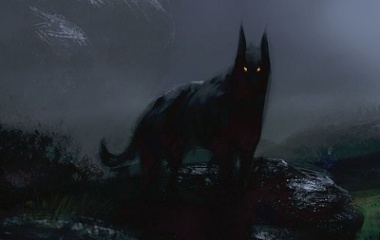
He pictured an Alsatian outside, broken loose from its kennel, maltreated perhaps and starving. He thought of the police, but they were ten miles away in Somerton. The dog’s breath rasped in its throat like a hacksaw; its claws scrabbled paint off the door in crackling sheets. When it barked, the glass of the wall lights shook. Five, six, seven times it hurled itself against the door and then, when the bolts held, fell back and prowled around the house, slavering over the spilled dustbin, setting small plant pots rolling, clawing at the brittle tarpaper covering the cellar door. Phelim felt his own shanks shaking, his feet and palms melting like butter…

Phelim knew he had to move. He knew he had to do more than wait for the dog to scratch or climb its way into the house and come ravening down the stairs. He rushed up the staircase on hands and feet, sobbing with the exertion, and threw open both bedroom doors to check that the windows were shut tight. He went over and pressed his face against the dirty glass, trying to catch a squinnying glimpse of the dog below–the hound besieging his sister’s cottage. Good thing she was away; Prudence was not fond of animals at the best of times.
But Phelim could not see; the dog was too close in against the house, clawing at the brickwork. All he could see was the overturned chicken house crushed into splintery shards, the chickens lying about like torn-off scarlet dahlia heads.

https://mythology.net/wp-content/uploads/2017/04/Black-Dog-Ghost-380x240.jpg
Artist’s impression of Black Dog.

No good or even ambiguous creatures hatch from the Stoor Worm’s eggs; they are all vile monsters, repelled by commonplace items – from marigolds to spilled blood to hot cross buns – but otherwise pitiless and unstoppable. Nightmare fuel is a constant throughout the book as the apocalyptic scenario unfolds. It’s one of the finest examples I’ve come across of fantasy as social metaphor (something often poorly executed), as World War One was essentially an apocalypse, with lasting social and psychological damage to this very day, and making it trigger a literal end of the world is fitting and powerful. The shadows of the dead men hang over everything, from Mad Sweeney’s twisted nursery rhymes to Phelim’s run-in with the Washer at the Ford, washing the shirts of the dead and the soon-to-die, Phelim’s own among them. Knowing what it means makes Phelim’s journey that much harder:

Alexia was pinning her hopes on him. If Jack o’ Green died, seemingly nothing could save humankind from the Stoor Worm’s brood of Hatchlings. And the more he thought about that, the more he despaired. After all, he already knew their journey was futile. He was going to get killed. He was traveling toward his own death. And yet he kept on going. Why? It must have been like that for the soldiers in the trenches, he thought. Plain common sense and logic told them they would die if they went one more time into no-man’s-land. And yet they knew they would go. The only taboo was to speak of it, to admit to the fear.

https://c2.staticflickr.com/4/3575/3493445311_ae005a0bb5_b.jpg
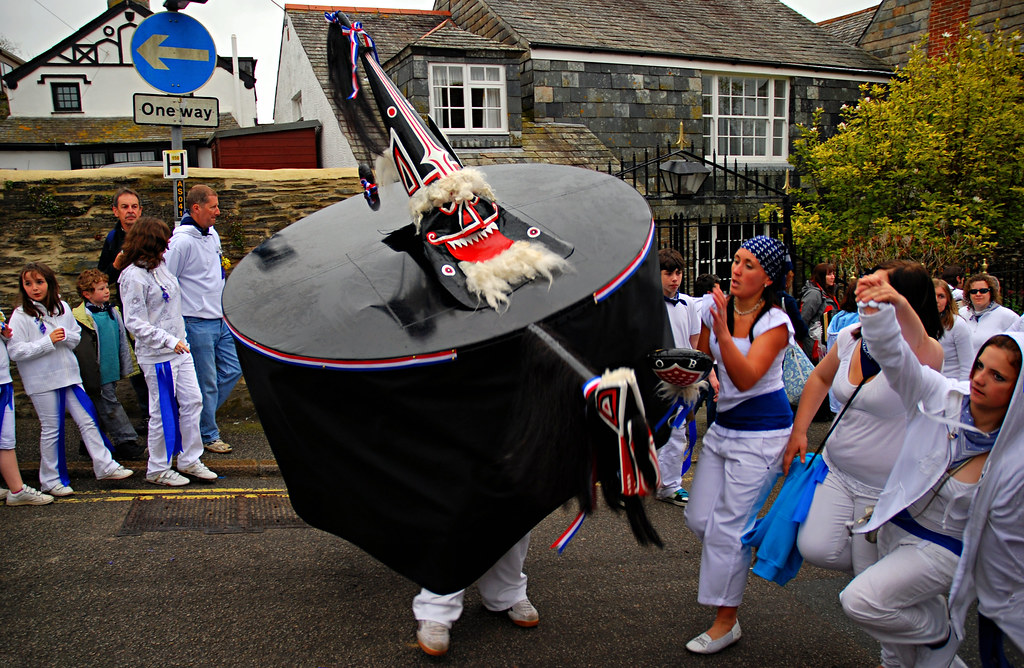
Phelim is accompanied by the Obby Oss, seen here in the traditional Obby Oss Festival in Padstow, Cornwall.

The darkness of The Stones are Hatching is very consistent and (eventually) rings hollow. Having an eleven year old British boy drawn into a hidden fantasy realm makes a Harry Potter comparison inevitable, although this book was clearly meant for an older audience from the start. Magic is unpleasant here and there is no logic, charm or comfort to be had in learning about it. Nor is Phelim’s role in saving the world explained to him beyond a bare outline. The stakes are high from the start, Phelim doesn’t know what to do and his bound companions are strange and off-putting – the Maiden thinks he’s an idiot, the Fool is a madman, and the Horse is what you see above. He can’t just shake off the years of psychological abuse from his only relative either, and he is unsurprisingly sullen and scared, with a continuously bad attitude – yet he does the work regardless. In spite of the treatment he’s received from his sister Prudence, the poor boy retains good instincts and is protective of Alexia (and indeed all the women of Britain when the time comes). When the big moments arrive, he steps up and does the right thing and is on a steady road to improvement, to true heroism – beginning when he recognises what a hero does:


“[Hatchlings] could be bought off, they could,” said the Oss in its soft Cornish burr. “Folks could hold they off with bribes; a child, spilled blood, a drowning. … But folks have forgot. Forgot the price. Forgot how to pay it…”
“They shouldn’t pay! … Not with blood and children and suchlike! It’s vile! It’s blackmail!” retorted Phelim hotly. “It’s giving in to blackmail. Like sending twelve men and maidens to feed the Minotaur. Theseus didn’t. Theseus refused. Theseus went and fought the Minotaur and killed it rather than go on paying the tribute.”

All of this positive character growth is then chucked off a cliff nine pages from the end. It doesn’t come entirely out of nowhere though – I simply discounted the warning signs from a desire to trust McCaughrean. The biggest clue of what’s coming is how she continuously falls back on the tired horror trope of “anyone can turn on you.” Phelim and his companions are off to save the world, yet the people within that world are constantly shown as not worth saving, even if they’re blood kin. The flashbacks even hold this view, with Alexia’s parents shipping her off to a school for the dark arts (in the most traditional “deal with the devil” fashion) while Mad Sweeney fought in the Napoleonic Wars and almost got executed by his own side for cowardice. In the present, ordinary humans are as much of a danger as the Hatchlings are – worse, because Phelim constantly misplaces his trust in them. Even in the early scene with soon-to-perish reapers (nice working-class blokes, mostly schoolboys and old men) who are as close to good folk as McCaughrean gets, she still inserts a line of schoolmarmish scolding to cheapen their innate worth – when Phelim explains he’s been locked out of his own house by strangers, “that’ll be Gypsies,” said the driver bigotedly. Nice use of the adjective for a man who’s about to die horribly. The poetic detriment done by this treatment of humanity is considerable.

https://www.metmuseum.org/toah/images/h5/h5_50.130.14.jpg
Reapers Resting in a Wheat Field, 1885 oil-on-canvas by American artist John Singer Sargent (1856-1925).

A related problem involves the way McCaughrean bypasses Christianity, or indeed any spiritual element at all – in a book where Old Scratch has a cameo and hot cross buns can ward off hidden enemies. The question just sits unanswered, all the while Phelim’s name means “Ever-good” and legends are told of the ancient hero Assipattle who first vanquished the Worm. There are no positive influences or allies to be found as Phelim and his companions travel toward the end game – which is not the case in any old folktales, whether of the Pagan or Christian era. For instance, McCaughrean includes the horrifying nuckelavee but ignores the Orcadian legend it is a part of, in which the monster is confined in the summer months by the good Sea Mither, a feminine spirit locked in constant struggle with her masculine counterpart Teran, who represents the storms of winter. I did not even know about this legend until I’d read The Stones are Hatching and was doing my research, but I did feel that the novel had a slightly hollow ring to it even before reaching the finish line.

Now I have to discuss the ending. If you think the book sounds like something you really want to read for yourself, you should stop here and come back later.

Massive spoilers ahead!

Phelim saves Britain. To do so he has to kill the Stoor Worm in its sleep, which effectively genocides its Hatchlings. That they would have done the same to humanity doesn’t matter to Phelim – he feels soiled. Throughout the book, Phelim’s mysterious magic has been tied to his “goodness” and he tries in the aftermath to explain to Alexia that he is no longer “ever-good” and that his name is now false. However, his magic has not faded, so by the rules of the Old Ways he is clearly in the right for what he did.

He then returns home to his sister, who reveals that when Phelim was little she had his father (the real Jack o’ Green) committed to an asylum for seeing things, for being a drunkard and a pacifist. Phelim responds by using his magic to summon up an ushtey (a water-horse), which he helps his sister to mount. She is then swept off to be drowned and he is relieved to be no longer burdened by goodness, magic or heroism. Ever-good Green had committed his first act of wickedness, and his magic was guttering out like a spent candle.

Punchline is, the boy tracks down his father and it turns out Jack o’ Green didn’t even mind being in the asylum all this time because he really is a lazy good-for-nothing, twirling his green thumbs while his pint-sized son had to save the world in his place. The hero’s journey is upended in a world never shown worth saving, all for some cheap attempt at moral equivalency. Phelim’s hatred and anger went with [the water-horse], sucked out of him like the nests out of the hedgerow. He was left with the same kind of emptiness as after killing the Worm. Oh right, no difference there.

So that’s what McCaughrean spent her considerable talents on in 1999. I neither see the point of The Stones are Hatching as a meaningful story nor do I have any idea who its intended audience is. Kids who actually like straight-up nihilistic horror fiction can doubtless find far bloodier books for their entertainment. Kids who enjoy fantasy – even dark fantasy – are unlikely to be entertained by this, because fantasy is an ancient and idealistic genre at heart, where big concepts like good and evil still manage to matter. There is of course an appreciable purpose to writing characters that deconstruct heroism, such as Special Agent Dale Cooper and Ned Stark, but the stories of these fallible men are A: intended for adults and B: do not peddle moral relativism like it’s some kind of revelation about humanity.

https://i0.wp.com/images4.fanpop.com/image/photos/17200000/Ashitaka-princess-mononoke-17253113-853-480.jpg
Ashitaka, from Princess Mononoke (1997), directed by Hayao Miyazaki.

It’s a real shame. My advice is to skip The Stones are Hatching and go watch Princess Mononoke instead – that has beauty alongside the ugliness and its hero Ashitaka (who also desires to find a peaceful solution to conflict between an ancient natural order and modernizing humans) doesn’t just throw in the towel and embrace evil when things don’t go his way.


Spoilers continue into the Parental Guide.

Violence: A constant. Gruesome imagery abounds, from skinless demons to Alexia’s bones being used to make a witch’s ladder after she’s been killed. Monsters are described in a visceral manner, as when Phelim discovers the corn wives in the wheat field:

Then the curve of the blade clanged against something hollow and metallic and black.
A woman’s rib cage.
No white-clothed beauty, this. At close quarters he could see the rust-red eyes, the adze-shaped chin, the nose as curved as a billhook. Her long, black skirt was pale with dust, but not the shiny black of her iron upper body. Her long, flue-black, iron breasts had blunted countless sickle blades as she stood amid the wheat, waiting for her victims to blunder into her. She held a long-handled scythe, but she and her sisters had not come to harvest wheat.
Only the reapers.

Many of the old myths gave monsters sexual characteristics and this is not bowdlerized. It’s even a plot point when the faeries choose to invade Britain with the sole intent of stealing its women now that most of the men are dead. Phelim doesn’t seem to feel bad about wiping out their invading fleet, either; possibly because they are sentient, whereas most of the Hatchlings are beasts.

Values: Obviously not heroism, which is deconstructed in a most neurotic fashion. In fighting [the Worm], he could only become what she was: malevolent, destructive. … Phelim thought of Assipattle slicing and slashing with his sword, and it was not so much the preposterousness of the myth that struck him (one man fighting this subcontinent of a beast) as the violence, the kill-or-be-killed pettishness of it all. So the boy rejects heroism because being one means killing the enemies of those you are a hero to defend.

Family isn’t worth anything at all in this book either – family members are simply in a more advantageous position to betray both Phelim and Alexia. I think the end appearance of Phelim’s absent father is meant to be a positive moment, but it feels decidedly hollow given how cheerfully inactive the old man has been this whole time.

While modernity, as represented by Prudence and the Great War, is certainly not shown in a positive light, the Old Ways are nothing to miss, given that the people who hearken back to them turn into frenzied mobs looking for human sacrifices. Christian ministers don’t come to the aid of the people, but the one guy who takes up the pagan ways ends up causing Alexia’s death for no reason. Even the hokiest modern values like “just believe in yourself” come to nothing. By subverting the heroism of Phelim, this entire book is washed of all meaning, other than a possible anti-war sentiment if you squint.

Role Models: As if. “I couldn’t bring myself to die on the moral high ground, sparing thousands of monsters bent on eviscerating mankind, so I’m going to murder my sister. That’ll show em’.”

Educational Properties: A parent-child fantasy bookclub discussing the rich soup of symbolism, folklore, metaphor and poisonous philosophy within the novel is really your only hope in this regard. It could even be time well spent depending on how much research you want to do, but there really are much better choices for British fantasy out there.

End of Guide.

At least I can console myself that this weird artistic misfire wasn’t a trilogy. It turns out that The Stones are Hatching is the real reason I started this blogging project, because almost none of the reviews I’ve found discuss the ending or the themes, so I hope I’ve helped someone by this holistic method. Sadly, my early enthusiasm for McCaughrean’s oeuvre is now significantly tarnished, although that won’t stop me from her giving her another try down the road.

Up Next: Let’s just go back to Tom Sawyer and Mark Twain’s continued bids to make money off him. As long as Tom doesn’t murder Aunt Polly, I’m up for anything.

Fantasy: Seven Tears Into the Sea

I was not originally planning to review very much young adult fantasy (or modern young adult in general) on the Castle, given how massively popular the speculative genres are right now, and given that a little over half of the readers of young adult books are adults themselves, who probably aren’t looking for a Parental Guide to Throne of Glass and the like. However, I have started to notice that almost all of the fantasy books being recommended to teens and getting discussed on YouTube are extremely modern, always post-Twilight, with the entirety of the post-Potter boom somehow forgotten about. This is strange, and a little disconcerting to be honest – I really thought writers of Patricia McKillip’s and Terry Pratchett’s caliber were sure to live on in YA memory. Guess not.

Meanwhile, the very conceit of this blog is that it’s for parents or planning-to-be-parents who want to construct a youth library at home, rather than trust modern libraries to do the job for them. As such, there’s no reason not to care about what’s in the books your eventual teenagers will be reading. So I will be reviewing books for teens in the same fashion as books for younger kids.

Thank you and on to the review…

https://thewesterncornerofthecastle.home.blog/wp-content/uploads/2019/08/64f4a-seventearsintothesea.jpgTitle: Seven Tears Into the Sea
Author: Terri Farley (1950-)
Original Publication Date: 2005
Edition: Simon Pulse (2005), 279 pages
Genre: Fantasy. Romance.
Ages: 15-17
First Sentence: This is what it’s like to be crazy.

Everyone knows which novel swept the young adult world in 2005 (Twilight) and every young adult fantasy fan who cares about good writing, creative plots and believable characters knows that this book essentially ruined the genre, both by turning romance into a prerequisite (and people act like it’s a surprise boys don’t read) and incidentally creating the “Bella Swan backlash” that led to YA being flooded with sexually active assassin chick role models to compensate. Sadly, a far worthier alternative with a better take on paranormal romance was published that same year, a short standalone novel whose supernatural love interest was not a literal predator, whose heroine did not treat her humanity like last year’s shoes and whose author actually knew the meaning of the term “star-crossed.” While not a masterpiece, Seven Tears Into the Sea quietly offers some surprisingly good themes and a very pleasant atmosphere.

At ten years old, Gwen Cooke sleepwalked into the ocean and was rescued by a strange boy who vanished after whispering a mysterious poem in her ear:

Beckon the sea,
I’ll come to thee…
Shed seven tears,
Perchance seven years…

The incident became the focal point of small town gossip and her parents soon decided to move away and start fresh. Now, seven years later, Gwen returns to Mirage Beach to see her grandmother and find out the truth of her supposed hallucination. The truth turns up soon enough in the form of a cute guy named Jesse and Gwen has to fight rationality when all the evidence indicates that Jesse is a selkie.

https://ak7.picdn.net/shutterstock/videos/3846677/thumb/1.jpg
The stormy coastline of northern California.

It’s a little bit unusual to find the selkie legend transplanted to the Pacific but what could have been a disaster was rather cleverly utilized. Sea lions replace seals and the coast of northern California is suitably rocky and fog-bound, but what really makes it work is the clash of the old world and the new, ancient and modern ways of living. Gwen has the old country in her blood and in her red hair but like most modern people she’s been taught not to care. I wasn’t playing dress-up for the tourists, she thinks. Fantasy stories often have an initiation aspect, where the experience the main character has is impossible to share with the friends left behind and the same is true of this story, with tensions between Gwen and her city friends reaching a boil when the latter show up unexpectedly at the Summer Solstice celebrations.

Seven Tears is rather short on plot, compensating with leisurely charm. The second half of the book opens each chapter with an entry from a sea garden guide Gwen is creating, to wit:

https://i0.wp.com/www.rarexoticseeds.com/media/catalog/product/cache/1/image/600x600/9df78eab33525d08d6e5fb8d27136e95/r/u/rubus-parviflorus.jpgWild Western Thimbleberry
(Rubus parviflorus)
Velvety pink berries, dark green leaves, and cautioning spines mark this woodsy berry. Cousin to the blackberry, it may live at the shore, in red-wood forests, and on the High Sierra, but deprived of moisture it will sicken and die. Thimbleberry wine is nectar to fairies, and herbal lore praises the thimbleberry for shielding the virtuous. Running through a thimbleberry thicket is rumored to dispel illness, while a sip of thimbleberry tea returns evil to those who wish it on others.

The Sea Horse Inn, run by Gwen’s grandmother Nana, hosts a proper tea. “Be certain you have your caddy spoons, mote spoons, serving plates, sugar tongs, cream pitcher…” Nana keeps a scrying glass in her pocket and tells folk tales to the guests. One of the locals plays the bagpipe. Gwen brings her cat to the cottage and protects the swallows’ nest above her porch door. The book is full of nice things, culminating again with Midsummer Eve, and because of this the pacing is unexpectedly languid. It’s as close as paranormal romance can get to regular slice-of-life, almost a seamless merger of genres. I expect this would frustrate a lot of fantasy fans, as there is no real magic to be found until the very end of the book. However, for readers more willing to put aside expectations, they’ll find the lifestyle Gwen is introduced to on Mirage Beach as lovely as a Pinterest board. I think that still counts as escapism.

Then everyone hushed at the bagpipes’ skirl.
Red wore a tartan kilt and a plaid fastened at his left shoulder. It was easy to overlook his knobby old-man knees and everyday orneriness while he played. He cradled the leather bag as if it were a child, and though I doubt anyone knew the song, they watched, faces turned amber by firelight, falling under a spell.

https://i0.wp.com/elelur.com/data_images/mammals/california-sea-lion/california-sea-lion-04.jpg
A California sea lion (Zalophus californianus).

Jesse should really be at the center of this narrative but I find little to say about him because he’s rather thinly sketched. To begin with his attention is played for menace: His eyes darted past me, as if he’d block my escape. … He stood slowly, staying entirely too close. … He tossed out the words like a lure. He’s secretive about his life and he’s been seen with the wrong crowd but it’s all a red herring because this image of a dark, menacing lover from the ancient folktales turns out to be merely Gwen’s preconception. Being a selkie, Jesse is actually just a simple soul who likes to eat raw seafood and is bothered by enclosed spaces. And because Farley clearly loves animals he’s also a peaceful child of nature who wouldn’t hurt a living thing (although he’s a dab hand in a fistfight and, incidentally, a carnivore). This all makes for a neat subversion of the standard brooding hero with a dark past that crops up almost automatically in stories of this type but it ends up being less than satisfying because he doesn’t really have a past at all. It doesn’t help that the timeframe for this epic love story is one week. That was a hard sell even for Shakespeare.

Since Jesse is not dangerous and Gwen’s fear of inciting old gossip is revealed to be an empty worry, a villain is provided in the form of Zack McCracken, who looked like a young Brad Pitt who’d been living behind one of those dumpsters for a week and decided to crawl out for a joint. There is no love triangle here, nor hint of one. Zack belongs on a fishing boat but the fish are gone and as such he’s deteriorated into a full-time thug. As nice as the beachside appears, the scene isn’t fully set until Nana finally takes a reluctant Gwen to the local town of Siena Bay:

“Siena Bay has changed a lot, hasn’t it?” Nana asked, as if she’d noticed my head swinging around, taking it all in. “The Chamber of Commerce tries to keep the atmosphere of an old fishing village but-“
I followed Nana’s gesture and focused beyond the booths.
I remembered coming down to the docks at dawn with Mom. She’d buy me hot chocolate from Sal’s Fish and Chips, which was the only thing open that early. We’d watch sun-browned men shout and sling around nets before putting off into the turquoise water.
Now, though the nautical decorations remained, they draped a dozen places I could find in the Valencia mall.
“Someone must still fish,” I insisted.
“They try,” Nana allowed. “In fact, most of them still put out to sea every morning, but they have to supplement.”
Supplement? Was that a nice word for welfare? Or something shady? Nana had said the gang in town was made up of fishermen’s sons with nothing to do.
“They say it’s fished out and blame the sea lions and tourists,” Nana went on. “I blame it on pollution and the industrial fisheries, but not many listen to an old woman. I’m glad we’re up the coast a ways.”

With the setting so strongly emphasised throughout, the above passage must be seen as of key importance. The coastal way of life is dying, replaced by global tourism (guests at the inn are portrayed as a rather pointless bunch, with Tolkien enthusiasts and unhappily married couples) and this culture clash plays right into the Midsummer Eve celebration and the choices Gwen makes that directly impact the tragic ending, as Gwen sees the look on Jesse’s face. Anger wouldn’t have surprised me, or even sadness, but he looked as if I’d given up our very last night together.

https://www.bookpeople.com/sites/bookpeople.com/files/TerriFarleycrop%284%29.jpg
Terri Farley.

Seven Tears Into the Sea is a good example of young adult fantasy, written right before the Twilight boom solidified all the cliches it’s now hard to avoid in paranormal romance. The novel also feels very personal. Terri Farley has otherwise kept to the topic of horses in all of her works, specializing in romantic “girl and her horse” series for pre-teen girls, both in the Phantom Stallion series (I read 15 of those books back in the day) and its spin-off Wild Horse Island. Seven Tears Into the Sea stands out as a unique entry in her catalogue and, given that it came out right alongside Twilight, it can’t claim to be influenced by that runaway success. In other words, Farley must have felt a strong compulsion to break form and write this story.

The writing is simple but fairly solid, with a well-rendered atmosphere and an effective example of present tense usage in the opening flashback, with the rest of the novel conveyed in the traditional past tense. This lends immediacy to Gwen’s memory of nearly drowning and keeps the rest of the novel from feeling like a wannabe movie script. The biggest flaws are the rushed ending and lack of developed subplots, but it’s a good choice for those readers who enjoy a cozy seaside atmosphere alongside their doomed romance. If you’re planning to read it yourself, you should stop here. Otherwise, spoilers below.

https://media.mnn.com/assets/images/2016/06/midsummer-bonfire.jpg.990x0_q80_crop-smart.jpg
A Midsummer bonfire.

On the night of Midsummer’s Eve, there are bonfires to jump over, music and dancing, and games meant to single out the King and Queen of Summer. The locals takes pride in Gwen and Jesse’s accomplishment and there’s the sense of a growing bond not just between the two of them but also between them and the whole town. This is exactly what the ancient festivals were built to do: strengthen the bonds of family, friends, community and the new young couples that carry the future.

Then a voice sliced through the magic.

Gwen’s two city friends crash the festival, Mandi drunk and slutting around, Jill detached and critical of her surroundings, both demanding Gwen leave her Midsummer’s Eve coronation and return to the “real world” with them. Depressingly, her sense of obligation makes her do what they want – and Terri Farley portrays this as a horrible choice. At three thirty in the morning I was sprawled on my couch, eating pizza I didn’t want, with guests I didn’t welcome. Gwen washes the seawater from her hair and changes from her Midsummer dress into fresh jeans and a sweatshirt. Hungover Mandi tries to give her a bleach makeover and sarcastic Jill starts psychoanalyzing her new relationship. Her cat is victimized because the girls foolishly let Zack into the cottage in Gwen’s absence. Jesse then steps in to confront Zack – which leads to a mortal wound, sharks in the water, storms, magic and farewells. All this instead of watching the fires burn low and seeing the sun come up on Midsummer morn. For want of a nail… Gulls banked and cried, scolding me for not observing at least one Midsummer morn tradition. I was Queen, after all.

The resolution to the threat of Zack feels rushed and I believe Farley made a mistake by keeping Gwen away from the action, instead leaving readers with a fragmentary, secondhand account of violence on a boat and a shark attack. Without seeing any of it, this portion of the story lacks dramatic heft. Gwen heals Jesse via some mystical bond they have that was only briefly hinted at, finally acquiring proof that selkies are real just in time for the truth to hit her: Jesse can only return to the shore every seven years. Here we get what the story has been building to, and it’s a worthy payoff because Terri Farley won’t cheat her way to a happy ending. Gwen is stricken. “That would mean, after this summer, I’d be twenty-four before I saw you again. Then, thirty-one-” I kept counting on my fingers -“thirty-eight, forty-five, fifty-two! Jesse! Fifty-two. If we had kids, they’d be grown. I would have wrinkles around my eyes from staring out to sea, watching for you. I could die, and you wouldn’t hear of it for years.” This is the tragedy of Celtic legend updated for a modern setting. Gwen did give up her last night with him. There will be no Midsummer dancing next year, no crowning, no belonging – not with Jesse. This was a once in a lifetime experience that Gwen let herself be talked out of. That’s worth more than seven tears.

Parental Guide up next.

This is quite modest as modern teen romances go. There’s some passionate kissing and some underwater manhandling that would probably look sexy on film but isn’t graphic in print. It’s not aiming for the Printz longlist, in other words.

Violence: Zack gets eaten by a shark offscreen in what may be termed disproportionate retribution. Jesse’s fatal stabbing is described in the mildest possible terms – “blood” and “wound” are as graphic as the language gets. One fistfight which Gwen leaves in the middle of.

Values: Nature conservation is right up there among Terri Farley’s cardinal virtues. The loss of small-town economies, traditions and cohesion is also an obvious theme.

https://www.ancient-origins.net/sites/default/files/field/image/Manannan-mac-Lir-sculpture.jpg
An Irish statue of Manannan Mac Lir, the Celtic sea god.

The book takes on a significant pagan holiday with great affection. Was this some Celtic deity’s way of convincing me he still ruled? Gwen wonders, which is as close as Farley gets to the religious aspect of all this.

Gwen’s parents vacate early on, leaving her to free-range for the summer in a cabin with no phone that’s just down the beach from her grandmother’s house. Convenient. Nana is the only parental figure around but she’s a very positive one.

Female friendship is not portrayed in a remotely positive light, as Gwen’s friends guilt-trip her hard for preferring Jesse to their drunken company. “You almost went off with him instead of us.” Jill retells Gwen’s childhood sleepwalking experience to Mandi (after Gwen told her in confidence) and the two of them also invite Zack into Gwen’s cabin, where he steals her cat – luckily he does return the cat alive. While in Gwen’s last scene with Mandi and Jill she thinks they’ll patch things up and continue on, that’s before she loses Jesse. It can only be hoped she finds some better friends after that.

Role Models: Gwen is a typical YA heroine – not too smart, not too quirky, somewhat insecure, easy to project on to – but she’s responsible, hard working and unselfish (to a fault, in fact), making for a decent heroine. Gwen later gives up her own happiness for Jesse’s when she refuses to steal his skin, knowing he would grow to hate her in time. This could be seen as a feminist commentary on the men in the old selkie legends who put any such scruples aside to keep their wives. On the other hand, it might also be seen as a girl putting her boyfriend’s needs before her own. No matter, as it’s quite poetic.

Jesse is masculine but non-threatening and socially rather awkward. He’s not an interesting character unless you’re a teenage girl, but (aside from the selkie problem) he’s not a walking warning label, which is a nice change.

Zack is clearly meant to be disliked (he’s both lewd and cruel to animals), while Mandi is incredibly annoying and infantile – not people to emulate or make excuses for.

Educational Properties: Unlikely, unless it inspires a teen to research the selkie legends.

End of Guide.

https://i.pinimg.com/564x/41/4d/6b/414d6b7c82caed6b57203e6efeb48d4a.jpg
Someone else’s complete set. They are marvelously pretty books.

Terri Farley has not revisited the fantasy genre, and I’m left slightly non-plussed by the remainder of her bibliography. With twenty-four books in the Phantom Stallion series, it’s unlikely I’ll ever acquire the complete set, and my first thought was to simply discontinue her bibliography from time constraints. However, since I am planning to do the twenty Black Stallion books for this project (eventually), and since I remember Phantom Stallion as being higher than average quality compared with some of the other horse series I was reading as a child, I would like to do an overview of the series some day. Certainly all “easy read” franchises are not created equal, and the best ones deserve acknowledgement.

Up Next: Returning to Prince Edward Island for the continuing story of Anne Shirley…

Fantasy: Time Cat

Apologies for formatting errors that I can’t seem to fix in this post.

Lloyd Alexander’s first novel for children is a tour guide of slightly cat-centric history and a promise of things to come. This bibliography is going to be fun.

See the source imageTitle: Time Cat
Author: Lloyd Alexander (1924-2007)
Original Publication Date: 1963
Edition: Puffin Books (1996), 206 pages
Genre: Fantasy. Historical Fiction.
Ages: 7-10
First Line: Gareth was a black cat with orange eyes.

A somewhat immature boy named Jason is sulking in his room after a bad day when his cat Gareth decides to speak to him. Jason (whose last name is never given, but I expect it’s probably Little) accepts this easily enough – Jason had always been sure he could if he wanted to and it’s left at that. However, he is surprised when Gareth shares a feline secret with him: cats don’t have nine lives, but they can visit nine lives, and Gareth has only been waiting for an “important reason” to do so. Jason gets to come along on a trip from Ancient Egypt to the American Revolution, learning about cats, people and life along the way.

Time Cat is a fairly perfect independent read for kids who are ready to tackle books without any illustrations. It’s a good standalone tale with adventure, humour and a cool premise: when cats disappear from a room they have actually gone time traveling. Short segments sustain the action, an occasional slimy villain pops up to threaten Jason and the situations he lands in are different enough from one to the next that any child should be fully entertained. Incidentally being introduced to the writing of Lloyd Alexander is just a bonus for down the road. Of course, Time Cat‘s very excellence for young kids dooms it to a fairly short shelf life, as it is so broadly sketched as to be soon outgrown in favor of deeper fantasy and historical narratives. That’s as it should be and it is certainly worth all 100+ Magic Treehouse books, and will do far more good for a child’s vocabulary, imagination and shelf space. To give an example: in Italy, 1468, Jason meets a boy called Leonardo (hint, hint) who shows him his room – the sort most scientifically-minded boys have probably wanted at one time or another.

Inside, Jason looked with amazement–tables crowded with piles of paper; collections of butterflies, rocks, pressed flowers. A squirrel raced back and forth in a small cage. In another cage, a sleepy green snake lay coiled. Great bottles and jars held clumps of moss and long-tailed, speckled lizards. From another bottle, a few fish stared at the inquisitive Gareth.
On a table, Leonardo had set a water bottle over a candle flame. “Did you ever notice how the bubbles come up?” Leonardo asked. “I’ve been watching them. There must be something inside, something invisible–I don’t know what it is. Perhaps the philosophers in Florence know and some day I’ll ask them. First, I want to try to find out for myself.”

https://www.johnnytimes.com/wp-content/uploads/2016/08/a-cat-by-leonardo-da-vinci.jpg
Detail from Cats in Motion, 1513-16 pen-and-ink by Italian artist Leonardo Da Vinci.

A quick rundown of places visited: The obvious cliche and weakest segment in ancient Egypt where cats are worshipped as gods; time spent tramping with the Roman legionaries before getting captured by some agreeable Britons; meeting a medieval Irish princess (with red-gold hair and a penchant for chatter, by the way) and a dignified slave by name of Sucat; teaching Japanese boy-Emperor Ichigo to stand up to his Regent, Uncle Fujiwara; meeting young Leonardo Da Vinci in Italy as he tries to convince his father that he’s an artist, not a notary; hanging out in post-Pizarro Peru; greeting the original Manx cat as she washes ashore on the Isle of Man; trying to avoid a nasty death in witch-burning Germany; and finally taking the rural tour of America in 1775.

https://upload.wikimedia.org/wikipedia/commons/7/7d/Manx_by_Gambier_Bolton.JPG
A historical photo of a Manx cat by photographer Gambier Bolton.

Almost every segment is two chapters long and everywhere they go Gareth imparts some fortune cookie wisdom like “even a kitten knows if you wait long enough someone’s bound to open the door.” Jason isn’t very proactive on their journey – whatever age he is, it’s apparently too young for active military service. Instead, he observes people and learns about life from them, to return home a steadier and wiser boy. Fantasy novels have a natural aspect of initiation and this one is no different, as Gareth points out at the end that he took Jason with to help him grow. There’s even a (very mild) sacrifice come journey’s end before Jason returns home in a cross between the movie version of The Wizard of Oz and Where the Wild Things Are.


Time Cat was Lloyd Alexander’s first novel for children after a string of flops, including a translation of Sartre’s La Nausée, which got roasted (along with Nausea itself) by Vladimir Nabokov. The moral: aim high and at least the giants themselves shall smite you. Alexander finally changed gears as he neared forty, and later described writing Time Cat as “the most creative and liberating experience of my life.” There’s a real joy that comes through the book, as it’s so clear that Alexander was simply enjoying the freedom of his new path in life. He loved cats, so they feature prominently. His villains are an entertaining series of oily and absurd caricatures, with the German witch-judge a standout:


The eldest judge, a bony, black-robed man with a lantern jaw and eyes as sharp as thorns, shuffled through some parchment sheets on the table. “We have studied your cases thoroughly,” he began, licking his lips, as if tasting every word.
“You’ve had no time to study anything,” shouted the miller.
The judge paid no attention. His little eyes turned sharper than ever as he read from his parchments.
“The accused witch, Johannes the miller: guilty.”
“The accused witch, Ursulina: guilty.”
“The accused witch, Master Speckfresser: guilty.”
“One demon disguised as a boy disguised as a demon: guilty.”
“One demon disguised as a cat: guilty.”
The judge set down his papers. “You will be burned at the stake in the morning. Believe me,” he added with a smile, “this is all for your own good.”

https://thewesterncornerofthecastle.home.blog/wp-content/uploads/2019/07/dda3e-lloyd2balexander.jpg
Lloyd Alexander.

Alexander’s writing is comfortable and witty, although it’s not quite polished enough to qualify as a great read-aloud on this early outing. He tosses around historic images like favorite toys, expecting kids to grasp the concept of centurions and Imperial Obeisance through context, rather than interrupting the plot to explain different factoids. Because of this it’s very light on educational material compared with more modern historical fiction for the same age group, and it has recently received some pointless criticism for cultural stereotyping. Honestly though, it’s for eight year olds. Try capturing a child’s imagination by explaining how the Incas were “exactly like you and me,” and see how much they remember about the subject in a month. We always begin with the broadest stereotypes, gaining detail and nuance as we grow up – so the Incas are memorable because they have llamas, while the Egyptians worship cats and ancient Britons wave spears around. Such details are memorable and interesting to a young child, and then swiftly outgrown as their reading naturally progresses.

Time Cat is simply a delightful experience at the right age. I read it avidly at around nine or so, and then within a couple of years I had moved on to Alexander’s far more mysterious Rope Trick. It’s easy to recommend and, while I don’t know exactly how consistent a writer Lloyd Alexander was over his long career, I’m looking forward to finding out.


https://i0.wp.com/img2.wikia.nocookie.net/__cb20110830042922/lloydalexander/images/3/3e/Time-Cat.jpg
My original copy of the book.

The Parental Guide up next, with some spoilers as always.

Violence: Death hangs over Jason’s head multiple times, including three threats of getting burned alive, but he never sustains any injury and after the danger is brought up it’s always swiftly negated. There are no other casualties until the final segment, when the likable Professor Parker is hit by British fire, though it’s never clear if he dies, since this is all we get: He smiled and tried to pull a shilling out of Jason’s ear, but his hand went slack and the coin dropped to the earth.

It is mentioned that cats are regularly killed in 1600 Germany, but none of the animal characters in the book suffer any harm. If you’re wondering, the “sacrifice” I mentioned Jason makes upon returning home is that Gareth will no longer be able to speak to him, but they will still understand one another without words.

Values: Sucat in the Ireland segment has a secular role, but it is revealed in a rather solemn moment at the end that Jason has actually just met Saint Patrick.

Cats are life’s great treasure, and this is not the last time Alexander would write a supremely cat-centric fantasy. In fact, it ends up such a trademark of his that I’m fairly surprised he kicked off his Prydain Chronicles with the hunt for an oracular animal of the porcine persuasion.

Monarchy is a fairly suspect arrangement in Time Cat, with rulers in general portrayed as ridiculously isolated from their subjects.

During the quiet story on the Isle of Man, Gareth states that everyone is pretty if they have pride in themselves, demonstrated by Dulcinea the Manx cat who doesn’t envy Gareth his tail. He also states the theme of Alexander’s career heretofore: “Trying to make someone do what they aren’t really good at is foolish.”

The most eye-rolling bit is easily when Sayri Tupac the Great Inca lets Jason and Gareth (being held for ransom) go because Don Diego the Spaniard gives a mushy speech about peace and understanding between cultures. “Understanding is better than gold,” says Sayri Tupac. Well, it was the sixties…

Role Models: Jason is a completely bland character; while he improves on his journey, it’s mostly by observing other, more interesting people. Gareth is a better creation, wise and unflappable, and when it’s time to save the princess, it’s Gareth who battles and slays the threatening serpent.

Educational Properties: The historical sketches are very light on detail, so even though you could tie the characters of Ichigo and Uncle Fujiwara to their real counterparts, it really belongs in the entertainment and fluency pile.

End of Guide.

Alexander’s books appear with some frequency at my local used bookstore, and I will be acquiring them whenever I can. As always, I invite those who’ve read more of his work than I have to share their opinions.

Up Next: Going for a classic western, and an example of what young adults were probably reading in the 1940s.

Fantasy: The Court of the Stone Children

Forewarned is forearmed, as they say, and if you have the Puffin edition it’s definitely helpful to know going in that this book contains ghosts and prophetic dreams but absolutely no time travel. You will be happier.

See the source imageTitle: The Court of the Stone Children
Author: Eleanor Cameron (1912-1996)
Original Publication Date: 1973
Edition: Puffin Books (1990), 191 pages
Genre: Fantasy.
Ages: 10-14
First Sentence: They were standing in a group under the trees tossing up wishes for the future, wishes and predictions, grand and wild and inflated, boys and girls alike, but Nina, lost in her own musings, wasn’t taking it like that.

The Court of the Stone Children is an intellectually demanding and elusive novel which won the National Book Award for Young People’s Literature in 1974 but has since drifted into obscurity. Recapping the plot is a little tricky since no plot threads take precedence over any others (I would say to the novel’s detriment). The story follows Nina, a girl whose parents have just moved to San Francisco. Nina is dismayed by the ugliness of her surroundings and passionately wants to find a nicer apartment for them to live in. She takes solace in a private French museum and hopes to get a job there, but she soon realizes there is a ghost in the museum, a girl named Dominique, whose father was wrongfully executed by Napoleon and who enlists Nina to help clear his name. There’s also a ghost cat with a living double, a boy named Gil who studies time and a mean girl with the inexplicably ugly nickname Marnychuck.

See the source image
Time is a River Without Banks, 1930-39 oil-on-canvas by Jewish artist Marc Chagall.

The writing is very stylized and quite lovely. Eleanor Cameron had complete confidence in her young audience and her imagery is intriguing, her turns of phrase almost poetic and her references boldly intellectual – few children will be familiar with Chagall, whose Time is a River Without Banks features throughout the book, nor with the epigraphs lifted from Faulkner, Camus and Gerard de Nerval. It gets a bit pretentious and metaphysical but the writing keeps it afloat, being beautiful to read even when Nina is literally soaking in the ugliness of a city in the rain:

 Drenched skirts whipped back; old people in broken shoes and shapeless coats talked to themselves, clutched their bundles in dripping hands, their heads down and faces twisted against the knives of rain. A man swore at her when she butted blindly into his side. Once when the rain stopped for a little, she let the umbrella fall and stood at a street corner gazing up at seagulls planing in circles in a patch of silver sky.
 “Come on, come on, girl–you’ll never get home that way!” An ancient dame, merry and toothless, her old head bare to the elements, grabbed Nina by the arm and swung her into the street, then on the other side skipped off lively as a sand flea and disappeared down an alley where garbage cans spilled their orange rinds and coffee grounds and stained papers onto the sidewalk.

It reminded me somewhat of the Patricia McKillip books I read as a teen, with images of beauty and its absence, a dreamlike slow pace, a maturity of tone and sophisticated (even antiquated) language – behold the merry and toothless dame above. It almost feels as if Cameron just happened to write a child protagonist in this case and could as easily have written the same story for an adult audience. This isn’t to say it’s inappropriate for kids – it shares themes with Madeleine L’engle of time, space, intelligence and alienation, though notably lacking her spiritual center. It simply feels heavy with the influence of grown-up things.

See the source image

I enjoyed Cameron’s writing from the start but language on its own is only half the battle and unfortunately, it’s the half that is most successful here. This is still a children’s book and it still features a ghost girl, ghost cat (Lisabetta looks like the cat on the right, judging by description) and historical mystery to solve. Rather than enhancing any of these elements, the structure of the story keeps them in the background for roughly three quarters of the way. Brief flickers of menace gutter out while Cameron continues with her painstaking scene setting and we wait and wait for Dominique to finally tell her sorrowful tale.

Meanwhile, less compelling B and C plots share equal time with these more intriguing elements and it’s extra frustrating because they could have made interesting mini-arcs were Nina the slightest bit proactive in pursuit of her goals; instead of which we are treated to Nina’s early declaration that she will look for a new apartment since her parents won’t (declaring a problem) and one follow-up scene several chapters later where Nina just happens to overhear a lady talking about an available apartment (solving the problem). Nina gets the address, the landlady is a kindred spirit, her parents are swiftly convinced even though it costs a little more and it’s all over. No conflict. Nina gets her dream summer job in much the same way, with the museum’s owner being another kindred spirit, ready and willing to hire her. Worse, these solutions occur quite late, forcing them to compete with Dominique’s story rather than beefing up the quiet middle section. The pacing felt really off to me, as I kept eyeing the page number and then flipping to the ill-advised cover copy with increasing disbelief. Puffin is partly to blame for my negative reaction, but by the time I adjusted my expectations it was too late.

See the source image
Eleanor Cameron, a lifelong Canadian in America.

As a very introspective book, a lot of time is spent on Nina’s perceptions and inner life, her sense of the reality of those who lived before her. Time has no effect on her and her ability to look at a painting or a manuscript and declare it a lie is not wholly due to the ghosts in her dreams. She feels fully realized as a character and these moments of clarity on her part are earned by Eleanor Cameron’s careful setup. I suspect that in the hands of the right child this could be a very enjoyable story, fully based on the kindred spirit principal that Cameron overuses here.

The intellectual ingredient list is fairly long; here’s an excerpt to give the flavour, where Nina and Gil discuss the meaning of a quote by Henri Bergson:

“But ‘Time is the ghost of space.’ I don’t get that,” Nina said. “How can it be? Why should it be?”
Gil was hunched up, cross-legged on the bed, and he frowned at her for a second. “It can be,” he said, “because space is something real–it exists–but time is only in our heads. Just as there have to be bodies for there ever to be ghosts–or, you could say, shadows–of them, so there has to be space for us to have an idea there is such a thing as time, space for objects to take time to move in, change in, because everything does change. No space, no time.”

I was reminded of Madeleine L’engle several times as I read, but it lacks the resonance I remember finding in A Wrinkle in Time, which I suspect is simply due to a difference in worldview between them. Cameron’s references are mostly secular modernists (Duchamp, Picasso) or post-18th century Jewish intellectuals (Bergson, Chagall). For a

See the source image
Portrait of a Young Woman, c. 1797 oil-on-canvas by French artist Louise Élisabeth Vigée-Lebrun.

book so concerned with the past, it has little to say about how French families of the 18th Century would have seen the world beyond Dominique noting how fast and ugly everything is now. The philosophical underpinnings that Eleanor Cameron flaunts do not enhance her chosen time period and are even alien to it, just as Time is a River Without Banks would be to both artist and model on the right. The Court of the Stone Children is an interesting experience, at times even an elegant one, but it never distills into something more than the sum of its parts.

Up next, the Parental Guide. It’s a 70s book, so I was not surprised to see Nina use “damned” and “stupid ass” during her moments of irritation. Reading so widely in children’s literature is undoubtedly going to reveal some interesting developments and fluctuations in what is and isn’t included at a given time period.

Violence: Dominique’s father was executed by firing squad for criticizing Napoleon (Napoleon comes off rather badly in general), and family servant Maurice was murdered to frame him for it. Dominique describes finding Maurice’s body, but it’s not very descriptive. She also casually mentions that she died giving birth to her third child.

Values: Objects of the past, museums, beauty, authentic and artisan creations, fine French cooking, classic architecture and rooms with a view. Nina desperately loves pretty things but the reasons for former beauty and the 20th Century’s lack of it are not addressed, so her fascination with Dominique’s life feels driven mostly by the ghost girl’s material goods. When she first enters the furnished rooms in the museum, she pretends they are hers: You could lose yourself drifting from one to another, as Nina now did, as though time were indeed a river without banks, “As though this is my home,” she said, then looked to make sure no guard or visitor was nearby, “this French–what is it? Yes, my father’s chateau, and these rooms are ours. That’s his library, and over here, our small private dining room where we have just a few friends–not like that big one back there where we give dinners for ambassadors and things like that.” There’s a recreated French peasant cottage on the grounds, and she’s nowhere near as entranced by that.

Role Models: Nina wants to be a curator, an interesting choice of profession in a children’s book. Her peers think it’s weird but Nina continually runs into older people, mostly women, who understand her quiet passions. Her mother is not included in this elect, and her father is a fairly passive person, so it’s not a family-driven story, but Nina and Gil are both very intelligent and diligent, and although pre-teen love stories are now often featured in middle grade fiction, there’s none of that found here.

See the source image
French Onion Soup.

Educational Properties: There’s not enough meat here to help with a historical study, though it could tie-in fairly well with one on metaphysics. Visiting some art/historical museums wouldn’t go amiss either. French cooking features frequently, which could lead to some lessons on fine cuisine (I got the photo to the left here if you want to check it out, though I haven’t had time to try it myself). Also, if you do want to discuss aesthetics with your child, this could work – even though the book itself never diagnoses the current problem, it at least acknowledges that there is one.

End of Guide.

If your child loves visiting museums, is learning French or enjoys art, this has a good chance of being a favourite, at least if the average reviews are anything to go by. The writing alone elevates it above much of the current competition. However, since I wasn’t that impressed as an adult, I would like some opinions. What did you think of this one? It won a shiny award, but is it really Eleanor Cameron’s best book?

Up Next: My first foray into the 19th Century will be Mark Twain. I’ll try not to be intimidated. Wish me luck.