
A great introduction to the western, although if you don’t like westerns this will not do much to convince you otherwise.
 Title: Shane
Author: Jack Schaefer (1907-1991)
Original Publication Date: 1949
Edition: Bantam Pathfinder Editions (1966), 119 pages
Genre: Western. Adventure. Historical Fiction. Coming-of-Age.
Ages: 12-15
First Line: He rode into our valley in the summer of ’89.
In the year of 1889 young Bob Starrett’s parents, Joe and Marian, take on a well-dressed drifter as a farmhand. Shane’s past is unknown but he quickly becomes a loyal friend to the Starretts and they need his help when local cattleman Luke Fletcher decides he’s had enough of all the new homesteaders crowding “his” range. Joe refuses to sell out and encourages his neighbours to stand strong, at which point Fletcher decides to intimidate the Starretts into leaving town, taking more and more violent steps to acquire the homesteaders’ land. The settlement is so small they don’t even have a sheriff to defend them and suddenly Shane’s hidden talent for violence is the only thing protecting the Starretts from losing everything they’ve worked so hard to build.

Shane is a classic western of the old unreformed school. Published originally in slightly shortened form in Argosy magazine in 1946, it appeared in book form in 1949 and was an instant hit, securing its place in the “western” canon and (although far less known today) it has remained in print ever since. Jack Schaefer had never been out west at this point in his life, but he had been to Oberlin College and could write reasonably well. All westerns are myth, Shane is just more appreciative of that fact. Everything from the gunslinger to the family to the land – and the hulking stump disfiguring it – is a part of Schaefer’s grandiose myth of the west.
So Shane arrives, riding a lone trail out of a closed and guarded past, and immediately takes over the entire novel. He’s a marvelous creation: courteous, fastidious, tense, always alert. His first action after going from guest to hired hand is to commandeer father Joe Starrett’s place at the table. Joe lets it pass without comment but Bob is puzzled at first. I could not see any reason for the shift until the first time one of our homestead neighbors knocked on the door while we were eating and came straight on in as most of them usually did. Then I suddenly realized that Shane was sitting opposite the door where he could directly confront anyone coming through it.

Shane is calm and controlled and he knows a lot about guns but never carries one. His background is murky but it’s also not really the driving mystery of the novel – this is not a soap opera where Shane’s dark past literally blows into town as an outlaw with a grudge or a lost love from back east, and indeed the one person in town who recognises Shane packs and leaves immediately, with no explanation ever given. Shane’s past is never brought to light and it doesn’t have to be because it’s fairly obvious that he’s marked as different – everyone can sense he’s a dangerous man, one with a talent for violence. He might have good manners and make a good farmhand but he’s outside of civilization and can’t just cozy his way back in; indeed the very thing that separates him from the farmers and shopkeepers of civilization is imperative to its defense. This cements Shane as a tragic figure, even if Bob is too young to really understand why.
To Bob, Shane’s simply a child’s hero, who knew what would please a boy, including letting Bob sneak into town with him when there could be trouble lying in wait:
I was afraid father would stop me, so I waited till Shane was driving out of the lane. I ducked behind the barn, around the end of the corral, and hopped into the wagon going past. As I did, I saw the cowboy across the river spin his horse and ride rapidly off in the direction of the ranch-house.
Shane saw it, too, and it seemed to give him a grim amusement. He reached backwards and hauled me over the seat and set me beside him.
“You Starretts like to mix into things.” For a moment I thought he might send me back. Instead he grinned at me. “I’ll buy you a jackknife when we hit town.”
The story isn’t about Bob or his coming-of-age, and as such it wouldn’t be considered a YA novel by modern standards, but since the market didn’t “exist” back then, I imagine a lot of kids in the 50s would have read this bestseller without any problem. Even though Bob’s role is limited to observer, he is quite important to the novel’s tone. I’ve read westerns by some of the bigger names of this time period – Zane Grey, Max Brand – and they could have done with a humble narrator to connect their taciturn wanderers with the common run of humanity. The boy’s innocence turns Shane from a mere action novel into one of men and the nature of violence – the need for steel in a civilized world.

Speaking of action, this is definitely a slow burn, with no violence at all until chapter 7, page 60, and with a major portion of the first chapters devoted to an epic of stump-removal that is really not as interesting as Schaefer seems to think it is. However, the back half of Shane is filled with brawls and gunfire, and Schaefer is a dab hand at concise, easy-to-picture action. I counted only two paragraphs that fell back on the cliched vagary of a blur of movement. The rest is very clear and unmistakable in what exactly is happening when. For example, Joe Starrett’s transformation into a furious Hercules when Fletcher’s men gang up on Shane and have him pinned:
I never thought he could move so fast. He was on them before they even knew he was in the room. He hurtled into Morgan with ruthless force, sending that huge man reeling across the room. He reached out one broad hand and grabbed Curly by the shoulder and you could see the fingers sink into the flesh. He took hold of Curly’s belt with the other hand and ripped him loose from Shane and his own shirt shredded down the back and the great muscles there knotted and bulged as he lifted Curly right up over his head and hurled the threshing body from him. Curly spun through the air, his limbs waving wildly, and crashed on the top of a table way over by the wall. It cracked under him, collapsing in splintered pieces, and the man and the wreckage smacked against the wall. Curly tried to rise, pushing himself with hands on the floor, and fell back and was still.
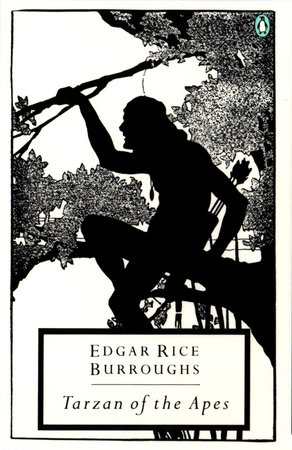
Now, this is definitely glamorized violence and some parents don’t want their kids exposed to that kind of thing, so you probably already know whether Shane is something you want in the family library. I’d put it in the same category with Tarzan of the Apes or even the original Conan the Barbarian stories, as portraits of an idealized masculinity, fiercesome yet just. Given the times we live in, current culture is far more interested in deconstructing or parodying masculine traits, or saying that these traits only look good on girls. Shane, at a certain age, is perfect light reading for boys, providing a piece of the needed counterweight to the culture they are now steeped in 24/7. Shane is not a billionaire playboy or similar juvenile power trip fantasy. He doesn’t degrade women and he retains his personal dignity in all situations. Nor does he preach pacifism only to hypocritically embrace violence at the last second; instead, he is committed to his purpose of saving the Starretts from the beginning, retaliating as soon as the cattlemen cross the line from verbal intimidation to physical harm. The traits Shane exhibits are those of classic heroes and they are shown in a healthy light that is increasingly hard to find in modern representations, where masculinity is all about ego, brute force and cluelessness. In consequence, I give it high marks and advise its inclusion on a young man’s reading list.
Parental Guide square ahead, with spoilers.
Shane and Mrs. Starrett fall in love over the course of the story, but they are unwilling to even speak on the subject until the night of Shane’s departure. Joe isn’t an idiot and is more aware of the situation than Bob is, even seeming to accept the idea that if he gets killed Shane would probably do a better job of protecting the family than he could. His comment to this effect is seemingly what spurs Shane to pack his things and take up his gun-slinging ways again. This subplot exists seemingly to drive home the loneliness of Shane’s life, as his continued presence on the farm would only harm those he cares for and risks his life defending.
Violence: Two fistfights, of which my earlier quote should help provide the tenor. Two gunfights which, in a nod to reality, involve simply drawing faster, Leone-style, rather than High Noon duck-and-dodge shootouts. And the room rocked in the sudden blur of action indistinct in its incredible swiftness and the roar of their guns was a single sustained blast. And Shane stood, solid on his feet as a rooted oak, and Wilson swayed, his right arm hanging useless, blood beginning to show in a small stream from under the sleeve over the hand, the gun slipping from the numbing fingers. These scenes are short, but they are what the entire book is building towards.
The villains might say “hell” occasionally, but Joe Starrett speaks only in a steady stream of “by Godfrey’s.” One line of bad movie innuendo spoken by soon-to-be-dead Wilson: “You wouldn’t like someone else to be enjoying this place of yours–and that woman there in the window,” regarding Mrs. Starrett.
Values: If you uphold the Second Amendment, this is your kind of book, as Shane tells Bob that “a gun is just a tool. No better and no worse than any other tool, a shovel–or an axe or a saddle or a stove or anything. Think of it always that way. A gun is as good–and as bad–as the man who carries it.”
Land is identity, to be prized, not given away without a fight. This is not a deconstructed western. Man’s capacity to conquer the elements is given its ode through the Epic of the Stump. A worthy cause justifies violence and the show of power. A beating can improve a man’s character – young Chris (one of Fletcher’s boys) gets his arm broken by Shane and goes straight as a result. There’s poetry in the violence and a joy of being alive and released from long discipline and answering the urge in mind and body.
Role Models: I think I’ve covered that aspect thoroughly enough already. A boy’s hero and an unbreakable family unit.
Educational Properties: The clash of cattleman and farmer – life, business and economic reality in the old west. Towns, how they sprang up, thrived and sometimes perished overnight. There’s a lot of real history mixed up with the western and that’s well worth exploring.
End of Guide.
Jack Schaefer did move out west eventually, settling in Santa Fe and writing material that he had more experience with. He stuck to westerns for all the Shane fans, and I don’t plan on pursuing any of them as I expect they fall well outside the purview of this blog. However, he also won a 1961 Newbery Honor for a book called Old Ramon, and I’ll be keeping my eyes out for that one.
Up Next: No coy clues this time. It’s Charlotte’s Web, everyone.
 The Western Corner of the Castle